

Fatigue is one of the most dangerous risks in road transport, and drivers' hours rules are the law's answer to it. For fleets running heavier vehicles, the rules are strict, closely monitored by tachograph, and directly tied to the operator's licence, making them among the most consequential compliance obligations a fleet has.
Who the Rules Apply To
The GB and EU drivers' hours rules apply to most goods vehicles over 3.5 tonnes and to larger passenger vehicles. Some vehicles fall under separate GB domestic rules or are exempt, but for the typical HGV or coach operator, the EU-derived rules are the ones that bite.
The Main Limits
The core daily and weekly limits are:
- Daily driving: a maximum of 9 hours, extendable to 10 hours no more than twice a week.
- Breaks: a break of at least 45 minutes after no more than 4.5 hours of driving (which can be split into 15 then 30 minutes).
- Daily rest: normally 11 hours, reducible to 9 hours up to three times between weekly rests.
- Weekly driving: a maximum of 56 hours, and no more than 90 hours across any two consecutive weeks.
How Tachographs Enforce It
Compliance isn't taken on trust. Vehicles in scope must be fitted with a tachograph that records driving, other work, breaks, and rest against each driver's card. Digital tachograph data must be downloaded regularly, from both the vehicle unit and the driver card, and retained. That data is exactly what DVSA examines, at the roadside and in audits.
Why It Matters to the Licence
Drivers' hours and tachograph compliance is one of the undertakings behind every operator's licence, and one of the KPI areas in DVSA Earned Recognition. Persistent breaches, or missing tachograph records, are treated seriously by Traffic Commissioners and can put the licence itself at risk, not just individual drivers.
#1 AI-powered fleet spend control platform
Ready to Stop Losing Money on Fleet Spend?
See how much you could save in the first week. Start your free trial today. Cancel anytime.
How Fleevo Helps
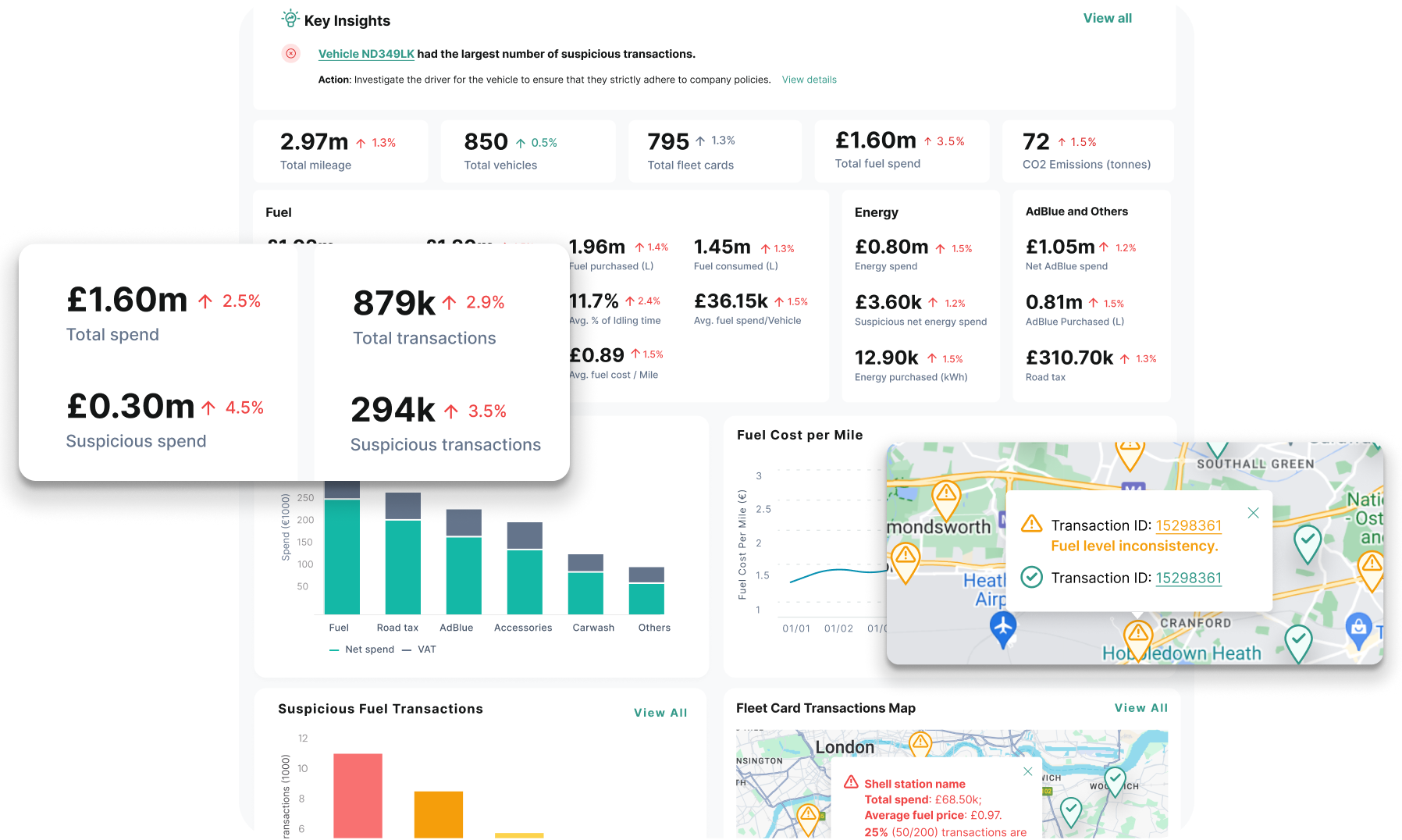
Drivers'-hours compliance depends on capturing, retaining, and reviewing tachograph data before problems compound. Fleevo keeps that data organised alongside the rest of your compliance record, so missed downloads and emerging breach patterns are visible early rather than at a roadside stop. Explore Compliance & Audit Readiness, or read about DVSA Earned Recognition.
Drivers' Hours FAQs
What is the maximum daily driving time?
9 hours, which can be extended to 10 hours no more than twice a week, under the GB and EU rules.
When must a driver take a break?
A break of at least 45 minutes after no more than 4.5 hours of driving. It can be split into a 15-minute break followed by a 30-minute break.
What are the weekly driving limits?
A maximum of 56 hours in a single week, and no more than 90 hours across any two consecutive weeks.
Why do tachograph records matter so much?
They are the evidence of compliance. Missing or unreviewed tachograph data, or persistent breaches, can put the operator's licence itself at risk, not just the driver.
This is general information, not legal advice. Confirm current rules with DVSA and GOV.UK guidance.