
Reimbursing a driver for petrol is simple: HMRC publishes an advisory rate per mile and you pay it. Electric company cars broke that habit, because "filling up" now happens on a domestic electricity bill, at a public rapid charger, or both on the same journey. HMRC's answer is the Advisory Electricity Rate (AER), and there are now two of them.
What Is the Advisory Electricity Rate?
The AER is the pence-per-mile figure HMRC lets an employer use to reimburse business mileage in a fully electric company car, or to recover the cost of private mileage, without creating a taxable benefit. Pay at or below the AER for genuine business miles and there is no taxable profit and no Class 1A National Insurance to account for. It is the electric equivalent of the long-standing Advisory Fuel Rates for petrol and diesel.
Two Rates: Home vs Public Charging
HMRC now publishes separate advisory electric rates depending on where the car is charged. From 1 June 2026 they are 7 pence per mile for home charging and 15 pence per mile for public charging. The gap reflects reality: topping up on a domestic tariff is far cheaper per mile than a slow or fast public charger. Where a car is charged in both places, HMRC lets you apportion the mileage between the two rates, provided the split is fair and reasonable.
These rates are reviewed quarterly, on 1 March, 1 June, 1 September, and 1 December, so the exact figure moves over time. Always confirm the current rate before you run a reimbursement cycle rather than relying on last quarter's number.
Why This Trips Fleets Up
Three things make EV reimbursement harder than it looks. Business miles have to be separated cleanly from private ones, exactly as with fuel. The home-versus-public split means a single flat rate no longer fits a driver who does both. And you need evidence, mileage and ideally charging location, to stand behind whichever rate you paid.
Can You Pay More Than the AER?
Yes, if you can show the actual cost per mile was genuinely higher, for example a driver who relies on expensive public rapid charging. The AER is a safe harbour, not a hard cap. But pay above it without evidence and the excess becomes taxable, so the burden is on you to show the real cost.
#1 AI-powered fleet spend control platform
Ready to Stop Losing Money on Fleet Spend?
See how much you could save in the first week. Start your free trial today. Cancel anytime.
How Fleevo Helps With EV Reimbursement
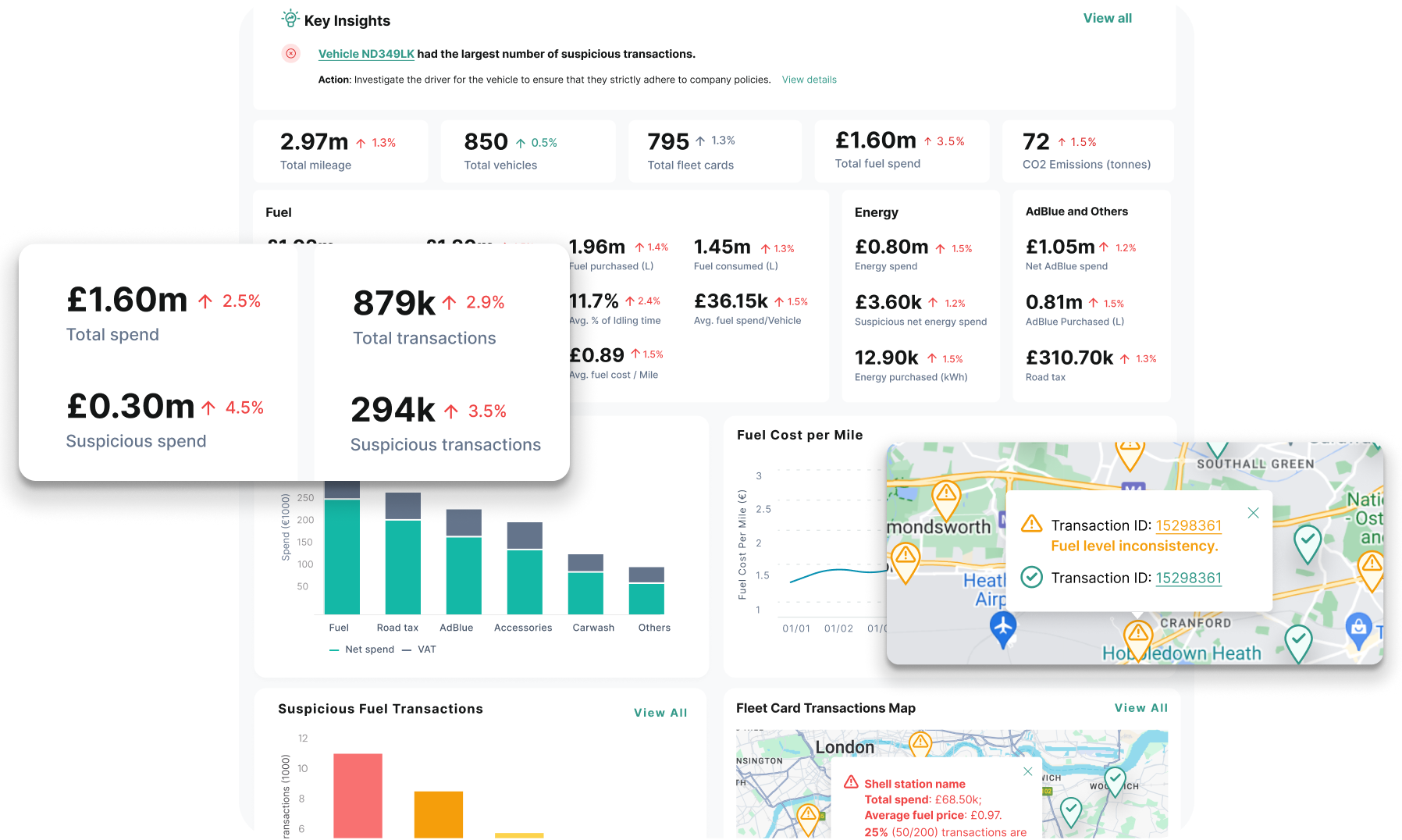
Fleevo brings charging and mileage data together so business miles, home charging, and public charging are separated, and the correct advisory rate is applied to each, with an audit trail behind every reimbursement. Explore Fuel & EV Charge Management, or read how to manage EV charging costs across depot, home, and public.
EV Reimbursement FAQs
What is the HMRC Advisory Electricity Rate?
It is the pence-per-mile rate HMRC lets employers use to reimburse business mileage in a fully electric company car, or recover private-mileage costs, without triggering a taxable benefit or Class 1A National Insurance.
Is there one electricity rate or two?
Two. From 1 June 2026 the rates are 7 pence per mile for home charging and 15 pence per mile for public charging. Mileage charged in both places can be apportioned between the two.
Can you reimburse more than the Advisory Electricity Rate?
Yes, but only if you can evidence that the actual cost per mile was higher. Without that evidence, anything paid above the AER is treated as taxable.
How often does the rate change?
HMRC reviews it every quarter, on 1 March, 1 June, 1 September, and 1 December, so check the live figure before each reimbursement run.
This is general information, not tax advice. Rates change quarterly and individual circumstances vary, so confirm the current figure and your own position with HMRC guidance or a tax adviser.