
Automated fleet emissions reporting works by calculating emissions from fuel and energy actually purchased, joined to the vehicles that used it, rather than from estimated mileage multiplied by an average factor. The fuel-based method is both more accurate and easier to automate, because the transactions already exist as data.
Most fleets still produce emissions figures by exporting mileage, applying a generic factor per vehicle type in a spreadsheet, and reporting the total. That approach is defensible for a rough estimate and indefensible under assurance, because it cannot be traced back to anything.
Fuel-based versus distance-based
Fuel-based. Take actual litres or kWh consumed, apply the appropriate emission factor for that fuel, and you have your figure. The inputs are fuel card transactions, onsite tank dispensing records and charge session data, all of which arrive as data already. This is the method to automate.
Distance-based. Take distance travelled and apply a factor per vehicle type. Necessary for grey fleet and for vehicles where you have no fuel data, and it is inherently an estimate, since a generic factor cannot reflect load, terrain or driving.
Use fuel-based wherever fuel data exists, distance-based only to fill the gaps, and label clearly which portion of the total came from which method. That labelling is what makes the report survive review.
Where the data comes from
- Fuel card statements give litres by product, site and date. Product type matters: diesel, petrol, HVO and gas all carry different factors, so a total litres figure is not sufficient.
- Onsite tank records give dispensed volume. Frequently the largest single fuel source and the most likely to be missing from an emissions report entirely.
- Charge point sessions give kWh for electric vehicles, from depot chargers, public networks and home charging.
- Telematics gives distance, which you need for intensity metrics and for the distance-based fallback.
- The vehicle register tells you what each vehicle is, which determines the factor and the reporting category.
The four things that break automated reporting
1. Unattributed fuel. A litre that cannot be assigned to a vehicle can still be counted in a total, but it cannot be assigned to a category, a site or a customer. Unattributed volume is the number that gets challenged in assurance, so quantify and report it rather than distributing it silently across the fleet.
2. Product mislabelling in card data. Card statements are inconsistent about product naming, and a diesel transaction coded as an unspecified fuel gets the wrong factor. This needs a mapping that is maintained, not assumed.
3. Double counting between tanks and cards. A fleet with both onsite tanks and cards can count a bulk delivery into the tank and then again as dispensed volume. Count dispensed volume for consumption, and treat deliveries as stock movements.
4. Emission factor versioning. Factors are updated annually. A report that silently switches factor version mid-series shows a change that is an artefact rather than a real reduction. Record which factor set each period used.
Building it once
- Join fuel, tank and charge transactions to the vehicle register, and report the attribution rate honestly
- Map every product code to a fuel type, and maintain that mapping
- Apply the correct factor set per period, and record the version used
- Calculate both absolute emissions and an intensity measure per vehicle class, since absolute figures move with activity and intensity is what shows actual improvement
- Keep the distance-based fallback separate and labelled, so its share of the total is visible
Once that pipeline exists, the reports that come out of it are effectively free: monthly internal, annual disclosure, per customer where contracts require it, and per site.
Frequently asked questions
How do you automate fleet emissions reporting?
Calculate from actual fuel and energy transactions joined to the vehicle register, applying the correct emission factor per product and per period, with a distance-based method used only where fuel data is unavailable.
Is telematics-based emissions reporting better than fuel logs?
They answer different questions. Fuel and energy purchased is the more accurate basis for emissions, because it is what was actually consumed. Telematics distance is essential for intensity metrics and as a cross check on whether the fuel figure is plausible. The strongest reporting uses both.
What data do I need for fleet emissions reporting?
Fuel card transactions with product type, onsite tank dispensing records, charge session data, telematics distance, and an accurate vehicle register. Missing onsite tank records is the most common reason a fleet total is understated.
How do I report emissions for grey fleet?
Distance-based, using claimed business mileage and a factor for the vehicle type where known. Label it as estimated, because it is, and it is worth recording vehicle fuel type in your grey fleet records to improve it.
Can emissions reporting reuse the same data as cost reporting?
Yes, and it should. Both need fuel and energy volume attributed to vehicles. Building two pipelines from the same transactions is duplicated work and produces two totals that will eventually disagree.
Where Fleevo fits
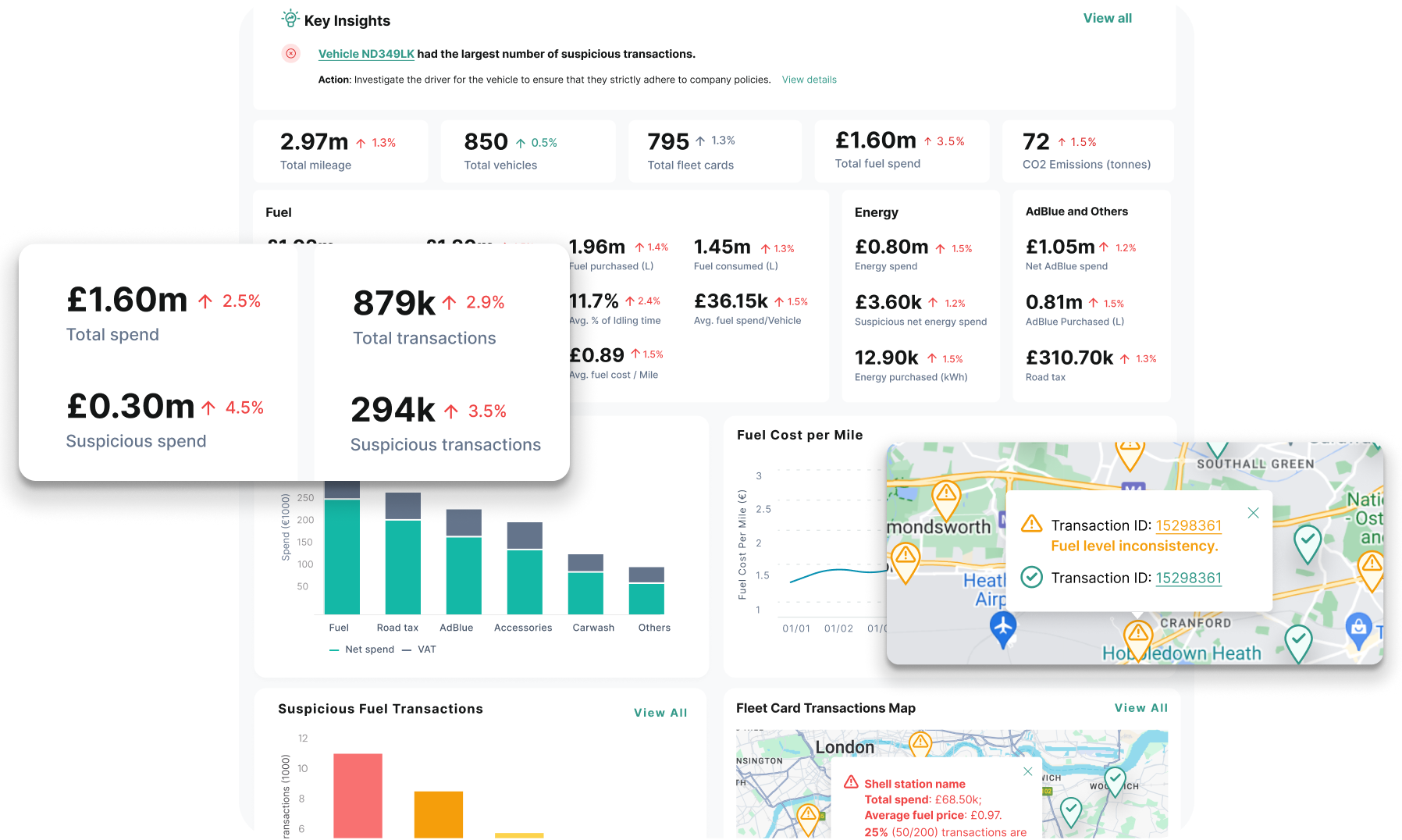
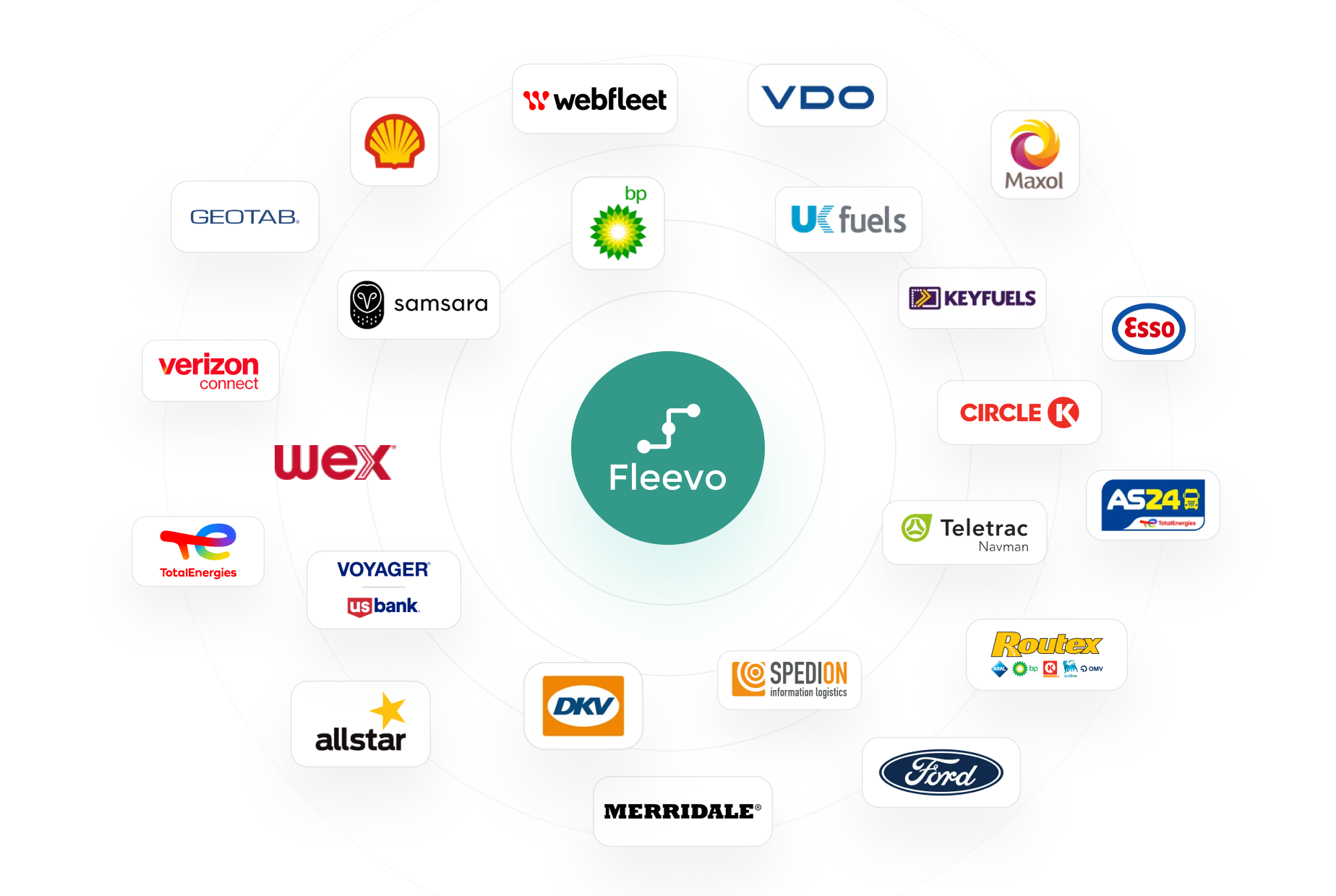
Fleevo already joins fuel card, onsite tank and charge point transactions to the vehicle register for cost and anomaly detection, which is the same join emissions reporting needs. That means emissions and cost per mile come from one dataset, on one attribution basis, so the two reports cannot drift apart.
#1 AI-powered fleet spend control platform
Ready to Stop Losing Money on Fleet Spend?
See how much you could save in the first week. Start your free trial today. Cancel anytime.