
The low tax on electric company cars is the single biggest reason EV adoption in UK fleets has accelerated. But "low" doesn't mean "static", the rates are written into law to climb steadily. Understanding both the current position and the trajectory is essential for anyone budgeting a fleet or offering a company car.
How Company-Car Tax Is Calculated
Benefit-in-Kind (BIK) tax on a company car is worked out from three things: the car's list price (P11D value), an "appropriate percentage" set by its emissions, and the employee's marginal income tax rate. Multiply list price by the appropriate percentage to get the taxable benefit, then apply the employee's tax rate. For electric cars, it is the appropriate percentage that makes the difference.
The EV Rates, and Where They're Going
A fully electric car's appropriate percentage is far below a combustion equivalent, but it rises each year:
- 2025/26: 3%
- 2026/27: 4%
- 2027/28: 5%
- 2028/29: 7%
- 2029/30: 9%
By comparison, many petrol and diesel cars sit at 25% to 37%. Even at 9% in 2029/30, an EV remains dramatically cheaper to run as a company car than its combustion equivalent.
What This Means for Fleets
The takeaway isn't just that EVs are cheap to tax today, it's that the advantage narrows predictably. A driver choosing an EV now locks in several years of very low BIK before the rate climbs. For fleet budgeting, the rising schedule should be modelled in, not assumed flat, because a car ordered today will see its BIK charge roughly double over a typical replacement cycle.
#1 AI-powered fleet spend control platform
Ready to Stop Losing Money on Fleet Spend?
See how much you could save in the first week. Start your free trial today. Cancel anytime.
How Fleevo Helps
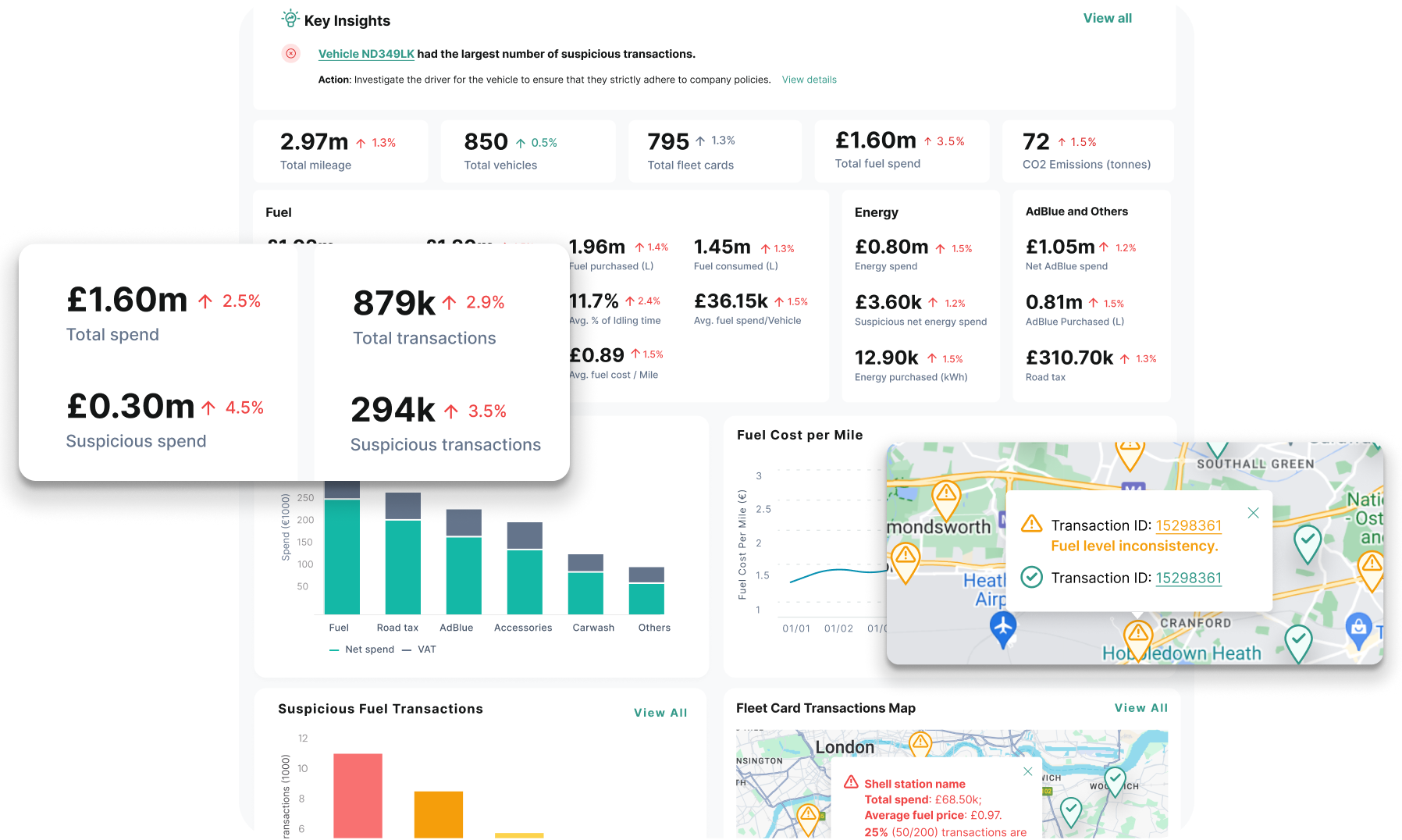
Company-car tax is only one part of an EV's true cost. Fleevo tracks the running costs that sit alongside it, charging spend, business mileage, and reimbursement, so the full picture of an electrified fleet stays in one place. Explore Fuel & EV Charge Management, or read our guide to EV salary sacrifice.
Electric Company Car Tax FAQs
What is the BIK rate on an electric car in 2026/27?
4% of the car's list price. It rises to 5% in 2027/28, 7% in 2028/29, and 9% in 2029/30.
How is company-car tax calculated?
List price (P11D value) multiplied by the appropriate percentage set by the car's emissions, then multiplied by the employee's marginal income tax rate.
Why are electric cars taxed so much less?
Their appropriate percentage is a fraction of a petrol or diesel car's, which can be 25% to 37%. The gap is a deliberate incentive, though it is legislated to narrow gradually to 2030.
This is general information, not tax advice. Confirm your position with current HMRC guidance or a tax adviser.