
A fleet budget set once a year and checked at year-end is not really a budget, it is a guess you find out about too late. Good fleet budgeting is built on real per-vehicle cost data and tracked continuously, so overspend shows up while you can still act. Here is how to build, track, and forecast fleet costs.
What Goes Into a Fleet Budget?
A fleet budget brings together the full cost of running the fleet: fuel and energy, maintenance and repairs, insurance, leasing or depreciation, fines, tolls, and compliance. The more of these are based on actual historical cost per vehicle rather than round estimates, the more reliable the budget.
Why Forecasting Matters
- Catch overspend early. Compare actual against budget through the year, not at the end of it.
- Plan replacements. Forecast when rising maintenance cost makes a vehicle worth replacing.
- Absorb fuel volatility. Model the effect of fuel price swings before they hit.
- Support decisions. Back capital and contract decisions with real numbers.
How to Build and Track a Fleet Budget
- Start from actual cost per vehicle. Use historical, allocated cost data as the baseline.
- Forecast forward. Project each cost category, allowing for mileage, aging vehicles, and price trends.
- Track actual vs budget. Monitor spend against the plan continuously.
- Adjust early. Act on variances while there is still time in the year.
The Data Problem
Most fleet budgets are weak because the underlying data is scattered and out of date. If cost per vehicle lives in a spreadsheet rebuilt each quarter, the forecast is always looking backwards. Connected, continuously updated cost data is what makes a budget something you can steer by.
#1 AI-powered fleet spend control platform
Ready to Stop Losing Money on Fleet Spend?
See how much you could save in the first week. Start your free trial today. Cancel anytime.
How Fleevo Supports Fleet Budgeting
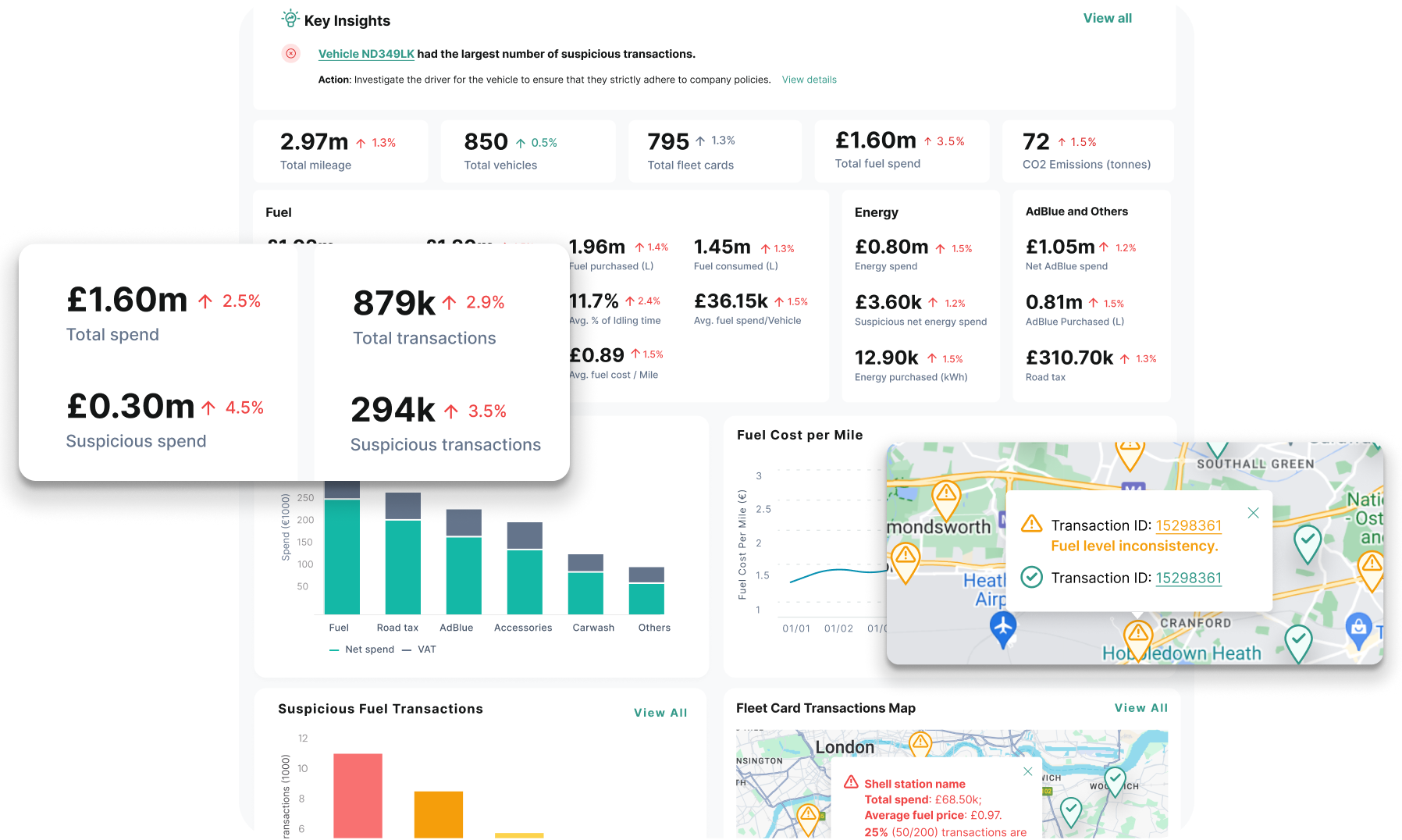
Fleevo keeps a live, per-vehicle cost picture across fuel, maintenance, fines, and more, so your budget baseline is always current and actual spend can be tracked against it as it happens. Overspending vehicles and categories surface early, not at year-end. Explore Fleet TCO, or read how fleet invoice management builds the per-vehicle data a budget needs.
Fleet Budgeting FAQs
What should a fleet budget include?
Fuel and energy, maintenance and repairs, insurance, leasing or depreciation, fines, tolls, and compliance costs, ideally based on actual cost per vehicle rather than estimates.
How do you forecast fleet costs?
Start from historical cost per vehicle, then project each category forward for mileage, vehicle age, and price trends, and track actual spend against the forecast through the year.
Why do fleet budgets go wrong?
Usually because the cost data is scattered and out of date, so the budget is built on estimates and variances are only found at year-end. Live, connected cost data fixes that.
Explore the platform: Fleet TCO.
Budgeting turns on the same per-vehicle data as fleet total cost of ownership — the pillar guide to reducing it.