
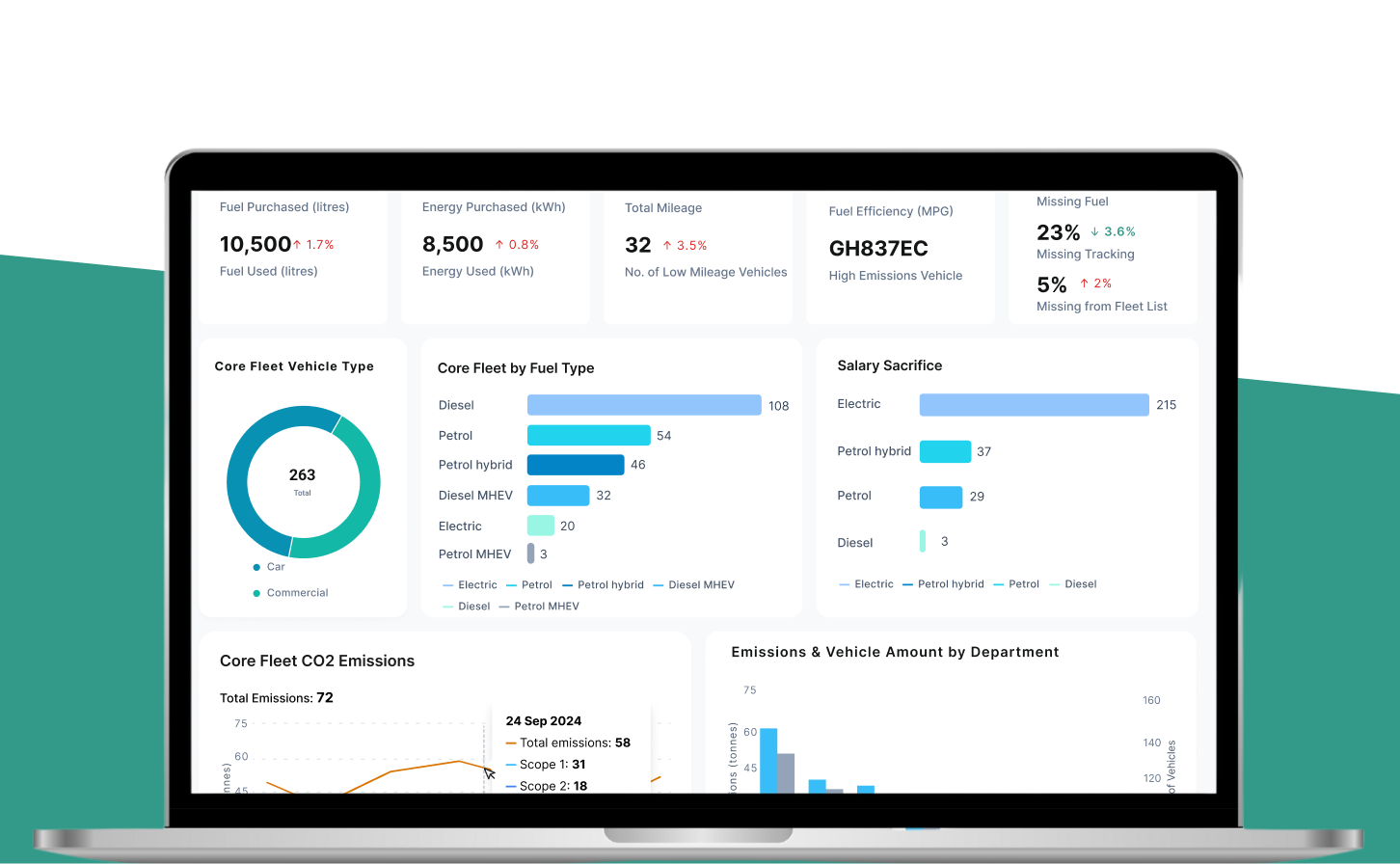
Fleet emissions reporting means measuring and disclosing the greenhouse gas emissions produced by your vehicles, usually under the GHG Protocol's framework of Scope 1, 2, and 3. Here's what each scope covers for a fleet, how the emissions are calculated, and why getting accurate data is the real challenge.
What is fleet emissions reporting?
It's the process of quantifying the carbon your fleet produces and reporting it, whether for regulation, customer requirements, sustainability goals, or accreditation such as FORS. The GHG Protocol is the most widely used framework.
Scope 1, 2, and 3 for fleets
- Scope 1 covers direct emissions from fuel burned in vehicles you own or control, your diesel and petrol fleet.
- Scope 2 covers indirect emissions from the electricity used to charge your EVs.
- Scope 3 covers emissions from transport outside your direct control, such as subcontracted carriers or third-party logistics.
How fleet emissions are calculated
There are two main methods. The fuel-based method calculates emissions from the fuel actually consumed and is the more accurate approach. The distance-based method multiplies distance travelled by emission factors for each vehicle type. The GHG Protocol's transport tool combines both, because CO2 is best estimated from fuel use and other gases from distance travelled.
Why accurate data is the hard part
Reliable reporting depends on complete, consistent data, and most fleets have fuel, telematics, and EV charging data scattered across separate systems. Gaps and mismatches produce numbers you can't stand behind in an audit.
How Fleevo helps
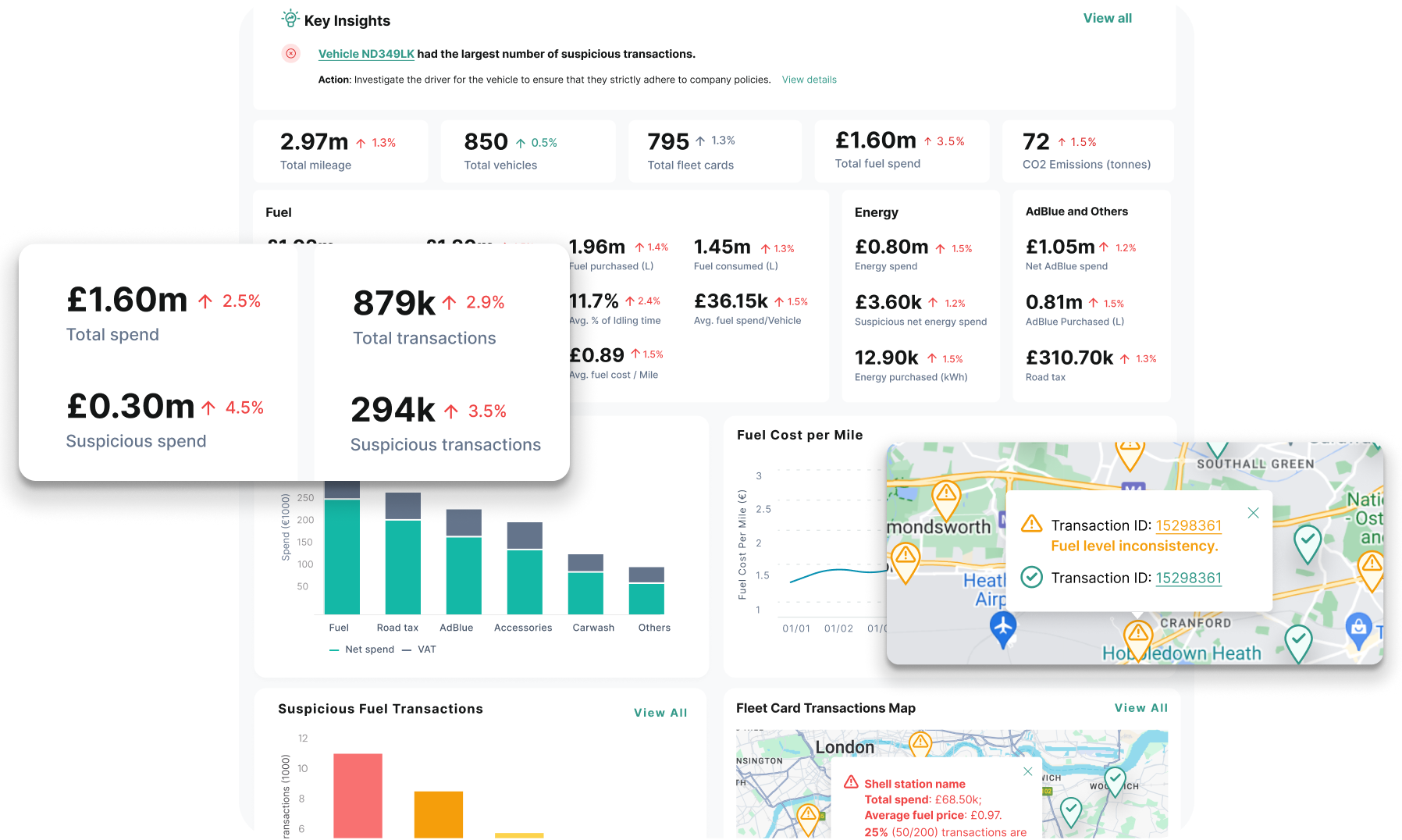
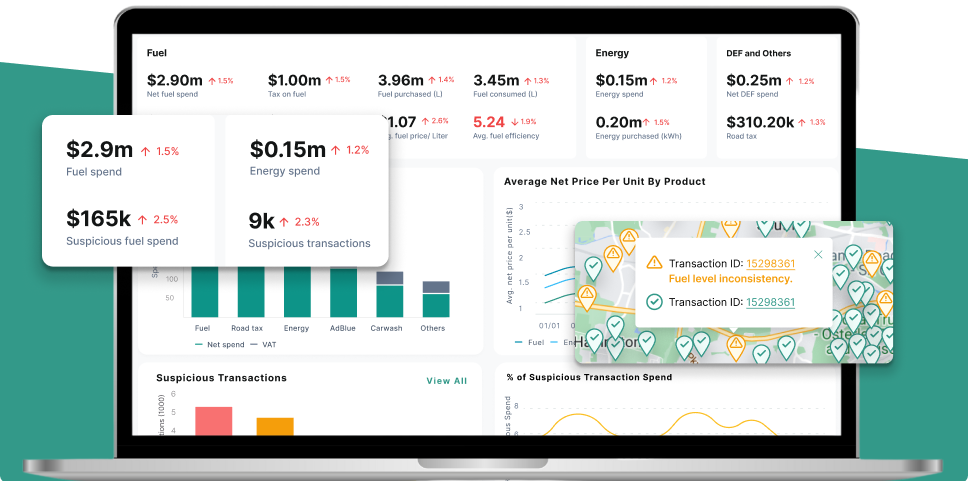
Fleevo pulls your fuel, tank, and EV charge data into one place and generates automated, audit-ready emissions reporting, so the figures are consistent and defensible.
Frequently asked questions
What's the difference between Scope 1 and Scope 3 for a fleet?
Scope 1 is direct emissions from your own vehicles' fuel; Scope 3 is emissions from transport you don't directly operate, such as subcontractors.
Which calculation method is more accurate?
The fuel-based method, because it's based on actual fuel consumed rather than estimated distance.
Do electric vehicles produce reportable emissions?
Yes, indirectly. The electricity used to charge them is reported under Scope 2.
#1 AI-powered fleet spend control platform
Ready to Stop Losing Money on Fleet Spend?
See how much you could save in the first week. Start your free trial today. Cancel anytime.