
Automate the fleet processes where a human is currently copying data between systems and making no judgement while doing it. That is the whole selection rule. Processes that need judgement should be supported with better information, not automated, and confusing the two is why fleet automation projects stall.
Ranked below by payback, based on how much manual transcription each removes and how quickly it can be running.
Automate first
1. Fuel and charge transaction intake. Card statements, tank records and charge sessions arriving automatically, mapped to vehicles, rather than being downloaded and pasted monthly. Highest payback of anything on this list because it is pure transcription, it happens every month without fail, and everything else downstream depends on it.
2. Invoice line extraction. Maintenance invoices parsed to line level, with labour, parts and consumables separated, rather than a single total keyed into a system. This is what makes overbilling detection and any serious maintenance analysis possible at all.
3. Exception detection on fuel and maintenance. Once 1 and 2 are in place, the checks run themselves: location mismatches, volume over tank capacity, labour hours above standard times, part prices out of line with history. Nobody was doing this manually, so this is new capability rather than time saved.
4. Fine and PCN intake with deadline tracking. Notices logged on receipt with deadlines calculated, and the driver identified from telematics. High payback because the failure mode it prevents, a missed challenge window, has a direct cash cost.
Automate second
5. Compliance document expiry tracking. MOT dates, licence check due dates, insurance renewals, inspection intervals, with escalation when something is approaching. Straightforward, and the value is risk reduction more than time saved.
6. Recurring report production. Monthly cost per mile, fuel exception summary, emissions figures. Automate only after the underlying data pipeline is trustworthy, because automating an unreliable report just distributes the unreliability faster.
7. Driver licence checking. Automated periodic verification against the licensing authority. Worth doing, and cheap, but limited in scope compared with the items above.
Automate last, or not yet
8. Maintenance scheduling. Genuine judgement: operational availability, parts lead time, workshop capacity, route commitments. Automate the reminder and the booking record, and leave the decision with a person who knows next week's workload.
Three that are commonly proposed and generally not worth it early:
- Automated purchase approval. The approval is the control. Automating it removes the control and keeps the paperwork.
- Automated driver coaching allocation. Telematics scores need context before they should trigger anything involving a person, and coaching triggered by an uncontextualised score damages credibility quickly.
- Automated vehicle replacement decisions. The data should inform the decision. The decision involves capital, contracts and operational risk.
Why sequence matters more than tooling
Items 1 and 2 are data intake. Everything else on the list consumes their output. Automating report production or exception alerting before intake is reliable produces a system that is faster at being wrong, which is how automation loses credibility inside a fleet team.
The practical sequence is: get the data in automatically, verify it reconciles, then automate what sits on top.
How to size the opportunity honestly
For each process, count how many hours per month go into it and how many of those hours involve a decision. Automate the hours with no decision in them. That calculation usually shows that the largest single block of fleet admin time is fuel and invoice data handling, which is why it heads the list.
#1 AI-powered fleet spend control platform
Ready to Stop Losing Money on Fleet Spend?
See how much you could save in the first week. Start your free trial today. Cancel anytime.
Automating Fleet Admin With Fleevo
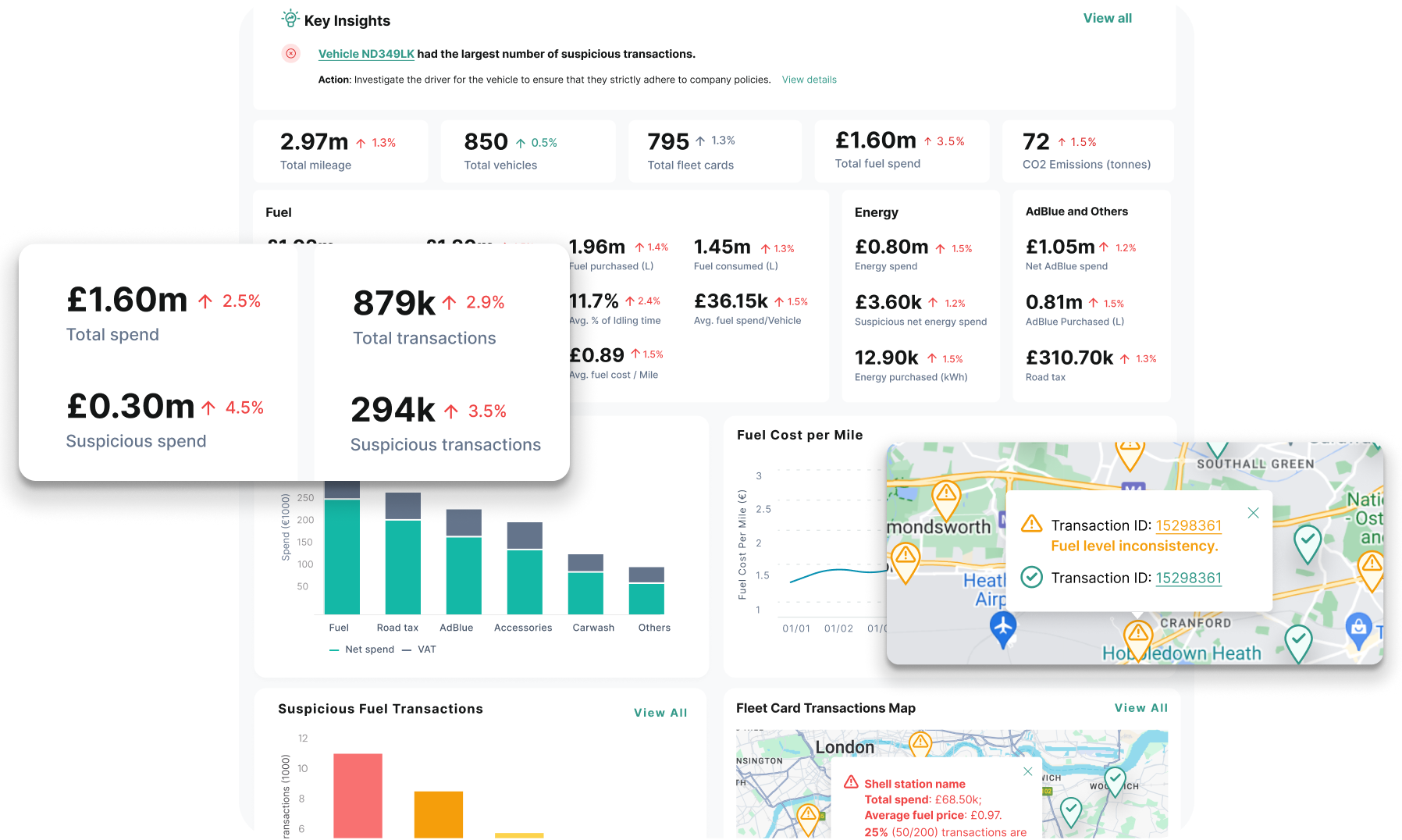
Fleevo covers items 1 through 6: automated intake from telematics, fuel cards, onsite tanks, charge points and maintenance invoices, line-level invoice parsing, exception detection across fuel and maintenance, fine intake with driver identification, document expiry tracking, and recurring reporting from one reconciled dataset. It sits above your existing providers rather than replacing them, so you keep the ability to change provider later without rebuilding. To see which of these would remove the most manual work in your operation, contact Fleevo or book a demo. See also Fleet Workflow Automation, fleet fuel reconciliation, and fleet invoice management.
Fleet Workflow Automation FAQs
What fleet processes should be automated first?
Fuel and charge transaction intake, maintenance invoice line extraction, exception detection on both, and fine intake with deadline tracking. These are transcription-heavy, recur monthly, and everything else depends on their output.
Does fleet workflow automation reduce headcount?
Usually it redirects it. The hours recovered from transcription tend to go into acting on exceptions that previously went unnoticed, which is a better use of the same people. Presenting it as headcount reduction sets an expectation that rarely materialises and makes the team resist it.
What should not be automated in fleet management?
Anything where the human step is a control or a judgement: purchase approval, maintenance scheduling against operational commitments, coaching decisions, and replacement decisions. Automate the information that feeds them instead.
How long does fleet workflow automation take to implement?
Data intake for fuel and invoices is typically the fastest to stand up because the source data already exists digitally. The longer part is usually mapping hygiene: making sure cards, devices and vehicles are correctly related with effective dates.
Do I need to replace my telematics or fuel card provider?
No, and doing so resets your baseline for no benefit. Automation should sit above your existing providers and consume their data, which also means you keep the ability to change provider later without rebuilding.