

A grey fleet audit checks that every employee who drives their own vehicle for work has a valid licence, business-use insurance, a roadworthy vehicle, and a mileage record you can defend. If you cannot produce those four things for every grey fleet driver, you are carrying duty of care risk on vehicles you do not control.
Grey fleet is the least governed part of most fleets, and often the largest by headcount. It also tends to sit outside the fleet system entirely, managed through expenses rather than through fleet.
Step 1: establish who is in scope
A grey fleet driver is anyone using a vehicle they own, lease privately, or hire personally for a work journey. Commuting is normally out of scope. Anything else is in.
The practical way to build the list is not to ask managers who drives. It is to pull everyone who has claimed business mileage in the last 12 months from expenses, then add anyone with a car allowance. That list is almost always longer than the fleet team expects, and the gap between it and the assumed list is itself an audit finding.
Step 2: collect the eight documents
- Driving licence check. Verified against the licensing authority record, not a photocopy. Photocopies do not show current endorsements or disqualifications.
- Insurance certificate showing business use. Social, domestic and pleasure plus commuting is not enough. The certificate must state business use, and the named driver must be the employee.
- MOT certificate where the vehicle is old enough to require one.
- Vehicle registration document confirming the driver is the registered keeper, or written permission from the keeper if not.
- Confirmation of vehicle age and condition, against whatever standard your policy sets.
- Servicing evidence, at manufacturer intervals.
- Signed acknowledgement of the grey fleet policy, including the driver's obligation to report changes.
- Mileage records distinguishing business from private, with journey purpose.
Note the second one carefully. Missing business use cover is the single most common finding in a first grey fleet audit, and it is the one with the most serious consequences if there is an incident.
Step 3: verify rather than collect
Collecting documents is not the same as checking them. Three specific verifications worth doing:
- Check the insurance certificate is in date at the time of the journeys claimed, not just in date today
- Check the registration matches the vehicle actually being used, which for drivers who change cars often it will not
- Cross reference claimed mileage against a route distance calculation, since consistently rounded up claims are common and quietly expensive
Step 4: set a re-check cadence
Annual is the usual baseline, with three triggers for an immediate re-check: the driver changes vehicle, the insurance renews, or the licence check returns new endorsements. The vehicle change trigger is the one most often missed, and it invalidates most of the file.
For higher mileage grey fleet drivers, six monthly is more defensible.
Step 5: handle non-compliance before it becomes a decision under pressure
Decide the rule in advance and write it into policy: a driver who cannot produce valid business use insurance does not drive for work until they can. Handling this case by case, in the moment, is how exceptions become the norm.
Offer the alternatives at the same time as the restriction: a pool vehicle, a daily hire, or public transport reimbursement. An audit that only produces prohibitions gets quietly circumvented.
#1 AI-powered fleet spend control platform
Ready to Stop Losing Money on Fleet Spend?
See how much you could save in the first week. Start your free trial today. Cancel anytime.
Grey Fleet In Fleevo
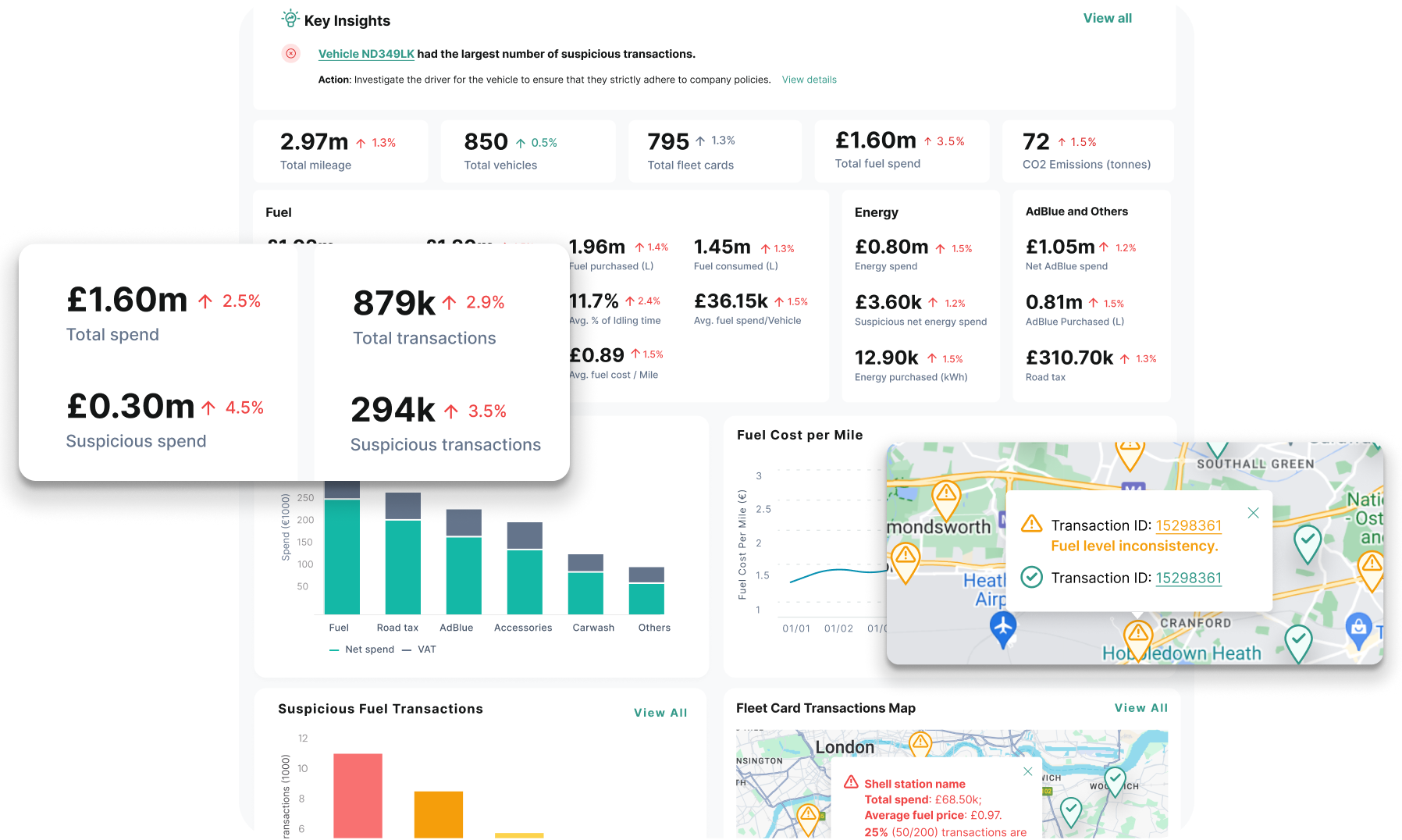
Grey fleet drivers rarely have telematics, so the data you can hold on them is documentary plus mileage. Fleevo keeps grey fleet vehicles in the same asset and cost records as the owned fleet, so mileage claims, fuel or charging spend and compliance status sit alongside everything else rather than in a separate spreadsheet that no one reviews. To bring your grey fleet into the same view as the rest of the fleet, contact Fleevo or book a demo. For the wider picture, start with our overview of grey fleet management, then see grey fleet risks, grey fleet mileage verification, and grey fleet policy.
Grey Fleet Audit FAQs
Do I need a grey fleet audit?
If any employee drives their own vehicle for work, yes. Your duty of care extends to those journeys, and without an audit you have no evidence that the vehicle and driver were fit for them.
How often should grey fleet checks be repeated?
At least annually, plus immediately whenever the driver changes vehicle, renews insurance, or receives new licence endorsements. Higher mileage drivers warrant six monthly checks.
Is a photocopy of a driving licence enough?
No. It shows the licence existed at some point and nothing about current entitlement or endorsements. Verification against the licensing authority record is the only reliable check.
Who is responsible for grey fleet compliance?
The employer, for the journey. The driver is responsible for the vehicle and their own licence and insurance, but the duty of care for work journeys sits with the organisation, which is why evidence of checking matters.
What if the driver is not the registered keeper?
You need written permission from the registered keeper and insurance that covers the employee for business use in that vehicle. This situation is common with spouse-owned cars and is frequently overlooked.