
With fuel cards, a fleet's energy spend arrives on one statement. Electrify the fleet and that single source fragments into many: home electricity bills, depot charger logs, and a handful of public charging networks, each with its own app, format, and billing cycle. Managing that scattered data is the hidden operational challenge of going electric.
Why EV Charging Data Is Hard
The problem is fragmentation. A single vehicle might charge at a driver's home, at the depot, and across two or three public networks in a month. Home charging shows up on a domestic bill mixed with household use. Public sessions land in separate provider accounts. Depot charging may or may not be metered per vehicle. Without consolidation, no one can say what a vehicle actually cost to run.
The Reconciliation Problem
Reconciliation means answering three questions for every kilowatt-hour: which vehicle, where, and how much. Get it right and you can allocate cost accurately, reimburse home charging fairly, and apply the correct advisory rate to public versus home miles. Get it wrong, or skip it, and you either overpay reimbursements or bury real cost in an unexamined average.
Reimbursement Done Properly
Home-charging reimbursement in particular depends on clean data. To reimburse a driver at the correct HMRC rate, and to defend it, you need their business mileage and a reliable read on how much charging happened at home versus in public. Guesswork here either shortchanges drivers or creates a taxable benefit no one intended.
From Scattered Logs to One View
The goal is the same visibility fuel cards once gave, restored for a world with many energy sources: every charging session, wherever it happened, attributed to a vehicle and a cost, in one place. That is what turns EV charging from an act of trust into a managed line item.
#1 AI-powered fleet spend control platform
Ready to Stop Losing Money on Fleet Spend?
See how much you could save in the first week. Start your free trial today. Cancel anytime.
How Fleevo Helps
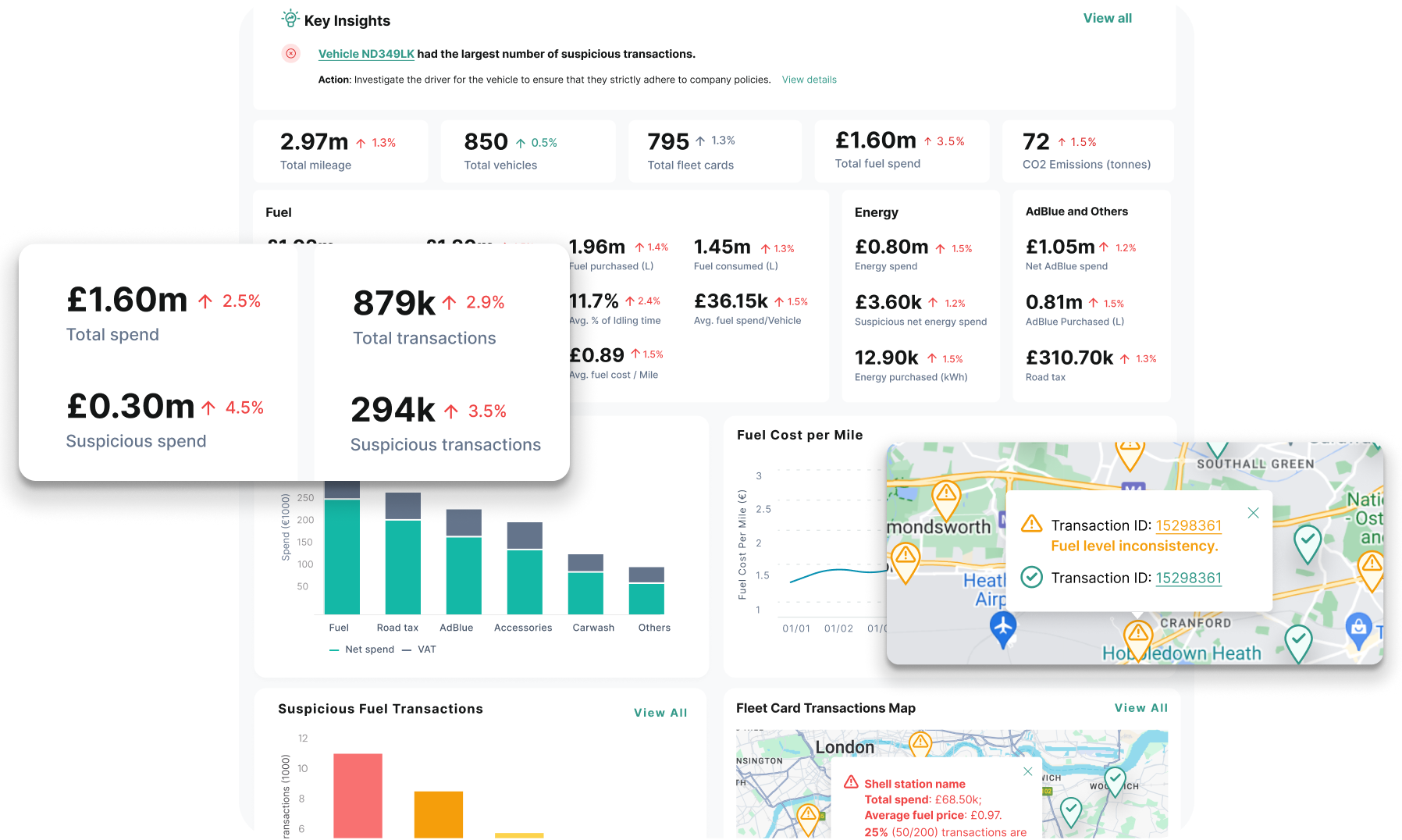
Fleevo consolidates charging data from home, depot, and public sources into a single view, attributes each session to the right vehicle, and lines it up against business mileage and the correct reimbursement rate, with an audit trail behind every figure. Explore Fuel & EV Charge Management, or read how EV home-charging reimbursement works.
EV Charging Data FAQs
Why is EV charging data harder to manage than fuel?
Fuel arrives on one statement; charging is spread across home bills, depot logs, and multiple public networks, each in its own format and billing cycle, so it has to be consolidated before it can be understood.
What does reconciling charging data involve?
Answering, for each charging session, which vehicle it belongs to, where it happened, and what it cost, so spend can be allocated and reimbursement applied at the correct rate.
Why does reimbursement depend on good data?
Because paying the right HMRC rate, and defending it, requires knowing a driver's business mileage and their home-versus-public charging split. Without that, you either overpay or create an unintended taxable benefit.