

A PCN lands on a company vehicle, and the first question is rarely "how much" — it's "whose problem is this." UK law answers that question more clearly than most fleet managers expect, and it is not always the driver. Here is how liability actually works, and where fleets get caught out.
The Short Answer: The Registered Keeper Is Liable
Under the Traffic Management Act 2004, civil Penalty Charge Notices, for parking, bus lanes, box junctions, and other moving traffic contraventions enforced by a local authority, are the legal responsibility of the vehicle's registered keeper, not whoever happened to be driving. For a fleet vehicle, that keeper is almost always the company itself, as recorded with the DVLA. The authority does not need to know or prove who was driving; the notice is addressed to the keeper by default.
The Exception: Police-Enforced Motoring Offences
This keeper-liability rule only applies to civil PCNs issued by councils or Transport for London. It does not apply to offences enforced by the police, such as speeding or using a phone while driving. For those, the keeper is legally required to name the actual driver under Section 172 of the Road Traffic Act 1988, and it is that individual, not the company, who receives the fine and any penalty points.
What This Means in Practice for Fleets
- Council and TfL PCNs (parking, bus lanes, ULEZ, Congestion Charge, moving traffic contraventions): the company is legally liable as keeper, full stop. Whether the business then recovers the cost from the driver is an internal policy matter, not a legal requirement.
- Police-enforced offences (speeding, mobile phone use, etc.): the company must identify the driver, who then carries the fine and points personally.
- Hire and lease vehicles: liability can transfer to the hirer, but only where a valid hire agreement is on file naming them and confirming they accepted liability for penalty charges; without that paperwork, the hire company (as keeper) stays liable.
Why Fleets Still Get This Wrong
Confusion usually comes from treating every notice the same way. A fleet that automatically tries to "reassign" every PCN to a driver can miss that, legally, the company was always on the hook for the council notices, while genuinely failing to name a driver for a police-enforced offence within the required timeframe carries its own separate penalty. Getting the split right matters for compliance, not just cost recovery.
#1 AI-powered fleet spend control platform
Ready to Stop Losing Money on Fleet Spend?
See how much you could save in the first week. Start your free trial today. Cancel anytime.
How Fleevo Helps With PCN Liability and Attribution
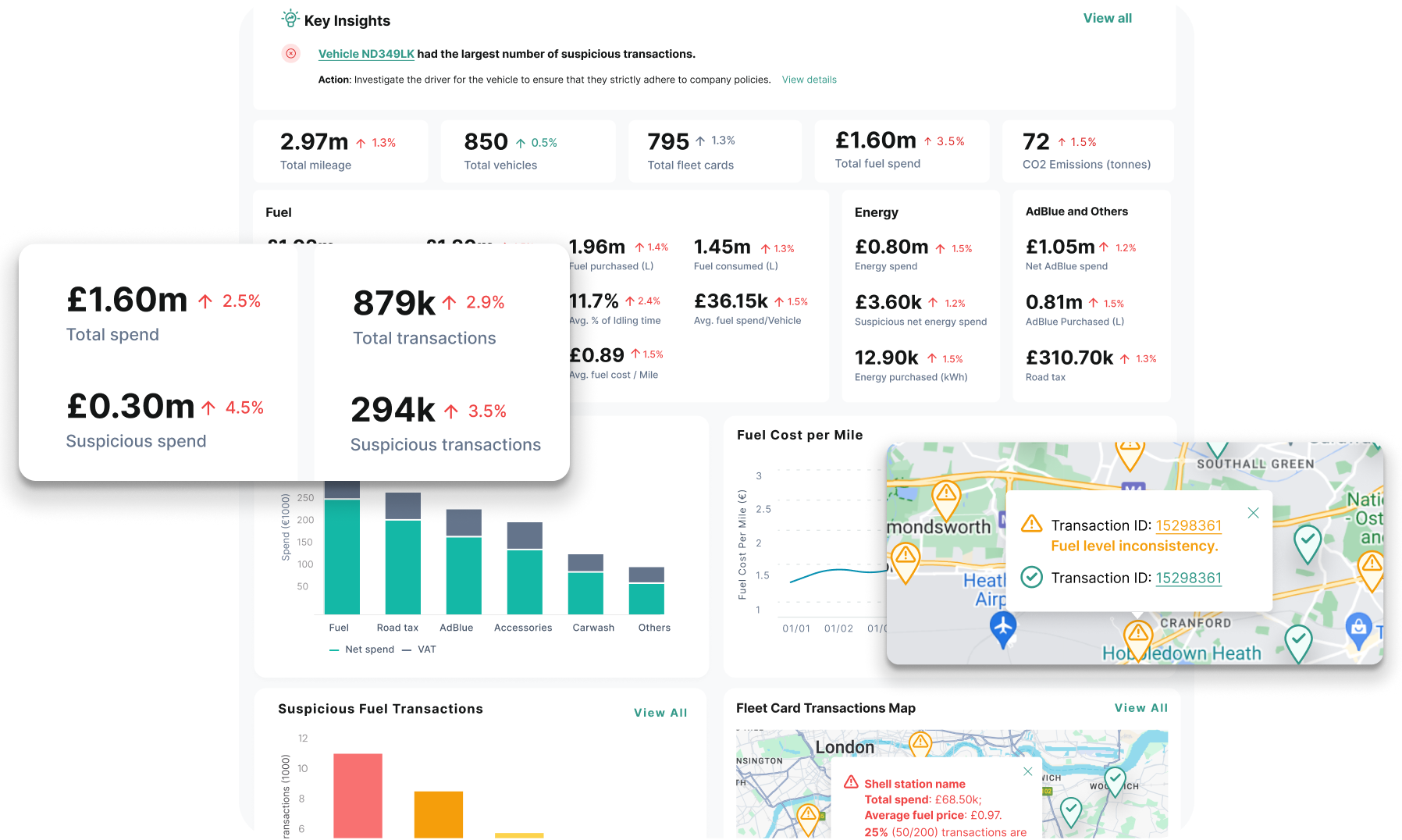
Fleevo captures every PCN and fine as it arrives and matches it to the vehicle's location, time, and assigned driver using your telematics data, so you know quickly who was actually driving, whatever your internal recovery policy is, and can respond to police-enforced notices within the required deadline. It keeps a full audit trail for every notice, council or police-enforced, in one place. Explore Fleet PCN and Fines Management, or read what a PCN actually is.
PCN Liability FAQs
Is the driver or the company liable for a PCN?
For civil PCNs issued by a council or TfL, parking, bus lanes, ULEZ, Congestion Charge, the registered keeper (usually the company) is legally liable, regardless of who was driving. For police-enforced offences like speeding, the company must name the actual driver, who then becomes personally liable.
Can a company pass a PCN cost on to the driver?
Legally, the company remains liable to the council or TfL either way. Whether it then recovers the cost from the driver is a matter of internal employment policy, not something the enforcing authority is involved in.
What happens with PCNs on hired or leased vehicles?
Liability can transfer to the hirer, but only if the hire company holds a signed agreement naming the hirer and confirming they accepted liability for penalty charges. Without that on file, the hire company remains liable as registered keeper.
Does this apply to speeding tickets too?
No. Speeding and other police-enforced motoring offences work differently: the keeper must identify the driver under Section 172 of the Road Traffic Act 1988, and that person carries the fine and any penalty points, not the company.
This is general information, not legal advice. Specific cases can turn on the exact contravention and paperwork involved, so confirm anything case-specific with your own legal or compliance advisor.