
For a commercial fleet, a single PCN is rarely a one-off. Across dozens or hundreds of vehicles, penalty charge notices pile up, and each one carries a deadline, a cost, and an admin burden. Here is what a PCN actually is, how the different types work, and how fleets keep on top of them at scale.
What Is a PCN?
A PCN (Penalty Charge Notice) is a fine issued for a parking or traffic contravention, such as parking on a restriction, stopping in a box junction, or driving in a bus lane. Local councils issue PCNs under the Traffic Management Act 2004, and they are enforceable in law.
It is worth clearing up a common confusion. A notice from a private parking company, for example on a retail or depot car park, is not a council PCN. It is a parking charge notice, a contractual charge rather than a statutory fine, though it is often styled to look the same. The two follow different rules and appeal routes, which matters when you decide whether and how to challenge one.
How Much Is a PCN, and What Are the Deadlines?
Council PCNs are typically banded. Outside London they are usually around £70 (higher band) or £50 (lower band), and in London they can be higher. Crucially, most are reduced by 50% if paid within 14 days. Miss that window and you pay full price; ignore it further and the charge escalates through a Charge Certificate and, ultimately, enforcement. For a fleet, the 14-day discount window is where most avoidable money is lost, because notices sit unopened or unassigned until it closes.
Why PCNs Are Hard for Fleets to Manage
- Volume and timing. Notices arrive by post, days after the event, across many vehicles at once.
- Attribution. Someone has to work out which driver was in which vehicle at the time.
- Deadlines. Each notice has its own clock, and the discount is lost quietly.
- Evidence. Challenging an unfair notice means producing location and timing evidence fast.
How Fleets Manage PCNs at Scale
- Capture every notice. Log each PCN as it arrives, ideally the moment it lands, rather than in a monthly batch.
- Attribute to a driver and vehicle. Match the notice's time and location to telematics and driver records.
- Act before the discount expires. Pay or challenge within the 14-day window.
- Appeal with evidence. Where a notice is wrong, submit the location and timing evidence to support a representation.
- Track hotspots. Spot the routes, sites, and drivers that generate repeat fines, and fix the cause.
Done manually, this is a paper chase. Done with connected data, it becomes a short, prioritized list that protects the discount and builds an audit trail automatically.
#1 AI-powered fleet spend control platform
Ready to Stop Losing Money on Fleet Spend?
See how much you could save in the first week. Start your free trial today. Cancel anytime.
How Fleevo Manages PCNs and Fines
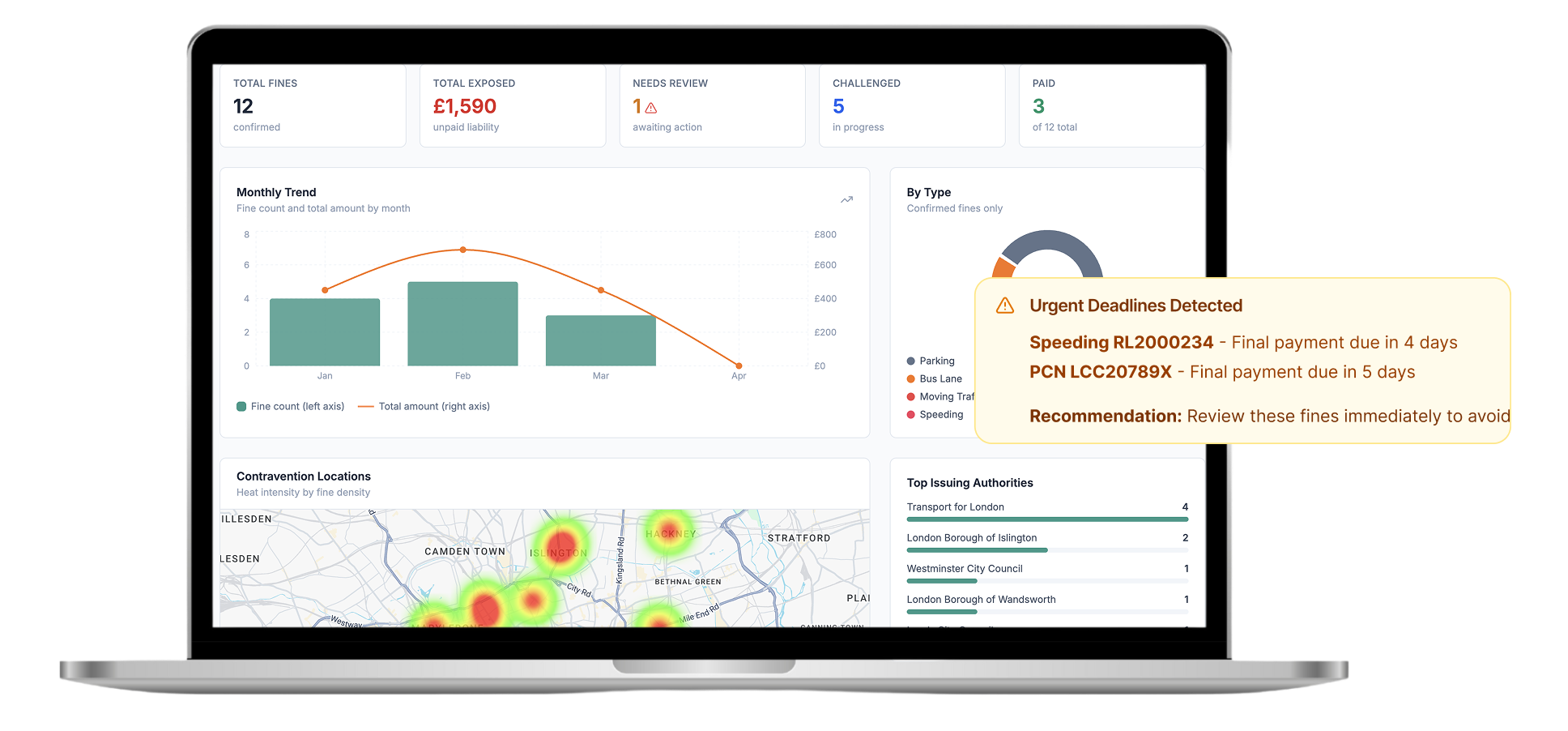
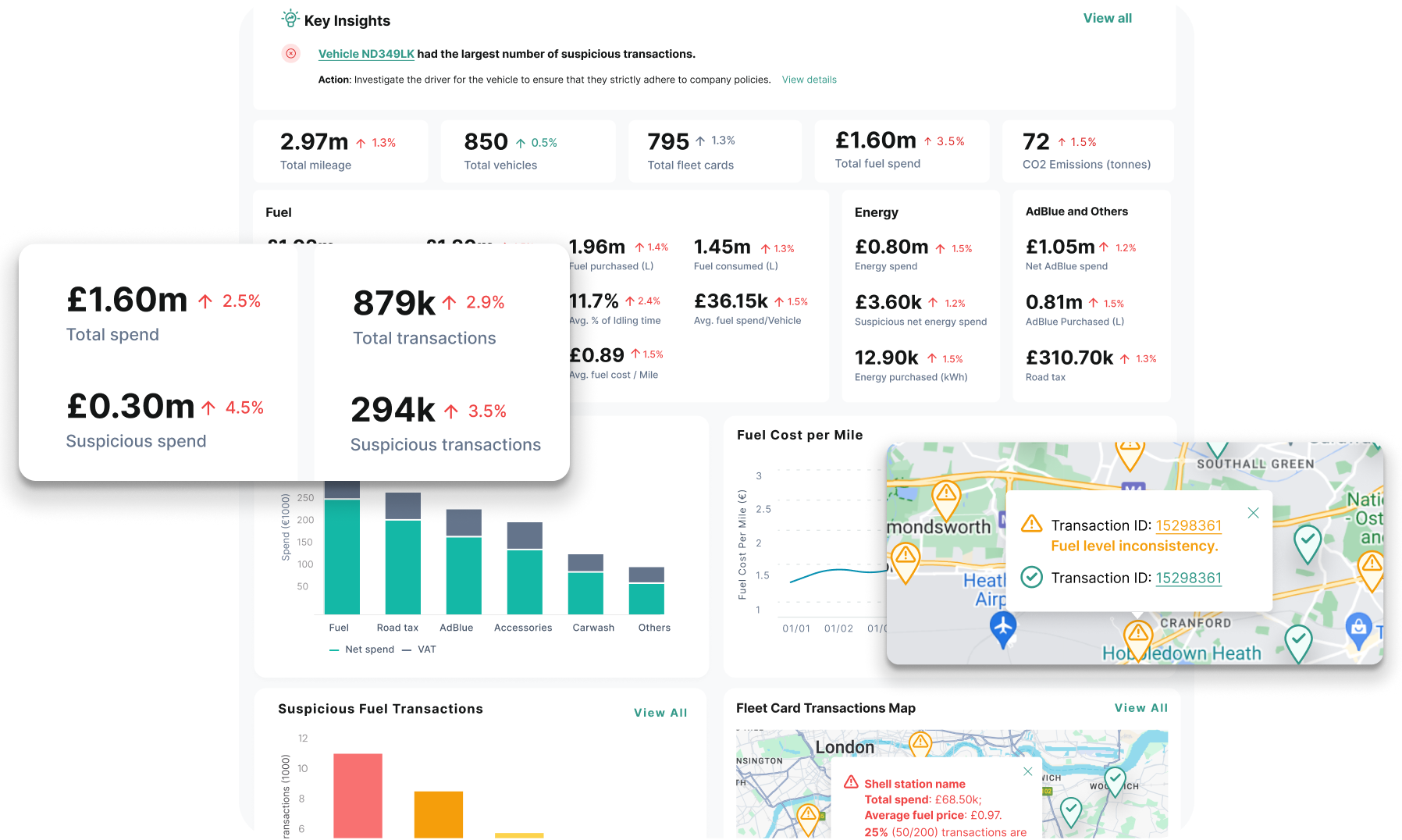
Fleevo captures every PCN and fine automatically, attributes it to the right driver and vehicle by cross-referencing telematics, and tracks each one to resolution with a full audit trail, so the 14-day discount window is protected and nothing slips through. It also surfaces the hotspots and repeat patterns behind your fines, so you can prevent them, not just pay them. Explore Fleet PCN and Fines Management, read how to automate PCN admin and boost compliance, or how to challenge a fleet PCN.
PCN FAQs
What is the difference between a PCN and a parking charge notice?
A PCN (Penalty Charge Notice) is a statutory fine issued by a local council for a parking or traffic contravention. A parking charge notice is issued by a private parking company and is a contractual charge, not a statutory fine. They follow different rules and appeal processes.
How long do you have to pay a PCN?
Most council PCNs offer a 50% discount if paid within 14 days. After that the full amount is due, and the charge escalates if it stays unpaid. For fleets, acting inside the 14-day window is the single biggest way to cut PCN costs.
How do fleets manage PCNs across many vehicles?
By capturing every notice as it arrives, attributing it to a driver and vehicle using telematics, and tracking deadlines and appeals in one place, rather than reconciling paper notices by hand. Software like Fleevo automates the capture, attribution, and tracking.