
For a fleet, the hard part of a PCN isn't paying it, it's deciding which ones to pay. Wave every notice through and you absorb charges you could have overturned. Ignore the wrong one and a £70 penalty quietly becomes a court-enforced debt with an enforcement agent attached. The difference between those outcomes is understanding the process: the stages a challenge moves through, the grounds that actually hold up, and the deadline sitting on each step.
This is a plain-English guide to how a council PCN challenge works in England and Wales, and where fleets tend to lose winnable cases. It covers civil Penalty Charge Notices issued by local authorities and Transport for London, not police-enforced offences like speeding, which follow a separate route (see who is liable for a PCN).
The Stages of a PCN Challenge
A council PCN doesn't go straight to an appeal tribunal. It moves through defined stages, and you can only reach the next one after the previous one is exhausted.
- Informal challenge. For a notice affixed to the vehicle on-street, you can make an informal challenge to the issuing authority before a formal Notice to Owner is served. Get it right here and the whole thing ends early.
- Notice to Owner (NtO). If the charge is unpaid and unchallenged, the authority serves an NtO on the registered keeper, which for a fleet is almost always the company. This is the formal start of the keeper's liability.
- Formal representations. You have 28 days from the NtO to make formal representations to the authority on specific statutory grounds. Councils can take up to 56 days to respond for parking contraventions, and often longer for bus-lane and moving-traffic notices.
- Notice of Rejection. If the authority rejects your representations, it issues a Notice of Rejection, which tells you how to pay and how to appeal further.
- Independent adjudicator. You then have 28 days to appeal to the independent tribunal, the Traffic Penalty Tribunal in England and Wales outside London, or London Tribunals within London. An adjudicator, not the council, decides the case on the evidence from both sides.
The Grounds That Actually Hold Up
A challenge succeeds on grounds, not on annoyance. Formal representations have to rest on a defined statutory basis. The ones most relevant to fleets are:
- The contravention didn't occur, for example the vehicle was not where the notice claims, or was permitted to be there.
- You were not the owner or keeper at the time of the contravention, which matters when vehicles change hands or come off a lease.
- The vehicle was taken without consent, such as a genuinely stolen vehicle.
- You are a hire firm with a valid hire agreement naming the hirer who accepted liability, which shifts responsibility to them.
- The penalty exceeded the amount applicable, or the charge had already been paid.
- Procedural impropriety by the authority, or an invalid underlying traffic order.
"The driver didn't realise" is not a ground. The value of a fleet's data is that it can support the grounds that are, above all a contravention that didn't occur, with location and timing evidence rather than an assertion.
The Evidence to Have Ready
Fleets lose more winnable challenges on weak evidence than on weak grounds. The time to assemble it is when the notice arrives, not when the deadline is a day away. Depending on the ground, that means:
- Telematics position and timestamp for the vehicle at the moment of the alleged contravention. This is the single strongest exhibit, because it either supports "the contravention didn't occur" outright or tells you not to waste time challenging.
- Dated photographs of the location and signage, where signage validity or a loading restriction is in question.
- The permit, ticket or exemption, with proof it was valid on that date.
- The hire or lease agreement, where liability sits with a hirer or the vehicle had come off a lease.
- Proof of the disposal or acquisition date, where you were not the keeper at the time.
- Delivery or job records showing the vehicle was engaged in loading, where that is the basis of the challenge.
When Not to Challenge
Challenging everything costs more in admin time than it recovers, and it trains your team to treat the process as a formality. A workable rule: challenge where you hold objective evidence that contradicts the notice, or where a procedural defect is visible on the paperwork. Pay at the discount where the contravention plainly occurred and the evidence confirms it.
Track the outcomes by contravention type. After a couple of quarters you will know which categories are worth contesting in your own operation and which are not, and the decision stops being a judgement call on every single notice.
What Happens If You Ignore It
Leaving a PCN unpaid and unchallenged doesn't make it go away, it makes it grow and then hands it to the courts.
- Charge Certificate. If nothing is paid or challenged in time, the authority issues a Charge Certificate and the penalty increases by 50%.
- Order for Recovery. The charge is registered as a debt at the Traffic Enforcement Centre. At this stage liability can only be challenged in narrow circumstances, by witness statement, and that must be returned within 21 days of the Order being served.
- Enforcement. If still unpaid, the authority can obtain a warrant and instruct enforcement agents to recover the debt, with their fees added on top.
For a single vehicle this is a bad day. Across a fleet, a handful of notices lost in the post can turn into several escalated debts at once, each larger than the original charge and far harder to unwind.
Why Fleets Lose Winnable Challenges
Most fleets don't lose challenges on the merits. They lose them on the clock and the evidence. A genuinely unfair notice goes unchallenged because it surfaced after the 28-day representation window had closed. A defensible case falls apart because nobody could produce, quickly, where the vehicle actually was at the time on the notice. And the routine notices that should simply be paid drift past the 14-day discount before anyone opens the envelope.
Getting this right at scale isn't about legal expertise on every notice. It's about capturing each one the moment it arrives, knowing instantly which vehicle and driver it belongs to, and having the location and timing evidence ready before the deadline, so the decision to pay or challenge is made on facts, in time, every time.
#1 AI-powered fleet spend control platform
Ready to Stop Losing Money on Fleet Spend?
See how much you could save in the first week. Start your free trial today. Cancel anytime.
How Fleevo Helps You Challenge and Track PCNs
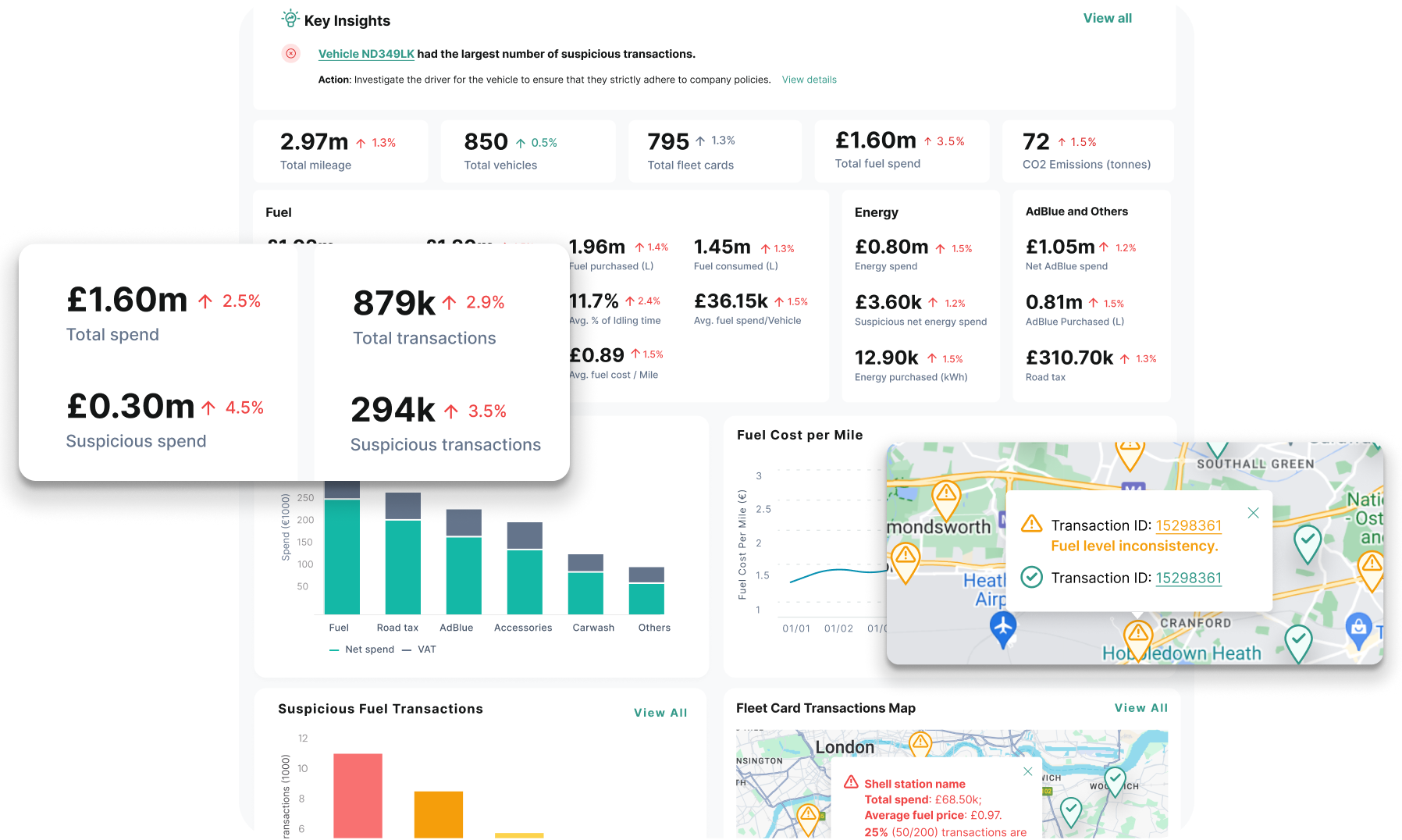
Fleevo captures every PCN as it arrives and matches it to the vehicle, time, and assigned driver using your telematics data, so you can see straight away whether a notice is worth challenging and produce the location and timing evidence to support it. Each notice is tracked against its own deadlines, the 14-day discount, the 28-day representation window, the appeal window, with a full audit trail, so winnable cases get challenged in time and routine ones get paid before they escalate. Explore Fleet PCN and Fines Management, or read what a PCN actually is and how to stop penalties eating your margin.
Challenging a Fleet PCN: FAQs
How long do you have to challenge a PCN?
You generally have 28 days from the Notice to Owner to make formal representations to the authority. If those are rejected, you then have 28 days from the Notice of Rejection to appeal to the independent adjudicator. The 50% early-payment discount, separately, usually applies only in the first 14 days.
Who decides a PCN appeal?
After the issuing authority has rejected your formal representations, the appeal is decided by an independent adjudicator, at the Traffic Penalty Tribunal in England and Wales outside London, or London Tribunals within London, not by the council itself.
What are valid grounds to challenge a PCN?
Statutory grounds include that the contravention did not occur, you were not the vehicle's owner or keeper at the time, the vehicle was taken without consent, a valid hire agreement transfers liability to a hirer, the penalty exceeded the applicable amount or was already paid, or there was procedural impropriety by the authority. General dissatisfaction is not a ground.
What happens if a fleet ignores a PCN?
The authority can issue a Charge Certificate increasing the penalty by 50%, then register the debt at the Traffic Enforcement Centre via an Order for Recovery, and ultimately instruct enforcement agents, adding their fees. Ignoring notices is the most expensive way to handle them.
This is general information, not legal advice. The exact process and deadlines can vary by contravention type and authority, so confirm anything case-specific with your own legal or compliance advisor.