
Fuel and maintenance get the attention, but penalties are the quiet drain on fleet budgets. A single PCN is a nuisance; hundreds a year, each risking a late-payment surcharge, become a line item nobody planned for — and one that's almost entirely avoidable with the right process. Here's how to get PCNs and fines under control.
What is Fleet PCN & Fines Management?
Fleet PCN and fines management is the process of tracking, allocating, contesting, and paying the penalties a fleet incurs — Penalty Charge Notices (PCNs), parking fines, congestion and clean-air-zone charges, tolls, and traffic violations — before they escalate. Done well, it turns a stream of unpredictable, deadline-driven paperwork into a managed, minimised cost. Done badly, it means missed deadlines, doubled charges, and penalties absorbed rather than challenged.
The Real Cost of Poorly Managed Penalties
The headline charge is only part of it. Left unmanaged, penalties cost fleets in four ways:
- Late-payment surcharges: miss the discount window and many PCNs double.
- Uncontested unfair charges: valid appeals never get filed because no one has time.
- Unallocated liability: charges the fleet swallows instead of assigning to the responsible driver.
- Admin overhead: staff hours spent opening post, identifying vehicles, and chasing deadlines.
How to Manage Fleet PCNs and Fines
- Centralise every notice
Get all penalties — parking, congestion, tolls, violations — into one place instead of scattered across depots, inboxes, and desks. - Identify the vehicle and driver automatically
Match each notice to the vehicle and, using telematics and rotas, the driver responsible at the time — the basis for both allocation and appeals. - Never miss a deadline
Track discount windows and appeal deadlines so charges are paid in the discount period or contested in time, never left to surcharge. - Contest what's worth contesting
Flag notices with grounds for appeal — wrong vehicle, unclear signage, already paid — so valid challenges actually get filed. For the full process, see how to challenge a fleet PCN. - Spot the patterns
Recurring penalties at the same location or from the same route signal a fixable operational problem, not just a cost to pay.
Recharging Fines to Drivers: What's Fair
For a civil PCN the registered keeper is liable, which for a fleet means the company pays first. Whether you then recover the cost from the driver is an internal matter, not a legal transfer, so it has to be provided for in the employment terms or driver handbook and applied consistently. Recharging case by case, decided in the moment, is how a cost-recovery policy turns into a grievance.
The workable line to draw in advance is between contraventions within the driver's control and those that were not. A bus-lane or moving-traffic contravention on a clearly signed route is within control. A parking contravention incurred while making a delivery with no legal option available is an operational cost of the route, not a driver failing, and recharging it simply pushes drivers to park further away and take longer. Deciding which contraventions fall on which side of that line, and writing it down, is what makes the conversation with a driver defensible rather than arbitrary.
Two practical rules keep it fair: never recharge on an unverified allocation, because a fine attributed to the wrong driver by a guess destroys trust in the whole scheme; and give drivers a route to query a recharge, since some allocations will be wrong and the ones that are need to be correctable without a fight.
#1 AI-powered fleet spend control platform
Ready to Stop Losing Money on Fleet Spend?
See how much you could save in the first week. Start your free trial today. Cancel anytime.
How Fleevo Manages PCNs and Fines
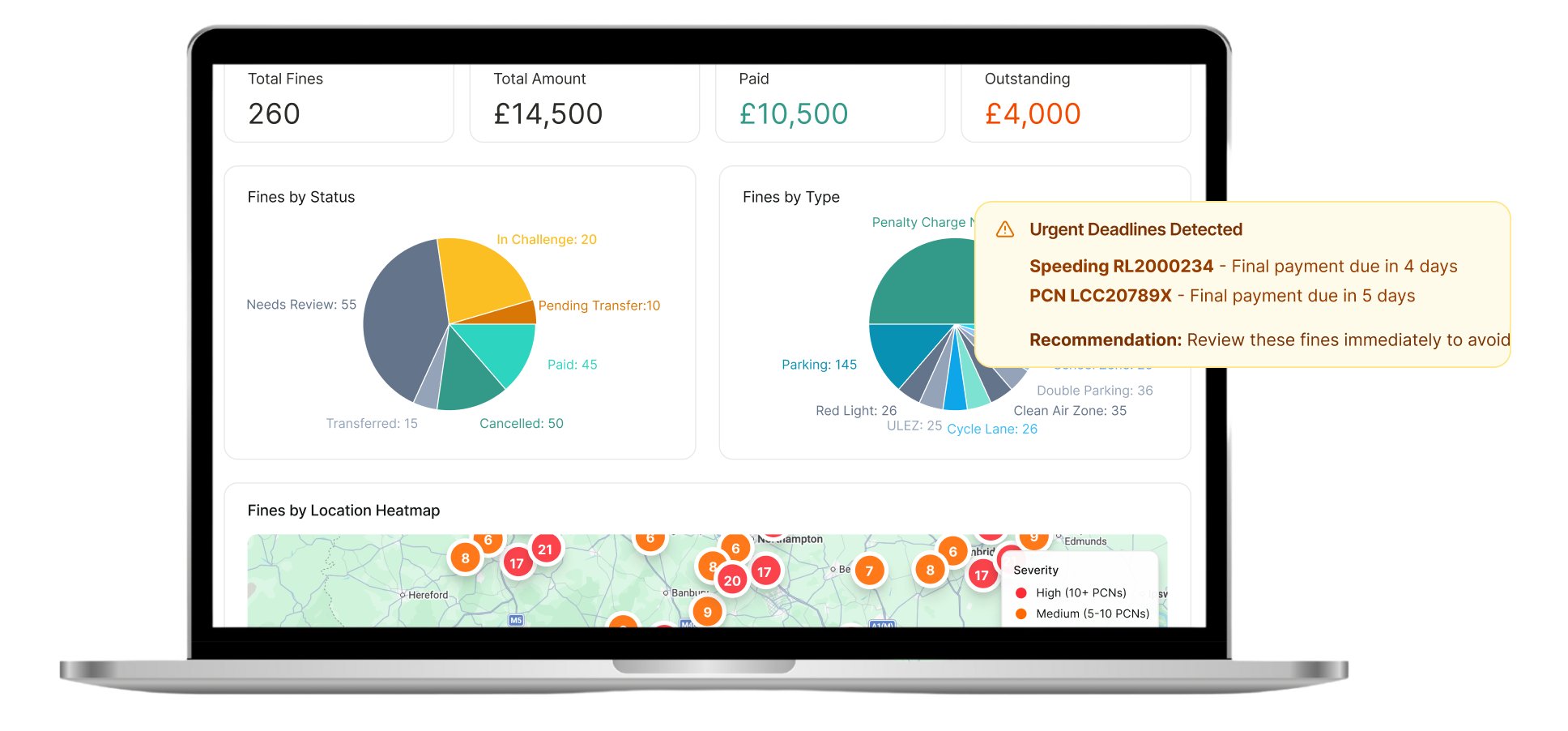
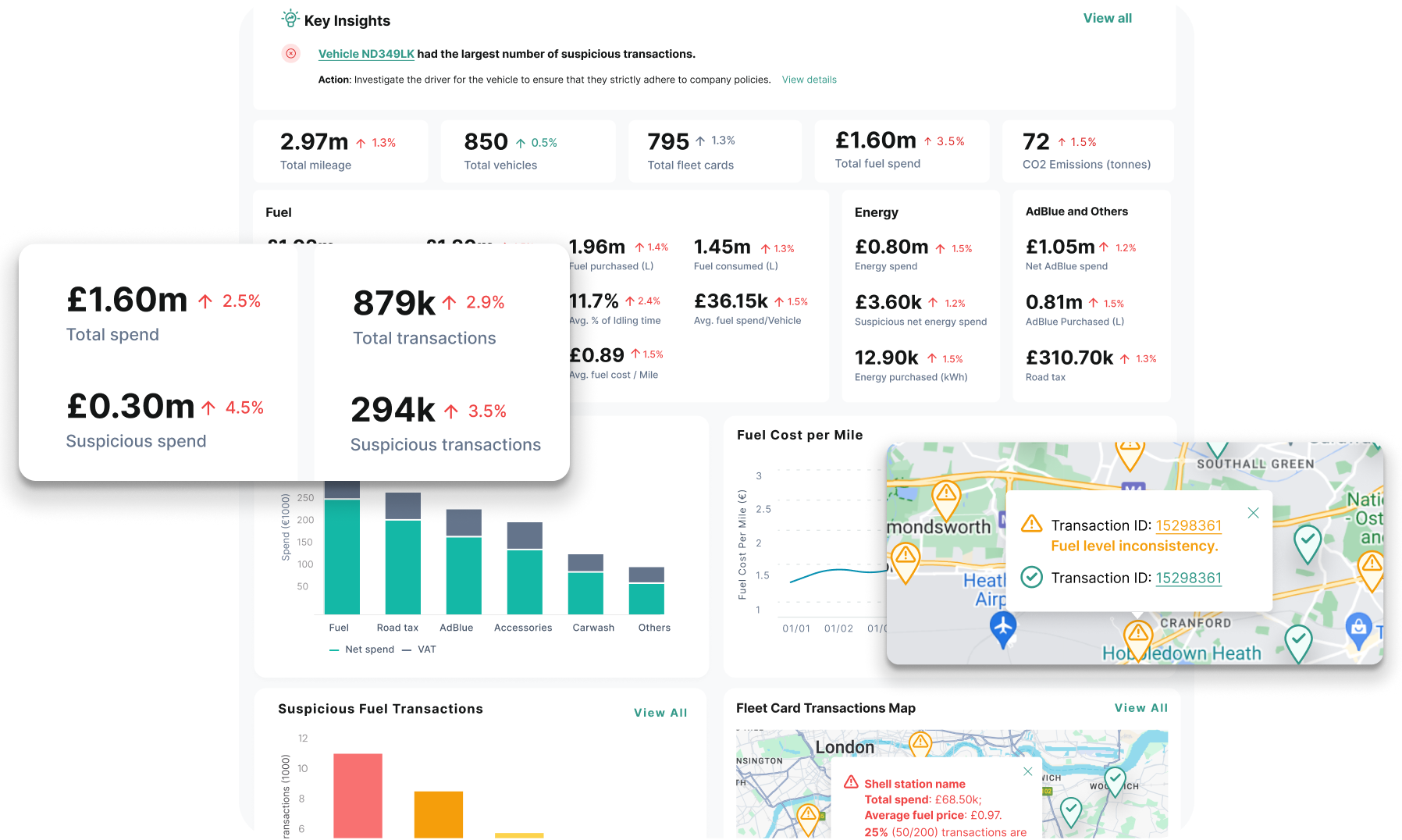
Fleevo's PCNs & Fines Management brings every penalty into one place, matches each to the vehicle and driver using your telematics and records, and tracks deadlines so nothing slips into a surcharge. Penalties sit alongside your fuel, maintenance, and telematics data in one platform, so you can spot hotspots, allocate liability fairly, and fold fines into your true total cost of ownership. Because each notice is matched to the driver on verified telematics evidence rather than a rota guess, any recharge rests on something a driver cannot reasonably dispute. It's part of Fleevo's wider fleet spend control across fuel, maintenance, and compliance.
Fleet PCN & Fines FAQs
What is a PCN in fleet management?
A Penalty Charge Notice (PCN) is a fine issued for a parking, traffic, or road-charge contravention. For fleets, PCNs also encompass congestion and clean-air-zone charges, tolls, and traffic violations — all of which need tracking, allocating, and paying or contesting on deadline.
How do you reduce fleet fines?
Centralise every notice, match it to the responsible vehicle and driver, hit discount deadlines, contest unfair charges, and analyse recurring penalties to fix the operational causes — rather than absorbing each fine as it lands.
Can fleet penalties be allocated to drivers?
Yes. By matching each notice to the vehicle and, via telematics and rotas, the driver at the time, fleets can allocate liability fairly and accurately — which is also the foundation for any appeal.
Can a company recharge a PCN to the driver?
For a civil PCN the company is the liable keeper and pays first, so recovering the cost from the driver is an internal contractual matter rather than a legal transfer. It needs to be set out in the employment terms or driver handbook, applied consistently, and based on a verified allocation. The fair approach distinguishes contraventions within the driver's control from operational ones incurred with no legal alternative, and gives drivers a route to query a recharge.
Bottom line: penalties are one of the most avoidable fleet costs. Centralise them, match them to vehicle and driver, never miss a deadline, and contest what's unfair — and a chaotic stream of paperwork becomes a managed, minimised line item.
Explore the platform: PCNs & Fines Management · Compliance & Audit Readiness
Related: How to Challenge a Fleet PCN: Stages, Grounds, and Deadlines.