
Most fleets don't have a data problem — they have a data scatter problem. Fuel spend lives in a card portal, mileage in a telematics system, repairs in a shop's records, and costs in a finance spreadsheet. Each system is fine on its own; the gaps between them are where money leaks and decisions stall. Fleet data integration closes those gaps.
What is Fleet Data Integration?
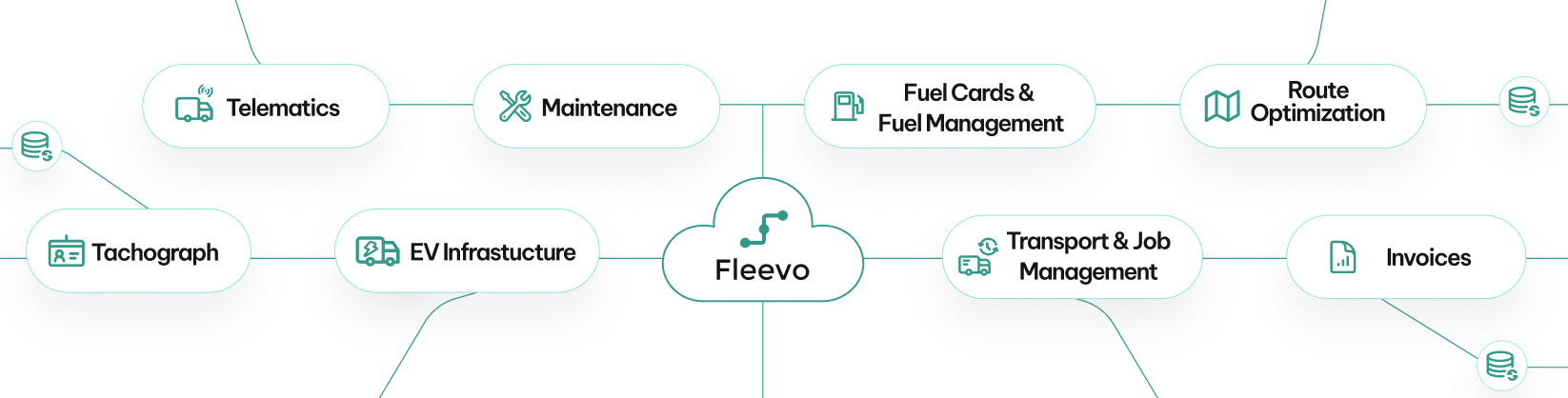
Fleet data integration is the practice of connecting the separate systems a fleet runs on — fuel cards, telematics, fuel tanks, maintenance, and finance — into a single, unified view. Instead of logging into five portals and reconciling by hand, integrated data flows automatically into one platform where every record can be cross-referenced against every other.
It's the foundation everything else depends on: you can't audit fuel without matching card data to vehicle location, you can't calculate true TCO without joining fuel, maintenance, and finance, and you can't detect fraud without both the transaction and the vehicle behind it.
Which Systems Should a Fleet Integrate?
- Fuel cards: transaction-level spend — site, time, gallons, fuel type, cost.
- Telematics: GPS location, odometer, engine hours, fuel level, fault codes.
- Onsite fuel tanks: depot dispensing and tank-level data.
- Maintenance systems: service records, repair invoices, parts costs.
- Compliance: DOT inspections, driver hours, and safety records.
- Finance: leasing, insurance, depreciation, and tax data.
Why Fleet Data Integration Matters
- It makes auditing possible. A fuel transaction is just a number until it's checked against where the vehicle actually was. Integration turns raw records into verifiable events.
- It kills manual reconciliation. The hours spent exporting CSVs and matching spreadsheets disappear — along with the errors that process introduces.
- It surfaces the full cost picture. Cost-per-mile, TCO, and spend-per-driver only exist once fuel, maintenance, and finance data sit together.
- It catches what silos hide. Fraud, overbilling, and waste live in the gaps between systems — exactly where no single portal is looking.
Integration vs Manual Data Entry
Many fleets still “integrate” by hand: someone exports the fuel report, downloads the telematics log, and reconciles them in a spreadsheet once a month. It works, barely — but it's slow, error-prone, and always looking backwards. True integration is automatic and continuous: data flows in as it's generated, and checks run in real time, so problems surface as they happen rather than at month-end.
#1 AI-powered fleet spend control platform
Ready to Stop Losing Money on Fleet Spend?
See how much you could save in the first week. Start your free trial today. Cancel anytime.
How Fleevo Integrates Your Fleet Data
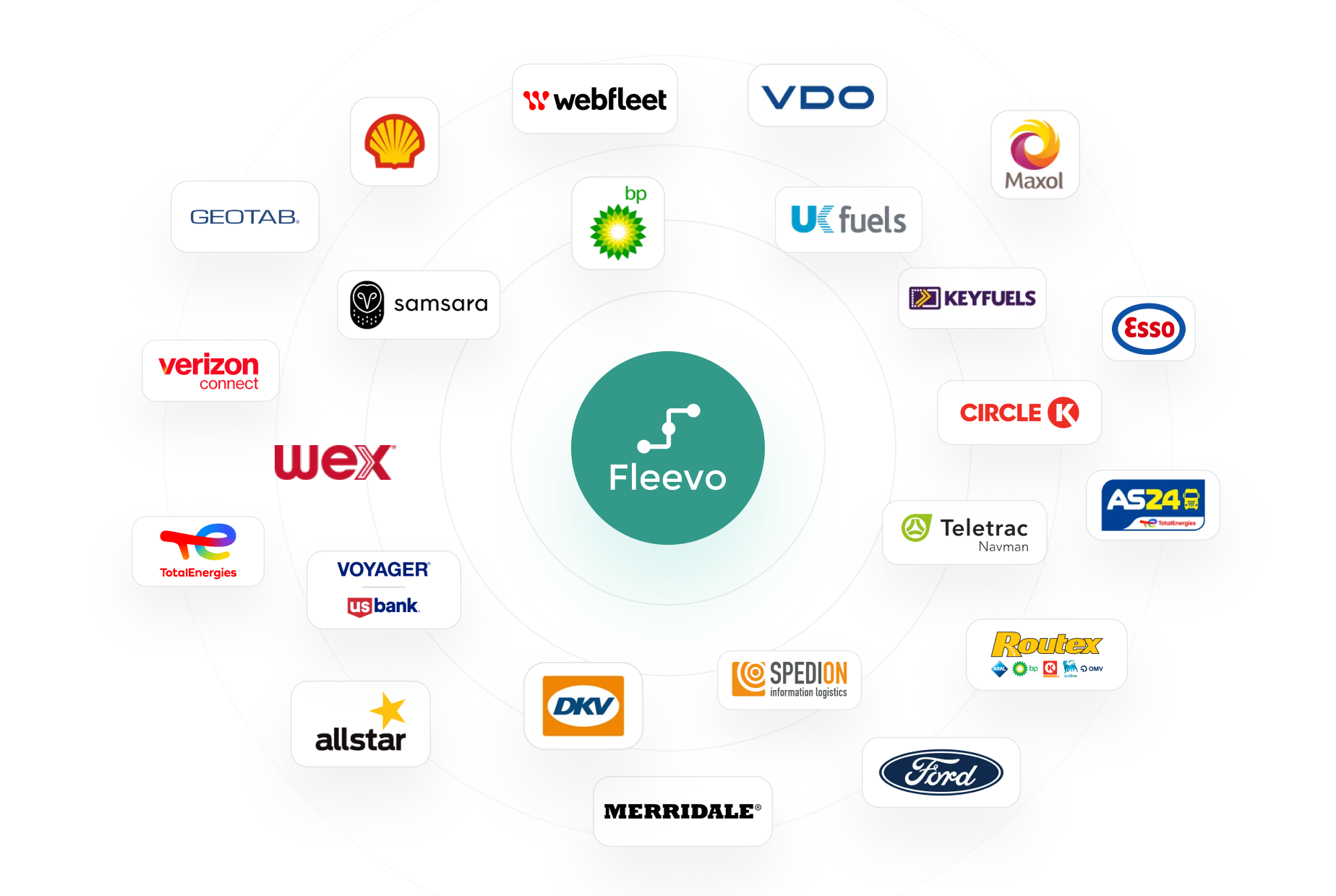
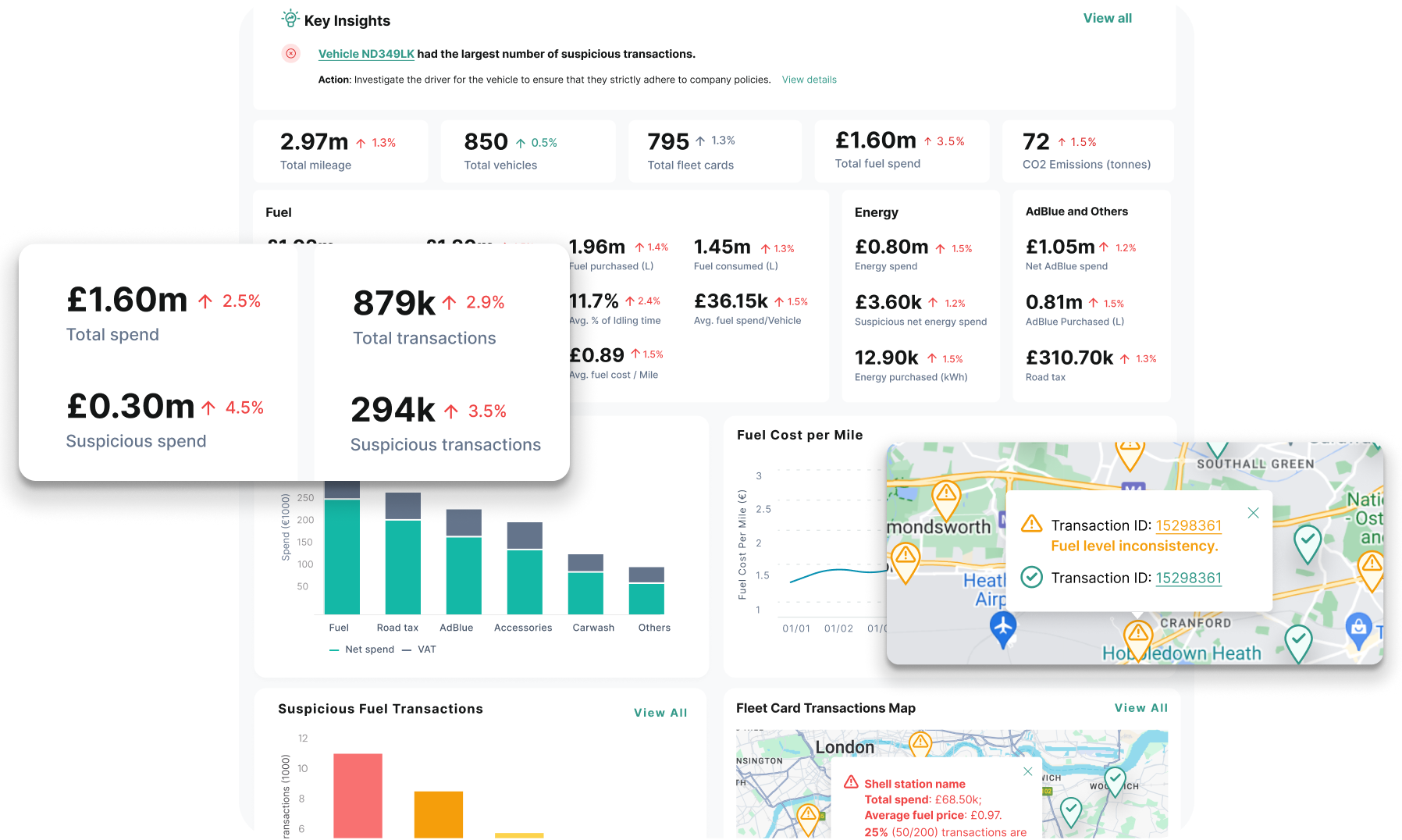
Fleevo connects 40+ fuel cards, telematics providers, fuel tank systems, and compliance tools — Shell, WEX, Voyager, BP, Geotab, Samsara, Verizon Connect, and more — into one AI-powered platform, with no new hardware. Once connected, every transaction is automatically cross-referenced against vehicle data to detect fuel fraud, flag maintenance overbilling, and produce a live TCO picture. Custom checks can be described in plain English, and reporting is audit- and emissions-ready. See how Lanes Group gained transparency by integrating their fleet data with Fleevo.
Fleet Data Integration FAQs
What does fleet data integration actually connect?
Typically fuel cards, telematics, onsite fuel tanks, maintenance systems, compliance records, and finance data — unified so records from each can be cross-referenced against the others in one platform.
Do I need new hardware to integrate my fleet data?
No. Integration works through your existing systems' data connections — the telematics devices and fuel cards you already use. Platforms like Fleevo connect via secure APIs, not new hardware.
What's the benefit of integrating fleet data?
It enables automated fuel auditing, fraud detection, accurate TCO, and the elimination of manual reconciliation — none of which are possible while data sits in separate silos.
Bottom line: fleet data integration is the foundation of spend control. Connect the systems, and auditing, fraud detection, and true-cost visibility follow — leave them siloed, and every one of those stays out of reach.
Explore the platform: All Integrations · Fuel & Energy Management