
Maintenance is one of the largest costs in any fleet — and one of the most controllable, if you know where the waste is. Cutting it isn't about deferring servicing or using cheaper parts (both of which cost more later); it's about eliminating unnecessary work, unfair charges, and preventable failures. Here's how fleets reduce maintenance spend without cutting corners.
Where Fleet Maintenance Money Actually Goes
Before cutting cost, it helps to see where it leaks:
- Reactive repairs: breakdowns that preventive servicing would have avoided — the most expensive way to maintain a fleet.
- Overbilling: phantom repairs, padded labor, and unnecessary work.
- Over-servicing: calendar-based schedules servicing vehicles that barely move.
- Downtime: the hidden cost of a vehicle off the road.
- No benchmarking: paying different suppliers wildly different rates for the same job without noticing.
How to Reduce Maintenance Costs
- Shift from reactive to preventive
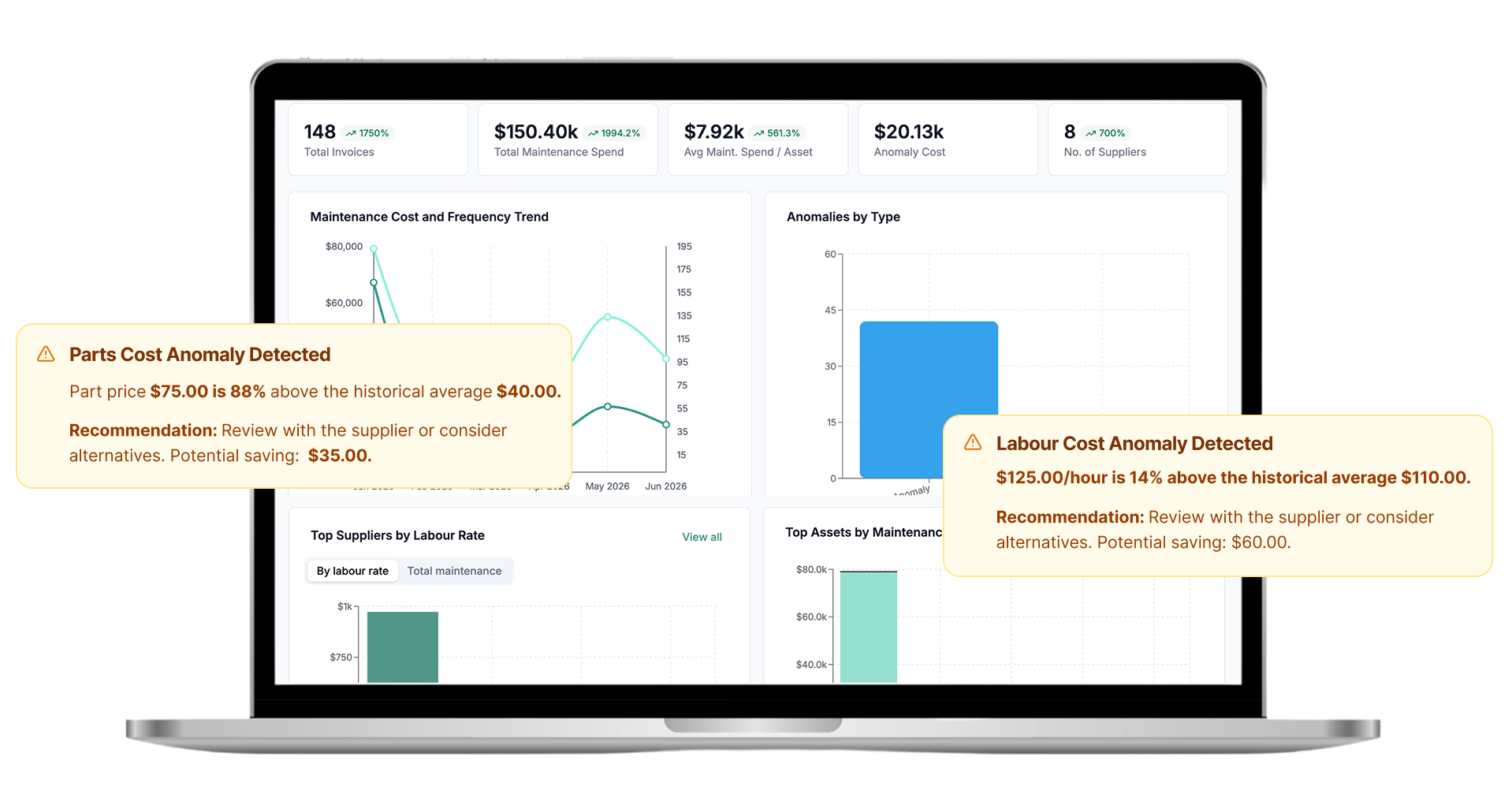
Preventive maintenance scheduled by real vehicle use prevents the breakdowns that dominate repair budgets. - Catch overbilling
Check invoices against service history and mileage to stop paying for work that wasn't needed or done. - Service by usage, not calendar
Time each service to actual mileage and engine hours so you're not over-servicing low-use vehicles. - Benchmark suppliers
Compare labor rates and parts prices across shops; consistent outliers are costing you. - Track cost per vehicle
Cost-per-mile by vehicle surfaces the assets that are cheaper to replace than keep repairing.
Cutting Cost vs Cutting Corners
The distinction matters. Deferring necessary servicing or fitting sub-standard parts reduces this month's invoice and increases next quarter's — usually with a breakdown attached. Real cost reduction removes waste: work that wasn't needed, charges that weren't fair, and failures that were preventable. Safety and compliance stay intact; only the waste goes.
#1 AI-powered fleet spend control platform
Ready to Stop Losing Money on Fleet Spend?
See how much you could save in the first week. Start your free trial today. Cancel anytime.
How Fleevo Cuts Maintenance Spend
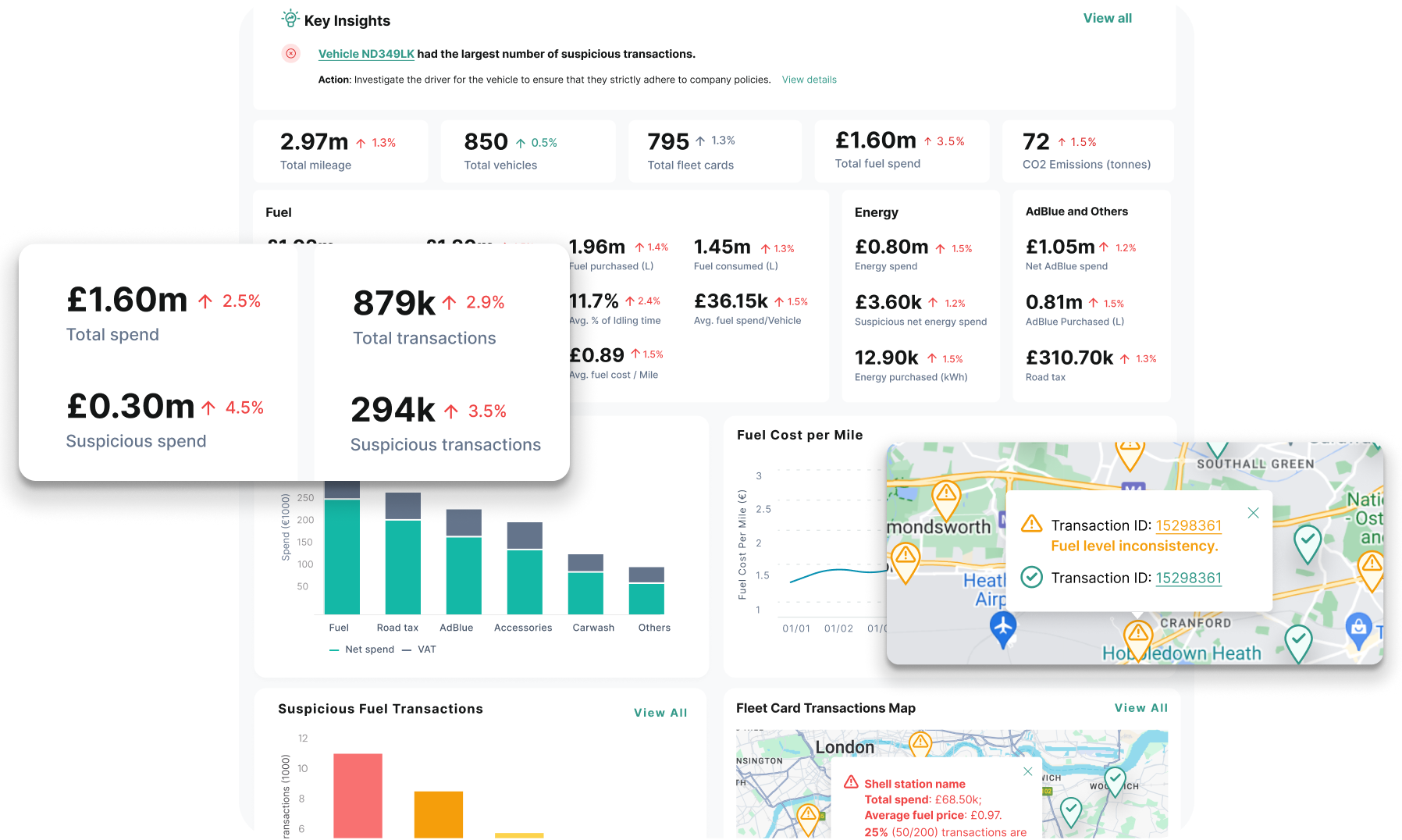
Fleevo unifies your maintenance invoices, telematics, and vehicle records in one platform — scheduling preventive work by real mileage, flagging overbilling against service history, benchmarking supplier costs, and tracking cost per vehicle. It turns maintenance from a bill you pay into a cost you control, and folds it into your true total cost of ownership. It's part of Fleevo's Maintenance Spend Control.
Reducing Maintenance Costs FAQs
What's the biggest driver of fleet maintenance cost?
Reactive repairs — fixing vehicles after they break rather than servicing them before — are usually the largest and most avoidable cost, followed by overbilling and over-servicing.
How can I cut maintenance costs without risking safety?
Target waste, not necessary work: prevent breakdowns with usage-based servicing, catch overbilling, and benchmark suppliers. Deferring genuine maintenance or using inferior parts costs more later — real savings come from eliminating unnecessary spend.
How much can fleets save on maintenance?
It varies by fleet, but the combination of fewer reactive repairs, eliminated overbilling, and right-sized servicing intervals typically removes a meaningful share of maintenance spend — without touching safety or compliance.
Bottom line: cutting maintenance cost isn't about spending less on necessary work — it's about eliminating reactive repairs, overbilling, and over-servicing. Do that with data, and spend falls while reliability rises.
Explore the platform: Maintenance Spend Control · Fleet TCO