
Fuel fraud gets the headlines, but maintenance overbilling is just as costly and far easier to miss. When an invoice arrives from a shop, most fleets pay it — there's rarely time to check whether the work was needed, done, or fairly priced. That gap is exactly where overbilling lives. Here's how to catch it.
What is Maintenance Overbilling?
Maintenance overbilling is being charged for work that wasn't necessary, wasn't done, or was priced above fair market rates. It's rarely dramatic fraud — more often small, plausible padding that adds up across a fleet's servicing and repair spend over a year.
The Most Common Forms of Overbilling
- Phantom repairs: work billed but never carried out.
- Parts charged but not fitted, or cheaper parts billed as premium.
- Inflated labor hours: more time billed than the job takes.
- Unnecessary work: services or replacements done before they were due.
- Duplicate charges: the same work billed twice, or across two visits.
- Above-market pricing: rates well above the norm for the job.
How to Spot Maintenance Overbilling
- Check invoices against service history
Was this work already done recently? A brake job billed twice in three months is a red flag. - Match work to real mileage
Services billed before the vehicle reached the interval — or repairs inconsistent with how the vehicle is actually used — warrant a question. - Benchmark cost per job
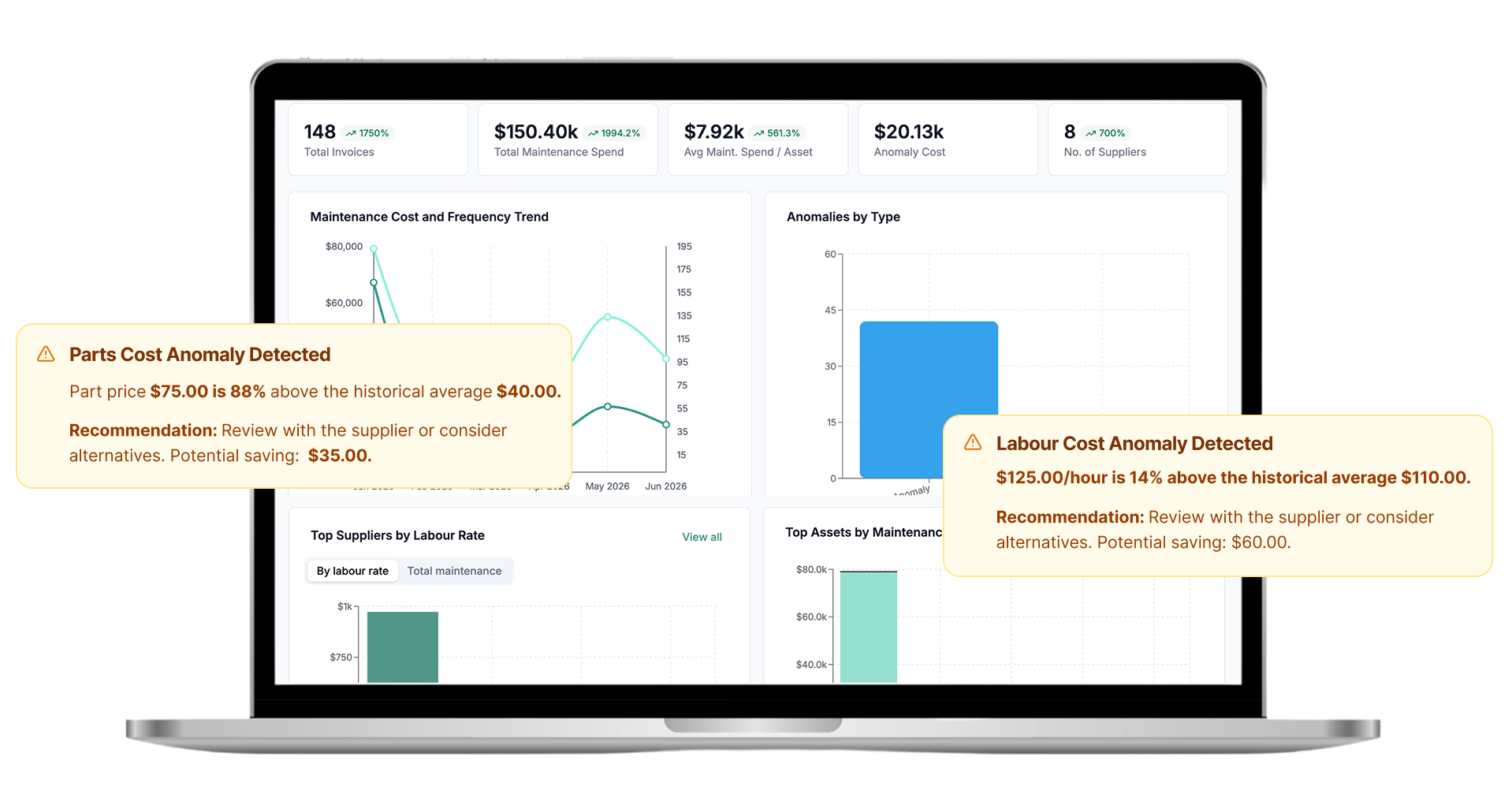
Compare labor hours and parts prices across suppliers and vehicles; consistent outliers signal a supplier worth scrutinizing. - Watch cost per vehicle over time
A vehicle whose maintenance spend drifts above similar vehicles is either faulty or being overserviced — both worth investigating. - Centralize invoices
Overbilling hides when invoices sit in separate inboxes and locations; one view makes patterns visible.
#1 AI-powered fleet spend control platform
Ready to Stop Losing Money on Fleet Spend?
See how much you could save in the first week. Start your free trial today. Cancel anytime.
How Fleevo Detects Maintenance Overbilling
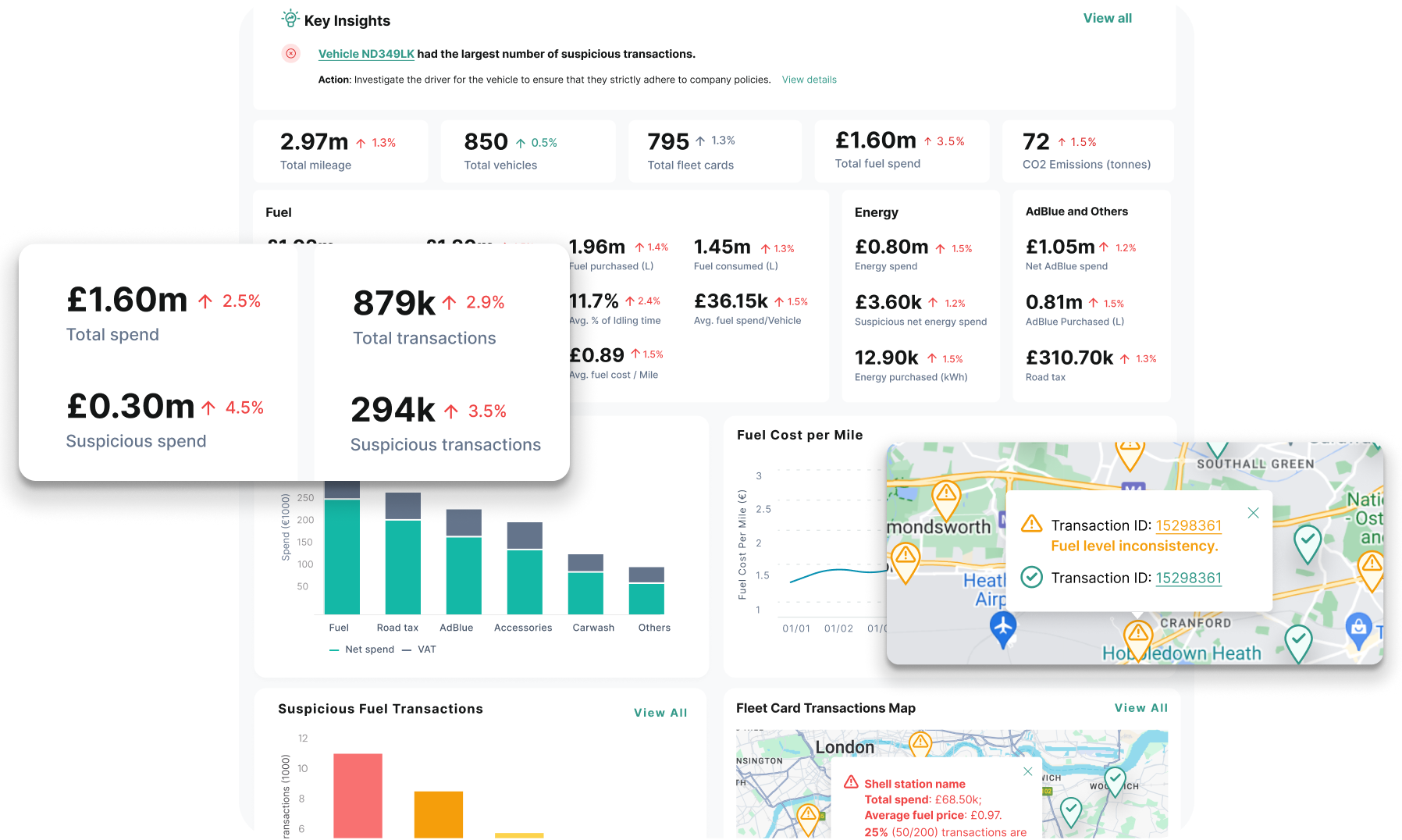
Fleevo brings your maintenance invoices together with telematics and vehicle records, checking each charge against the vehicle's real service history and mileage — flagging duplicate work, services billed before they were due, and cost outliers across suppliers. Maintenance spend sits alongside fuel and other costs in one audited view, so overbilling surfaces automatically instead of being paid by default. It's part of Fleevo's Maintenance Spend Control.
Maintenance Overbilling FAQs
How common is maintenance overbilling in fleets?
More common than most operators realize — rarely outright fraud, usually small padding (extra labor hours, unnecessary work, premium parts) that adds up across a fleet's annual maintenance spend when no one checks invoices against the vehicle's actual history.
How do you check if a shop is overcharging?
Match each invoice against the vehicle's service history and real mileage, benchmark labor and parts costs across suppliers, and watch cost-per-vehicle trends. Charges that don't fit the vehicle's usage or duplicate recent work are the flags.
Can maintenance overbilling be detected automatically?
Yes — by integrating invoices with telematics and service records, a platform can cross-check every charge against the vehicle's real mileage and history, flagging anomalies without manual review.
Bottom line: maintenance overbilling survives on not being checked. Match every invoice to the vehicle's real history and mileage, benchmark costs, and centralize the data — and padded, phantom, and unnecessary charges stop being paid by default.
Related: see how AI anomaly detection catches labor-rate and part-price overbilling.
Explore the platform: Maintenance Spend Control · Fleet TCO