
You negotiate labor rates and part prices with your suppliers — then the invoices arrive, and no one has time to check each one against what was agreed. That gap is where maintenance overbilling lives: a labor rate a few dollars above the agreed figure, a part priced above the contracted rate, repeated quietly across hundreds of invoices a year. AI anomaly detection closes it by checking every invoice automatically. Here's how it works.
Why Labor Rates and Part Prices Are Hard to Police
Maintenance invoices are detailed and frequent, and the overcharges are individually small — which is exactly why they slip through. A fleet running dozens of vehicles across multiple suppliers might see thousands of line items a year. Checking each labor rate and part price against the agreed terms by hand is impossible, so most invoices are paid on trust. Overbilling doesn't need to be brazen to be costly; it just needs to be unchecked.
What is AI Anomaly Detection for Maintenance?
AI anomaly detection is software that automatically checks every maintenance invoice against your agreed terms and market benchmarks, and flags anything that doesn't match — a labor rate above the contracted figure, a part priced above the agreed or benchmark rate, a quantity or job that doesn't fit the vehicle. Instead of spot-checking a handful of invoices, every line item is checked, every time.
Two Ways It Catches Overbilling
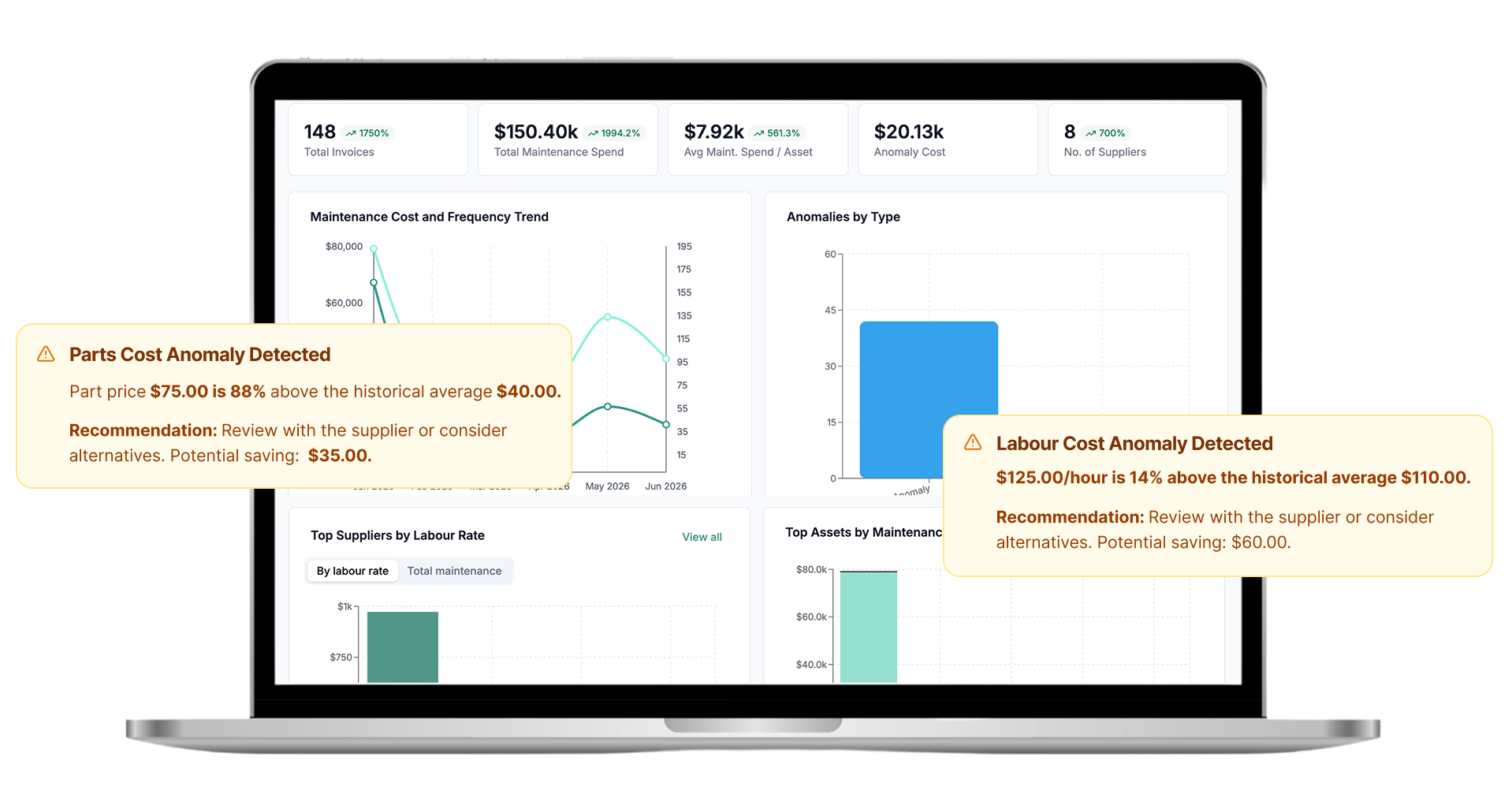
1. Automatic invoice-to-job matching against benchmarks. When an invoice arrives, Fleevo matches it to the relevant maintenance job and checks each charge against benchmark pricing — flagging anything above the expected rate so you can challenge the supplier before you pay, not months later. For example: an invoice for brake pads and rotors on the front axle comes in at $620; Fleevo flags the parts cost as 34% above benchmark ($462), with the discrepancy shown line by line.
2. Plain-English rules you define. On top of benchmark checks, you can describe your own rules in plain language and Fleevo's AI applies them as live checks across every incoming invoice — no threshold menus, no technical setup. For example:
- “Flag any invoice where the labor rate is higher than the agreed $[X] per hour for Supplier A.”
- “Alert me when a brake pad is charged above $[Y].”
- “Flag any service billed before the vehicle reached its interval.”
It's the same plain-English rule engine that powers Fleevo's fuel fraud detection, applied to maintenance spend: if you can describe the overcharge, Fleevo can catch it.
What This Catches
- Labor rates above the agreed figure — Supplier A charging more per hour than your contract specifies.
- Part prices above agreed or benchmark rates — components billed above the negotiated or market price, or cheaper parts billed as premium.
- Inflated labor hours — more time billed than the job warrants.
- Work inconsistent with the vehicle — services billed before they were due, or repairs that don't fit the vehicle's real mileage and history.
#1 AI-powered fleet spend control platform
Ready to Stop Losing Money on Fleet Spend?
See how much you could save in the first week. Start your free trial today. Cancel anytime.
How Fleevo Detects Maintenance Overbilling
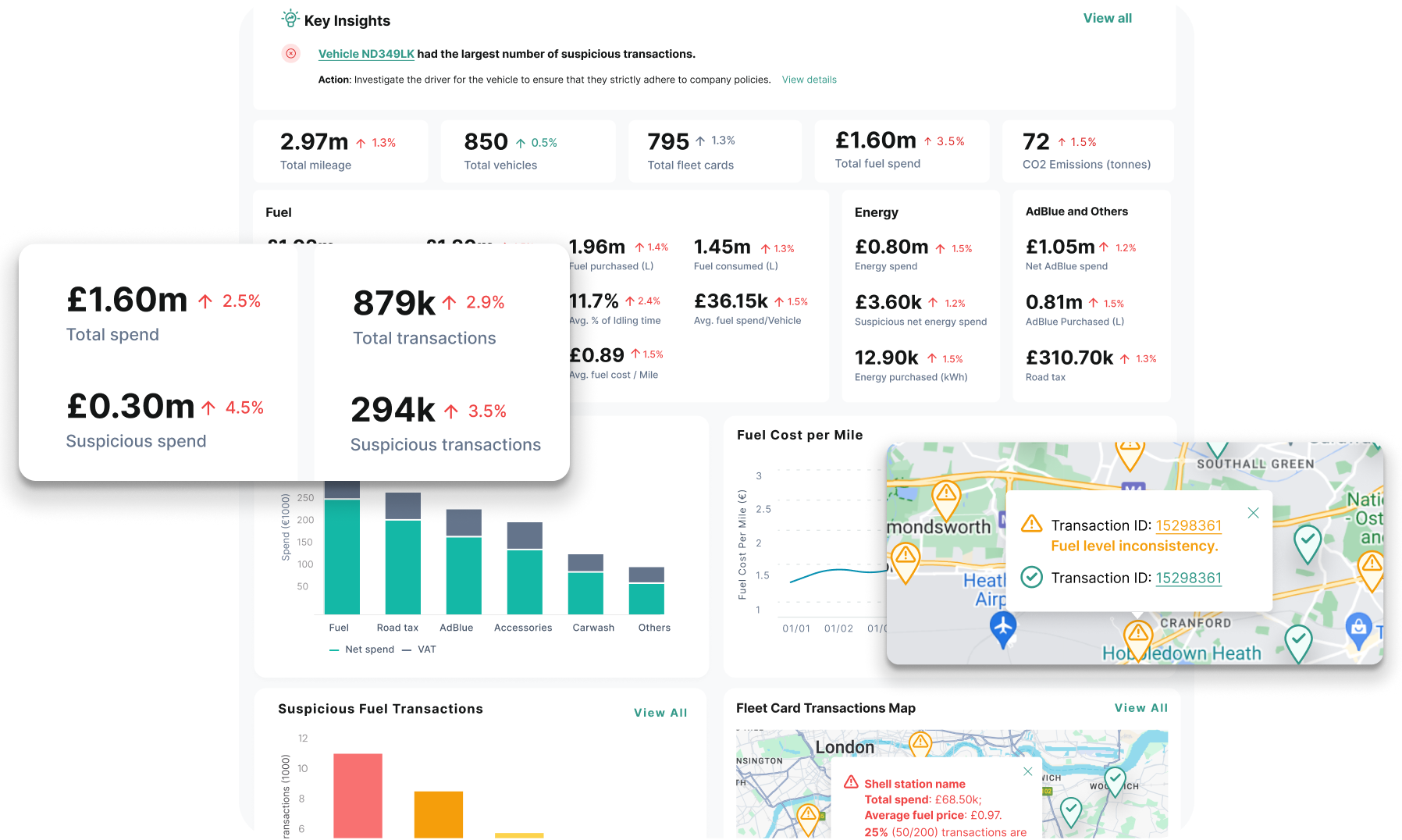
Maintenance overbilling detection is a core feature of Fleevo's Maintenance Spend Control. You set your agreed labor rates, part prices, and terms as plain-English rules, and Fleevo's AI checks every incoming invoice against them — flagging any that charge above the agreed rate, bill for work inconsistent with the vehicle, or otherwise break your terms. Because maintenance sits alongside your telematics and vehicle records, charges are also cross-checked against each vehicle's real mileage and service history. The result: overbilling is flagged automatically instead of paid by default.
AI Maintenance Anomaly Detection FAQs
How does AI detect maintenance overbilling?
By checking every invoice against your agreed terms and the vehicle's real data. With Fleevo, you describe the rule in plain English — for example, flagging any labor rate above the agreed figure for a given supplier — and the AI applies it as a live check across all incoming maintenance invoices.
Can I set my own rules for flagging invoices?
Yes. Fleevo lets you set rules in plain English, such as “flag any invoice where Supplier A's labor rate exceeds the agreed rate” or “alert me when a part is charged above $X.” The AI interprets and runs them automatically — no technical configuration.
What kinds of overcharges can it catch?
Labor rates above agreed figures, part prices above contracted rates, inflated labor hours, duplicate charges, and work inconsistent with the vehicle's mileage or service history — anything you can describe as a rule.
Bottom line: labor-rate and part-price overbilling survives because no one can check every invoice against every agreement. AI anomaly detection — driven by plain-English rules — checks all of them automatically, so charges that break your agreed terms get flagged instead of quietly paid.
Explore the platform: Maintenance Spend Control · How to Spot Maintenance Overbilling