
PCN stands for Penalty Charge Notice. It is a civil charge issued by a local authority, Transport for London or another statutory body for a parking, bus lane or moving traffic contravention. It is not criminal, carries no licence points, and liability normally rests with the registered keeper.
Fleets receive three different notices that get called the same thing in conversation. The distinction matters, because who is liable and how you must respond are different in each case.
The three types
Penalty Charge Notice (PCN). Issued by a council, TfL or similar under civil enforcement powers, for parking contraventions, bus lane contraventions, and moving traffic contraventions such as banned turns or box junction offences. Liability normally sits with the registered keeper, which for a fleet means the company. No points and no criminal record. There is a statutory challenge and appeal route that ends with an independent adjudicator.
Fixed Penalty Notice (FPN). Issued by the police for a road traffic offence. Criminal in nature, can carry licence points, and liability rests with the driver. Where the police need to establish who was driving, they can require the registered keeper to identify the driver under section 172 of the Road Traffic Act 1988. Failing to respond to that request is itself an offence and typically carries a heavier consequence than the original matter, which is why an FPN arriving at a fleet office is genuinely time critical.
Private parking charge. Issued by a private landowner or their agent for breach of the terms of a private car park. Despite frequently being labelled a PCN on the paperwork, it is not a statutory penalty at all. It is a claim for breach of contract or trespass, and it has no council appeal route. The independent appeals services run by the private parking trade bodies are the equivalent route.
Why the distinction matters operationally
Three practical consequences:
- Different deadlines. A statutory PCN has a discount period and defined windows for challenge and appeal. A section 172 request has its own short statutory deadline. A private charge follows the operator's own timetable and the relevant trade body code.
- Different liability routing. A PCN is the company's to pay or challenge. An FPN needs the driver identified. Treating an FPN like a PCN and simply paying it is not possible, and delay creates the more serious offence.
- Different appeal prospects. Statutory PCNs have well defined grounds for challenge. Private charges turn on signage, contract terms and landowner authority, which is a completely different argument.
The PCN sequence in England outside London
The exact wording and timings vary by issuing authority, so always work from the notice in front of you. The general shape is:
- PCN issued, either on the vehicle or by post for camera enforced contraventions. A reduced amount is normally available if paid within the discount period stated on the notice.
- Informal challenge may be made to the authority before the next stage.
- Notice to Owner is served if the charge remains unpaid, addressed to the registered keeper.
- Formal representations may be made against the Notice to Owner, on the statutory grounds.
- Notice of Rejection, if representations are not accepted, which opens the appeal route.
- Appeal to the independent adjudicator. London Tribunals handles London cases, and the Traffic Penalty Tribunal handles England outside London.
- Charge Certificate and registration as a debt if nothing is paid or appealed, after which the amount increases and enforcement follows.
The critical point for fleets is that missing a window does not just cost the discount. It removes the right to challenge, so a defensible case becomes an unavoidable payment purely through admin delay.
Frequently asked questions
What does PCN stand for?
Penalty Charge Notice. It is a civil charge issued by a local authority or similar statutory body for parking, bus lane or moving traffic contraventions.
What is the difference between a PCN and an FPN?
A PCN is civil, issued by a council or TfL, carries no points, and is normally the registered keeper's liability. An FPN is criminal, issued by the police, can carry licence points, and is the driver's liability, which means the driver has to be identified.
Does a PCN affect your driving licence?
No. A PCN is a civil charge with no points and no criminal record. An FPN for a road traffic offence can carry points.
Is a private parking charge a PCN?
No, although the paperwork often uses the same wording. A private parking charge is a contractual claim by a landowner or their agent, with no statutory appeal route to a council adjudicator.
Who pays a PCN in a company fleet?
The registered keeper, so normally the company. Whether the cost is then recovered from the driver is an internal policy matter, and it should be written into the driver handbook rather than decided per case.
Can a PCN be transferred to the driver?
For a civil PCN the liability stays with the keeper, so the mechanism is internal recharge rather than legal transfer. For police matters the driver is identified under section 172 and liability sits with them directly.
Where Fleevo fits
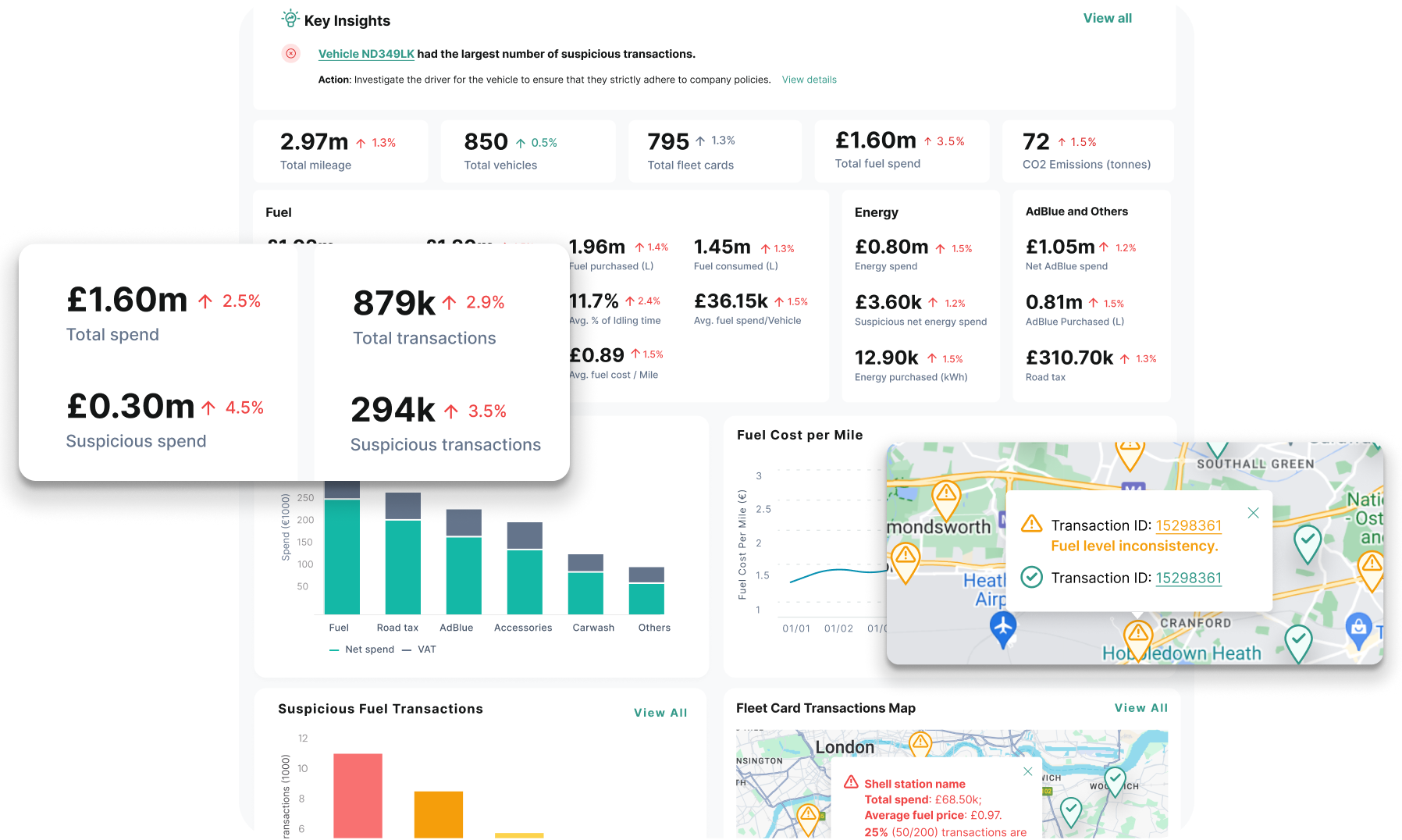
Fleevo holds each notice against the vehicle and, using telematics, against the driver who was in it at the time, with the statutory deadlines tracked. That means the liability question is answered from evidence rather than from a rota, and the challenge windows do not quietly expire while the paperwork moves between desks.
#1 AI-powered fleet spend control platform
Ready to Stop Losing Money on Fleet Spend?
See how much you could save in the first week. Start your free trial today. Cancel anytime.