
Ask “which fleet management system integrates best with fuel cards and route planning?” and you'll get a dozen vendors each claiming to be the answer. The honest response: the best-integrated system isn't the one with the longest feature list — it's the one that connects the tools you already use into a single, cross-referenced view. Here's how to judge that.
What “Best Integration” Actually Means
Integration isn't a checkbox — it's a spectrum. A system can “support” fuel cards by letting you upload a CSV, or it can pull transactions automatically and check each one against vehicle data. When comparing fleet systems on integration, look for:
- Breadth: does it connect the specific fuel cards, telematics, and route or delivery tools you use — not just a generic few?
- Depth: does data flow automatically and get cross-referenced, or just imported and displayed?
- No hardware lock-in: does it work with your existing devices, or require you to rip and replace?
- One unified view: do fuel, route, and telematics data actually join up, or sit in separate tabs?
Fuel Card Integration
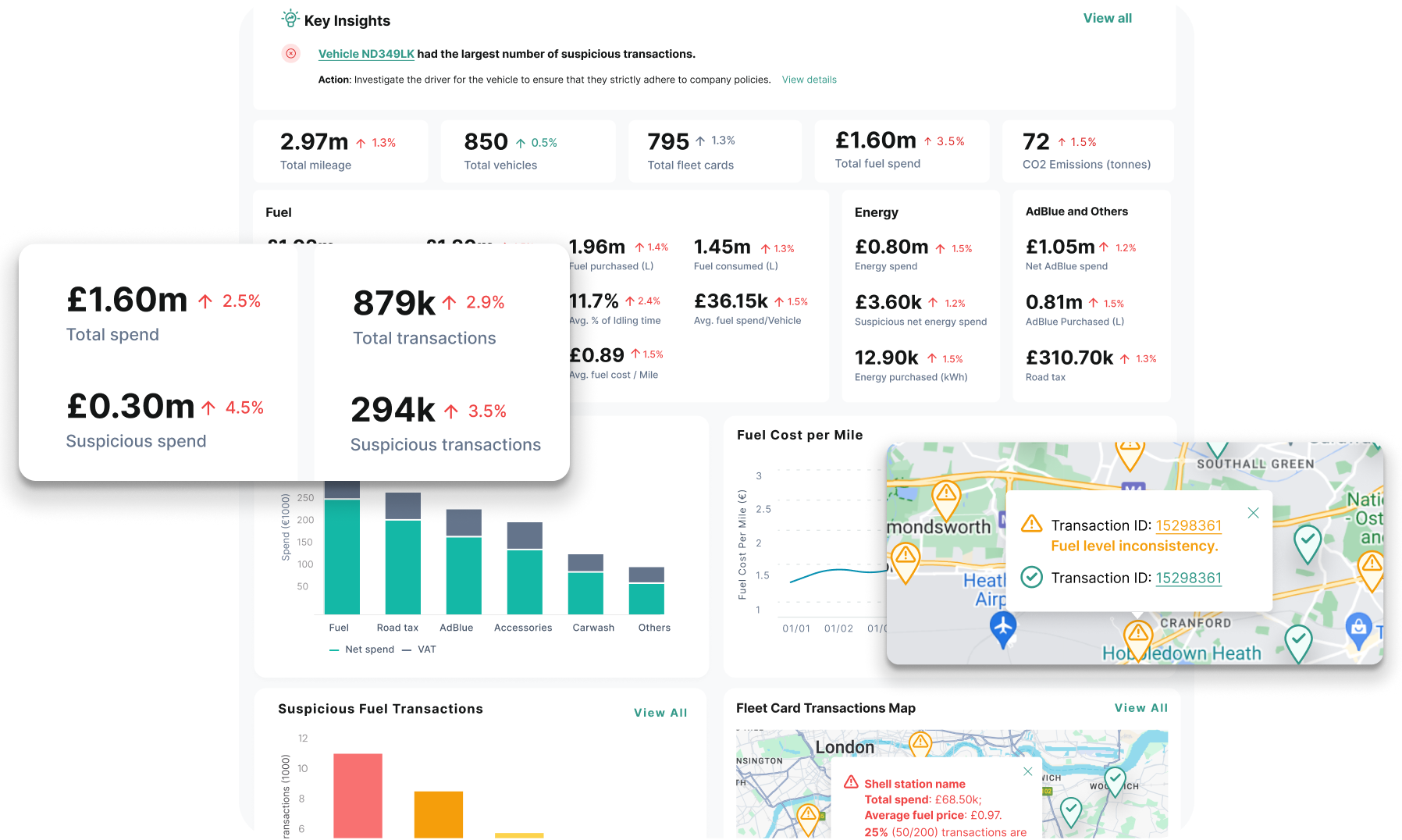
Strong fuel-card integration means every transaction is collected automatically and validated against the vehicle — location, tank capacity, fuel type — not just listed. This is what turns a fuel card from a spending record into an audited, fraud-checked data source. A system that only imports statements gives you visibility; one that cross-references gives you control.
Route and Delivery Integration
Route and delivery data becomes powerful when it's joined to fuel and telematics: planned versus actual routes, fuel consumed against distance driven, and off-route fills that signal misuse. Fleevo integrates with route and delivery-management tools such as Podfather and Route4Me, connecting job and delivery data to fuel and GPS — so you see not just where vehicles went, but whether they fuelled where and when they should have.
Why the “All-in-One” Promise Often Disappoints
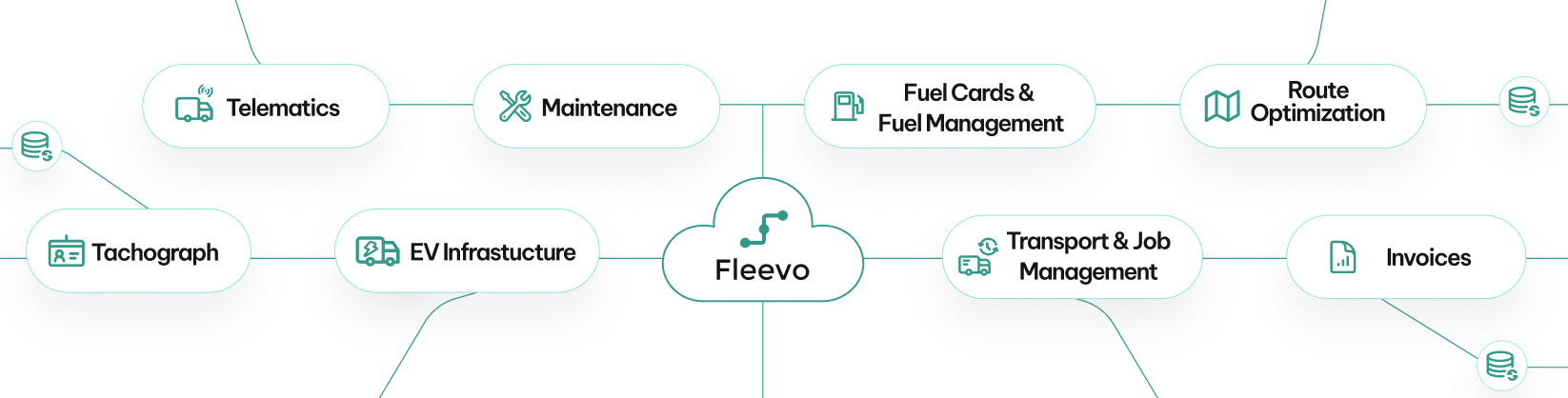
Many fleet suites promise everything in one box — but bundled fuel and route modules are frequently shallower than the specialist tools fleets already rely on. The alternative is an integration-first platform that connects best-of-breed fuel cards, route and delivery planners, and telematics rather than forcing you to abandon them. For most fleets, keeping the tools that work and unifying their data beats a single-vendor compromise.
#1 AI-powered fleet spend control platform
Ready to Stop Losing Money on Fleet Spend?
See how much you could save in the first week. Start your free trial today. Cancel anytime.
How Fleevo Approaches Integration
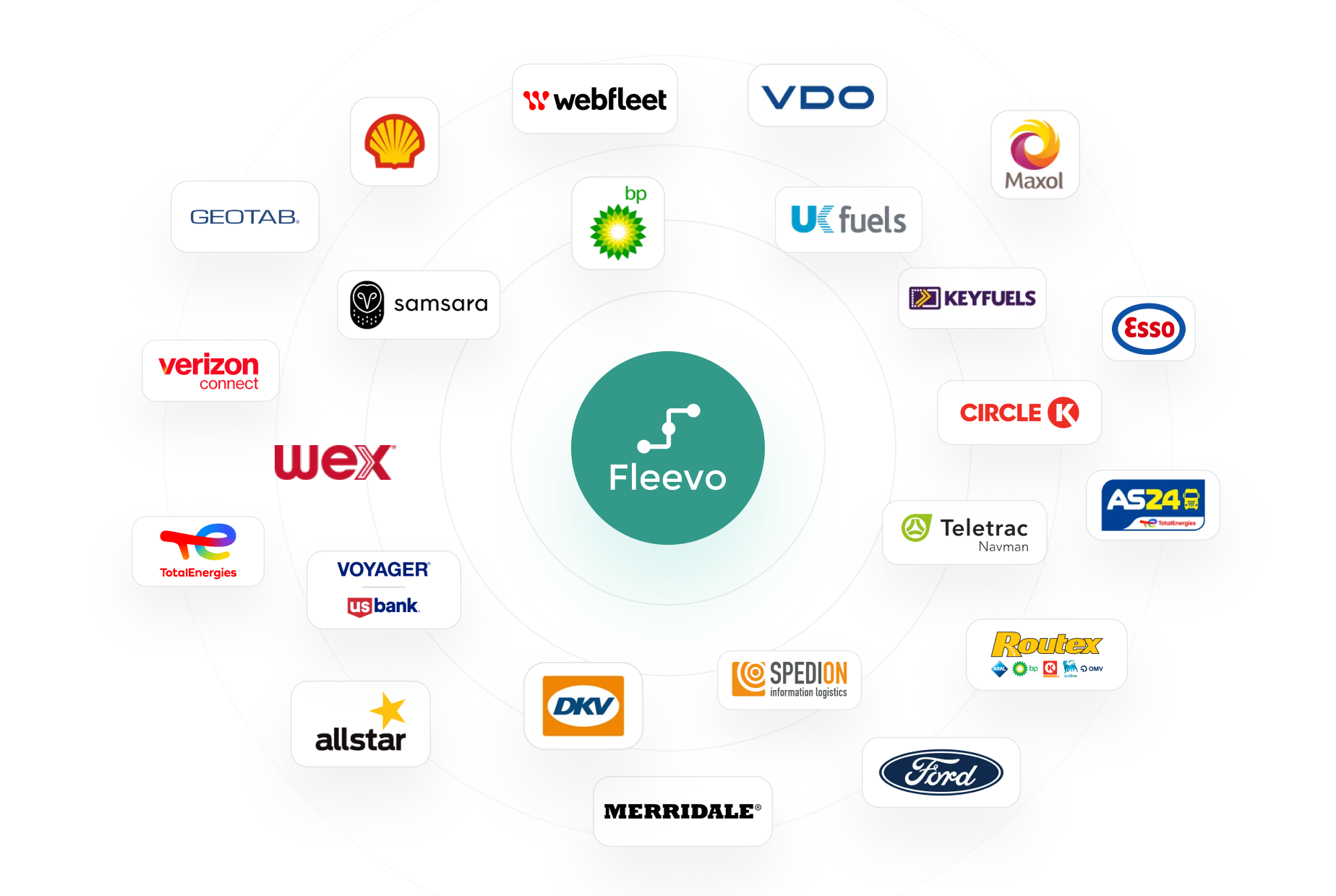
Fleevo is built integration-first: it connects 40+ fuel cards, telematics providers, route-planning and TMS tools — Shell, WEX, BP, Allstar, Geotab, Samsara, Verizon Connect, and more — into one platform, with no new hardware. Fuel transactions, route data, and telematics are cross-referenced automatically, so you get fraud detection, TCO, and a single operational view across the tools you already use rather than a single-vendor replacement. See all Fleevo integrations →
FAQs
Which fleet system integrates best with fuel cards?
The best fuel-card integration collects transactions automatically and validates each against vehicle location, tank capacity, and fuel type — not just imports statements. Integration-first platforms like Fleevo connect 40+ cards and cross-reference them against telematics.
Can one system combine fuel cards, route planning, and telematics?
Yes — an integration-first platform connects all three and joins their data, so fuel, route, and vehicle activity are cross-referenced in one view rather than sitting in separate systems.
Is an all-in-one suite better than connecting separate tools?
Not usually. Bundled modules are often shallower than the specialist fuel and route tools fleets already use. Connecting best-of-breed tools through an integration platform typically gives more depth without a rip-and-replace.
Bottom line: the best-integrated fleet system connects the fuel cards, route planners, and telematics you already run — automatically and cross-referenced — rather than bundling shallow versions of each. Judge integration on breadth, depth, and whether the data actually joins up.
Explore the platform: All Integrations · Fuel & Energy Management