
The problem electrification creates is not a new kind of fraud. It is attribution. Diesel goes into a tank on one vehicle; charging energy arrives across depot chargers, public networks and home supply, and none of those three knows, by default, which vehicle received the kWh. Until every session is tied back to an asset, both the cost per vehicle and the misuse checks are running on incomplete data.
This post is about closing that gap: the checks that attribute charging energy to a vehicle, and the controls to put in place on day one. The wider fraud patterns and the full cost-per-mile case are covered in separate posts, linked at the end, so this one stays on the part that is specific to charging and usually missing.
Why attribution is the hard part
Each channel fails attribution in its own way:
- Depot. Best data quality, because the chargers are yours, but a charger dispensing 47 kWh tells you the site consumed it, not which vehicle plugged in. Without a vehicle identifier the cost lands on a building.
- Public networks. Session records exist, but per network, in different formats and identifiers. Four networks is four reconciliations before a single vehicle view is even possible.
- Home. Reimbursed on a driver claim, with the weakest evidence trail of any fuel channel most fleets have ever run.
Get attribution right and the two things fleets actually want, cost per vehicle and misuse detection, both fall out of the same data. Skip it and neither figure is trustworthy.
The two checks that need battery capacity, not tank capacity
The standard fuel-card fraud checks port straight across to charging, and the full set is covered in EV charging fraud. Two checks are specific to charging and worth calling out here, because they depend on the vehicle's usable pack size, which most systems do not hold:
Session energy against usable battery capacity. A session delivering more kWh than the pack can physically hold means energy went elsewhere. This is the exact analogue of volume against tank capacity, and just as decisive, but only if usable capacity is recorded per vehicle.
Home claim against a telematics charge event. If the vehicle recorded no charge event at the driver's home location for the period claimed, the home-charging reimbursement is unsupported. The data to check this sits in almost every telematics feed and is almost never used for it.
The leak nobody owns: subscription and autopay creep
Charge network accounts quietly accumulate subscriptions, minimum spends, autopay enrolments and idle or overstay fees. None of it is fraud, so no misuse check catches it, and none of it is energy, so no cost-per-mile figure includes it. It simply leaks, on accounts nobody has been made responsible for. Name an owner for the network account list and review it quarterly. It is the cheapest saving in EV charging and the one most often left on the table.
Cost per mile: three errors that make the EV look wrong
Energy cost per mile is only meaningful if all three channels are in it, each priced at what was actually paid. Three errors recur:
- A single blended pence per kWh. Depot overnight and public rapid can differ several fold. Blending them hides the one number you most need to manage.
- Excluding home charging. It understates cost and flatters the EV, which gets found out the moment someone reconciles the driver claims.
- Ignoring idle and overstay fees. Not energy, but real cost, and they concentrate on particular vehicles and drivers in a way worth seeing.
The full method for building this figure across a mixed fleet is in EV charging cost management.
Controls worth having from day one
- Assign charge cards to vehicles rather than drivers wherever possible, so the capacity check is available at all
- Cap session energy slightly above usable battery capacity
- Restrict to the networks you hold commercial terms with, and review that list quarterly
- Require a telematics-corroborated charge event before paying a home-charging claim
- Bring depot charger data into the same report as public and home sessions, not a separate energy silo
Frequently asked questions
How do I attribute a charging session to a specific vehicle?
Match the session to a vehicle by charge-card assignment, and corroborate the session location and time against telematics position. Depot sessions need the charger to capture a vehicle identifier; without one, the energy can only be attributed to the site.
Why check session energy against battery capacity?
Because a session that delivers more kWh than the usable pack can hold means the energy went into something else. It is the charging equivalent of a fuel volume exceeding tank capacity, and it only works if usable capacity is stored per vehicle.
What is subscription creep on charge networks?
Subscriptions, minimum spends, autopay enrolments and idle fees that accumulate on network accounts over time. They are neither fraud nor energy cost, so they escape both the misuse checks and the cost-per-mile figure, and they leak until someone owns the account list.
How do I verify a home charging claim?
Check whether the vehicle recorded a charge event at the driver's home location for the claimed period. If it did not, the claim is unsupported. Most fleets already hold this data and simply do not use it this way.
#1 AI-powered fleet spend control platform
Ready to Stop Losing Money on Fleet Spend?
See how much you could save in the first week. Start your free trial today. Cancel anytime.
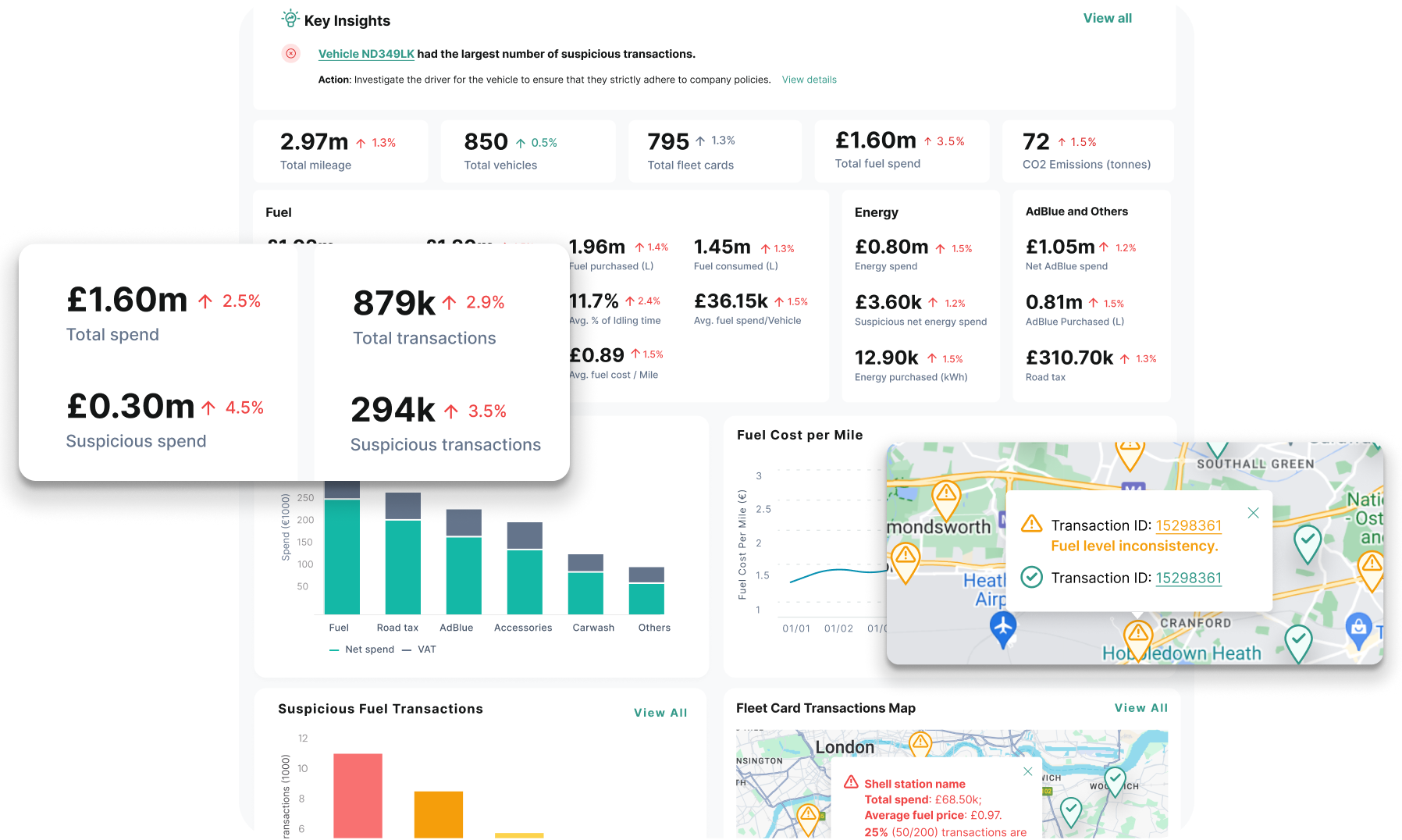
Attributing every charge session in Fleevo
Fleevo treats a charge session the way it treats a fuel transaction: attributed to a vehicle, corroborated against telematics position and activity, checked against the vehicle's usable battery capacity, and reported in one cost-per-mile figure alongside the diesel fleet. Depot, public network and home charging land in the same record, which is what lets a mixed fleet be compared on equal terms. To bring your charge data together, contact Fleevo or book a demo.
Related reading
- EV charging fraud - the full set of charge-session fraud patterns and how to catch them
- EV charging cost management - building the cost-per-mile picture across depot, public and home
- EV versus diesel fleet TCO - where charging cost sits in the total ownership comparison
- Fuel card spend controls that work - the diesel-side analogue of these controls