
Fleets spend years learning to detect fuel card fraud, then electrify and discover the problem has quietly moved. EV charging creates new opportunities for the same old behaviour, paying for energy that didn't power a fleet vehicle, and because the data is more scattered than a fuel card statement, it can be harder to spot. This is fuel fraud's next chapter.
Why EVs Change the Fraud Picture
Fuel card fraud detection relies on one clean data source: the card statement, matched to a vehicle. EV charging fragments that into home electricity bills, depot chargers, and multiple public networks (see our guide to managing EV charging data). More sources, more formats, and a reliance on driver-reported mileage all widen the gap where fraud hides.
The Main Patterns
- Home-charging reimbursement abuse: a driver reimbursed per business mile has an incentive to over-report mileage or claim home charging that didn't happen. The HMRC advisory rate only protects you if the miles behind it are real.
- Charging a personal vehicle: a work charging card or reimbursed home charger used to top up a private EV, the electric equivalent of filling a personal car on the fuel card.
- Phantom or inflated public sessions: public charging claimed but not made, or a session paid for on a work account that didn't power a fleet vehicle.
How to Catch It
The principles are the same as fuel: match every charging session to a vehicle and, where possible, to telematics. A home-charging claim should line up with the vehicle actually being at home and with plausible business mileage; a public session should match the vehicle's location and battery behaviour. Reimbursement claims that consistently sit at the top of what's plausible, or charging that doesn't fit where the vehicle was, are the signals worth investigating.
The Takeaway
Electrifying a fleet doesn't retire fraud detection, it demands a new version of it. The fleets that stay ahead treat charging data with the same scrutiny they learned to apply to fuel cards, rather than assuming the switch to electric made the problem disappear.
#1 AI-powered fleet spend control platform
Ready to Stop Losing Money on Fleet Spend?
See how much you could save in the first week. Start your free trial today. Cancel anytime.
How Fleevo Helps
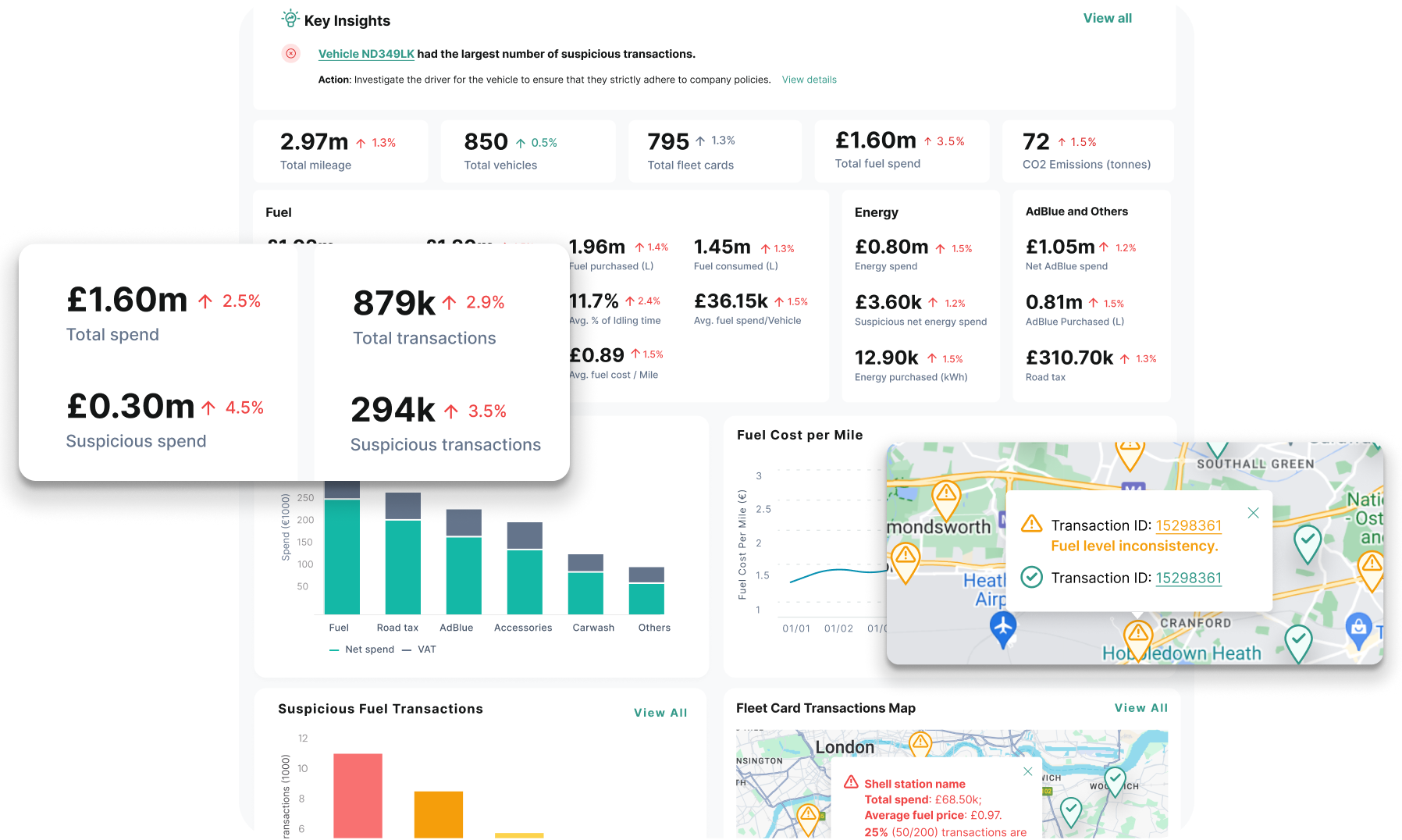
Fleevo brings home, depot, and public charging data together and checks each session against the vehicle it's assigned to and, where connected, telematics, so charging that doesn't fit the vehicle's location or mileage is flagged rather than reimbursed on trust. Explore Fuel & EV Charge Management, or read about the fuel fraud patterns we see most often.
EV Charging Fraud FAQs
Can you commit fraud with EV charging?
Yes. Common patterns include over-claiming home-charging reimbursement, charging a personal vehicle on a work account, and claiming public charging sessions that didn't power a fleet vehicle.
Why is EV charging fraud harder to spot than fuel fraud?
Because the data is fragmented across home bills, depot chargers, and multiple public networks, rather than sitting on one fuel card statement, and it often relies on driver-reported mileage.
How do you detect it?
Match every charging session to the vehicle and, where possible, to telematics. Claims that don't fit where the vehicle was, or consistently sit at the top of what's plausible, are the ones to investigate.