
FORS accreditation is awarded at three levels, and what separates them is evidence: Bronze proves your systems operate, Silver adds equipment and training records, Gold requires demonstrable improvement over time backed by consistent data.
This guide assumes you already know what FORS is and covers the practical question instead: which records you need at each level, and which ones fleets consistently cannot produce when the auditor asks. If you need the introduction first, we cover the scheme itself separately, linked at the end.
One standing caveat: the FORS Standard is revised periodically, so the definitive requirement list is always the current version of the Standard rather than any summary, including this one. What does not change year to year is which evidence trips people up.
What each level asks of you
Bronze is fundamentally about having systems and being able to show they operate: documented procedures, maintained records, and evidence that policies are applied rather than merely written. It is achieved by passing an audit against the Standard.
Silver adds requirements that generally involve equipment and training: specified vehicle safety equipment, driver training completed, and performance data collected and reported. It also requires Bronze to be held.
Gold requires Silver, sustained performance, and demonstrable improvement over time supported by data, plus a contribution to promoting the scheme. Gold is the level where a fleet's data quality becomes the constraint, because improvement has to be shown, not asserted.
The records fleets most often cannot produce
Across audits, the same gaps recur. None of them are difficult in principle. All of them are difficult retrospectively.
- Defect rectification evidence. Fleets can usually show the walkaround check that reported a defect. Far fewer can show what happened next, and the closing of that loop is what the auditor is testing.
- Nil defect records. A gap in walkaround records is indistinguishable from a check that was never done. Recording nil defects is what makes the series continuous.
- Licence checks for agency and grey fleet drivers. Employed drivers are usually covered. Agency and grey fleet are frequently not, and they are in scope.
- Evidence that drivers received and acknowledged policies. The policy exists. The acknowledgement record often does not.
- Performance data with a consistent baseline. Required for the higher levels. A fleet that changed how it measured fuel consumption partway through the year cannot show improvement, only a discontinuity.
- Fuel and mileage records that reconcile. Increasingly relevant given the environmental performance element, and this is where hand-built reporting comes apart under questioning.
Preparing without a scramble
- Read the current Standard for your target level and build a gap list against it. Not against the previous version, and not against a summary.
- Fix data capture before fixing documents. A missing procedure can be written in a day. A missing 12 month record series cannot be created at all.
- Establish your performance baseline early, and do not change the measurement basis during the reporting period. This is the single most common reason a Gold application stalls.
- Self-audit against the Standard a quarter before the real audit, using the same sampling approach: pick a vehicle, pick a driver, pick a defect, and trace each end to end.
- Bring agency and grey fleet drivers into the same records as employed drivers from the start, rather than treating them as an exception to sort out later.
What accreditation is actually worth
Being straightforward about it: FORS is most valuable where your customers or contracting authorities require or reward it, which in UK construction, utilities and public sector logistics is common. It is also a reasonable external forcing function for record keeping that should exist anyway. It is not, on its own, a cost reduction programme, and a fleet pursuing it purely for the badge will find the ongoing evidence burden hard to sustain.
Frequently asked questions
What evidence does a FORS Bronze audit require?
Documented procedures across management, vehicles, drivers and operations, plus the records proving they operate: inspection and defect rectification records, licence checks, walkaround checks including nil defects, insurance, and driver policy acknowledgements. The current Standard is the definitive list.
What is the difference between FORS Silver and Gold?
Silver adds equipment, training and reporting requirements on top of Bronze. Gold requires Silver plus sustained performance and demonstrable improvement evidenced with data, which makes data consistency the practical hurdle.
How long does FORS accreditation take to prepare for?
The document work is a matter of weeks. The constraint is record history: requirements that need a period of evidence cannot be shortcut, so a fleet starting from poor record keeping should expect to spend a year building the trail before an audit is worthwhile.
Are grey fleet and agency drivers in scope for FORS?
If they drive for you, yes, and they are the most common gap. Bring them into the same licence checking and policy acknowledgement records as employed drivers from the outset.
Why do Gold applications stall?
Almost always because the performance baseline moved. If the way you measure fuel consumption or emissions changed mid period, the data shows a discontinuity rather than an improvement, and improvement is what Gold requires.
Where Fleevo fits
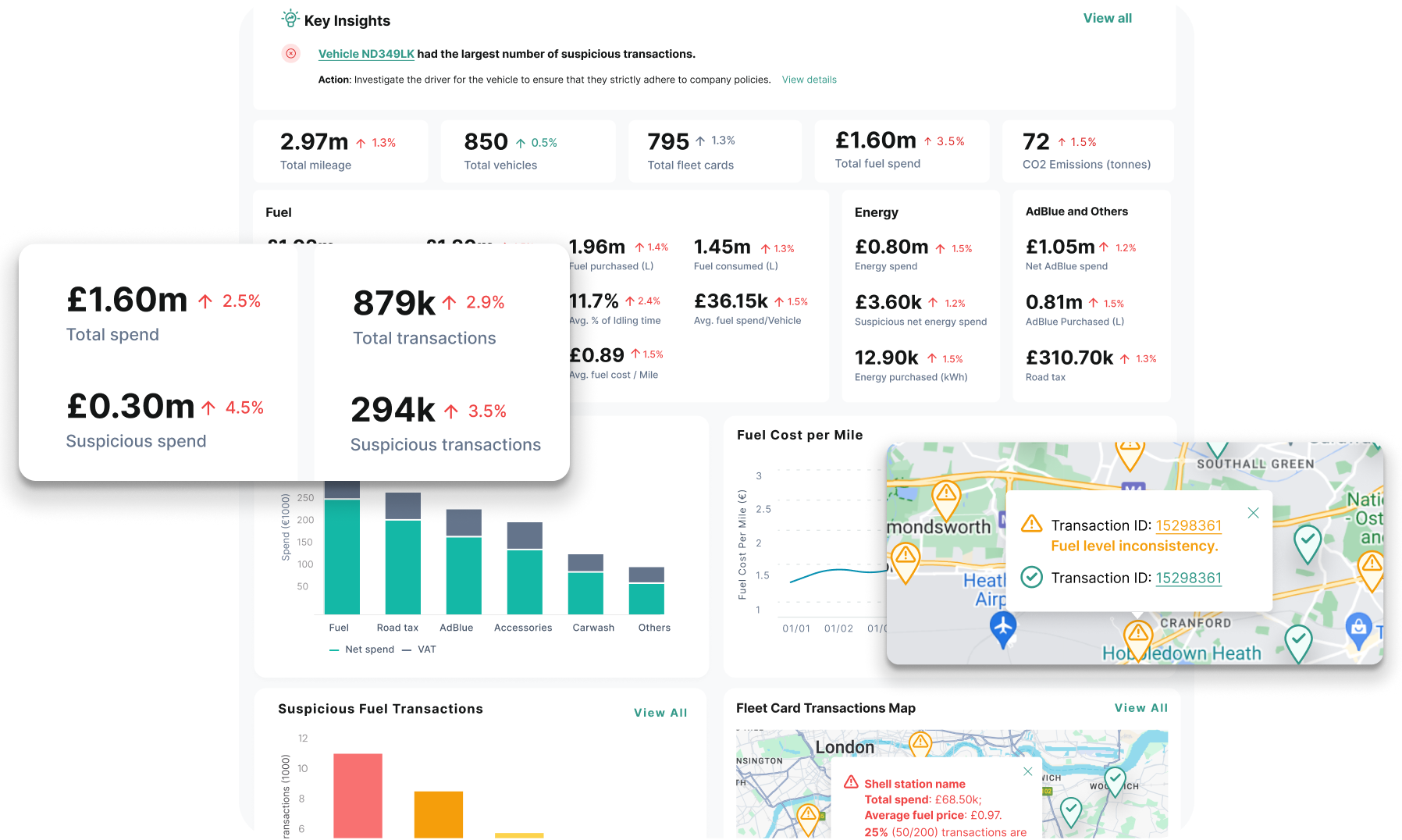
The parts of FORS that fleets fail on are the record series, not the policies. Fleevo builds the fuel, energy, mileage and maintenance record automatically from telematics, fuel cards, tanks, charge points and supplier invoices, on one consistent basis, which is what makes a year on year performance comparison defensible rather than approximate.
#1 AI-powered fleet spend control platform
Ready to Stop Losing Money on Fleet Spend?
See how much you could save in the first week. Start your free trial today. Cancel anytime.
Related reading
- What is FORS, the Fleet Operator Recognition Scheme — start here if you need the introduction to the scheme
- What is a fleet audit — the wider audit readiness picture, beyond FORS
- DVSA Earned Recognition — the other UK accreditation route
- Fleet compliance and audit readiness