
Most fleet managers only find out a vehicle is out of service when the driver calls. By then the route's already at risk and the clock has been running for hours. Downtime is one of the most expensive things a fleet carries — and one of the least measured. Here's how to track it and get vehicles back on the road faster.
What Does “Out of Service” Mean for a Fleet?
An out-of-service (OOS) vehicle — also known as vehicle-off-road, or VOR — is one that's unavailable for work: in the repair shop, awaiting parts, or grounded by a fault or failed inspection. Every hour out of service is a route uncovered or a job rescheduled, plus the repair cost itself. Downtime is the true cost of maintenance that maintenance reports rarely show.
Why Downtime Goes Unmeasured
Fleets track repair spend because it arrives as an invoice — but downtime has no invoice, so it slips by. Without a system, no one knows how many vehicle-days were lost last month, which vehicles are chronically down, or which repair shops are slowest to turn work around. What isn't measured can't be managed, and downtime is usually the biggest unmeasured cost in the fleet.
What to Track to Cut Downtime
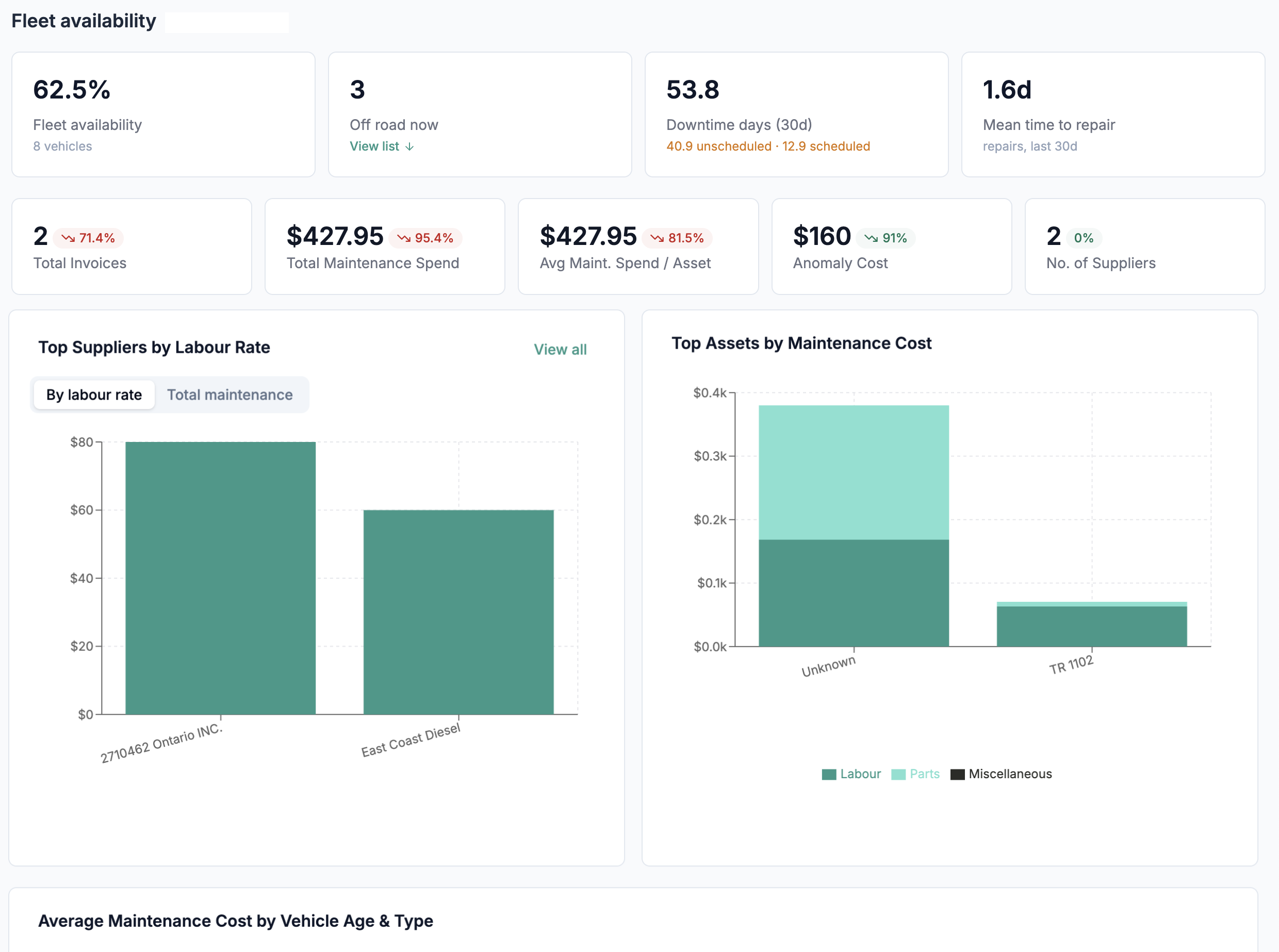
- Fleet availability: what percentage of the fleet is actually working right now.
- Vehicles out of service now: a live list, not a phone call after the fact.
- Downtime days: scheduled versus unscheduled, over time.
- Mean time to repair: how long vehicles actually take to come back.
- Downtime by vehicle: which assets are chronically down.
- Downtime by repair shop: which suppliers turn work around fastest — and which lag.
How to Reduce Fleet Downtime
- Start a downtime clock the moment a vehicle enters the repair shop
You can't manage turnaround you don't time. Logging in and out reveals which shops lag and which vehicles linger. - See what's out of service in real time
A live out-of-service list beats finding out when the driver calls — you can react before the route is affected. - Prevent the failures you can
Much downtime comes from breakdowns that preventive maintenance scheduled by real mileage would have caught. - Hold repair shops accountable
Mean-time-to-repair by supplier turns a vague sense that “the shop is slow” into a number you can act on.
#1 AI-powered fleet spend control platform
Ready to Stop Losing Money on Fleet Spend?
See how much you could save in the first week. Start your free trial today. Cancel anytime.
How Fleevo Tracks Fleet Downtime
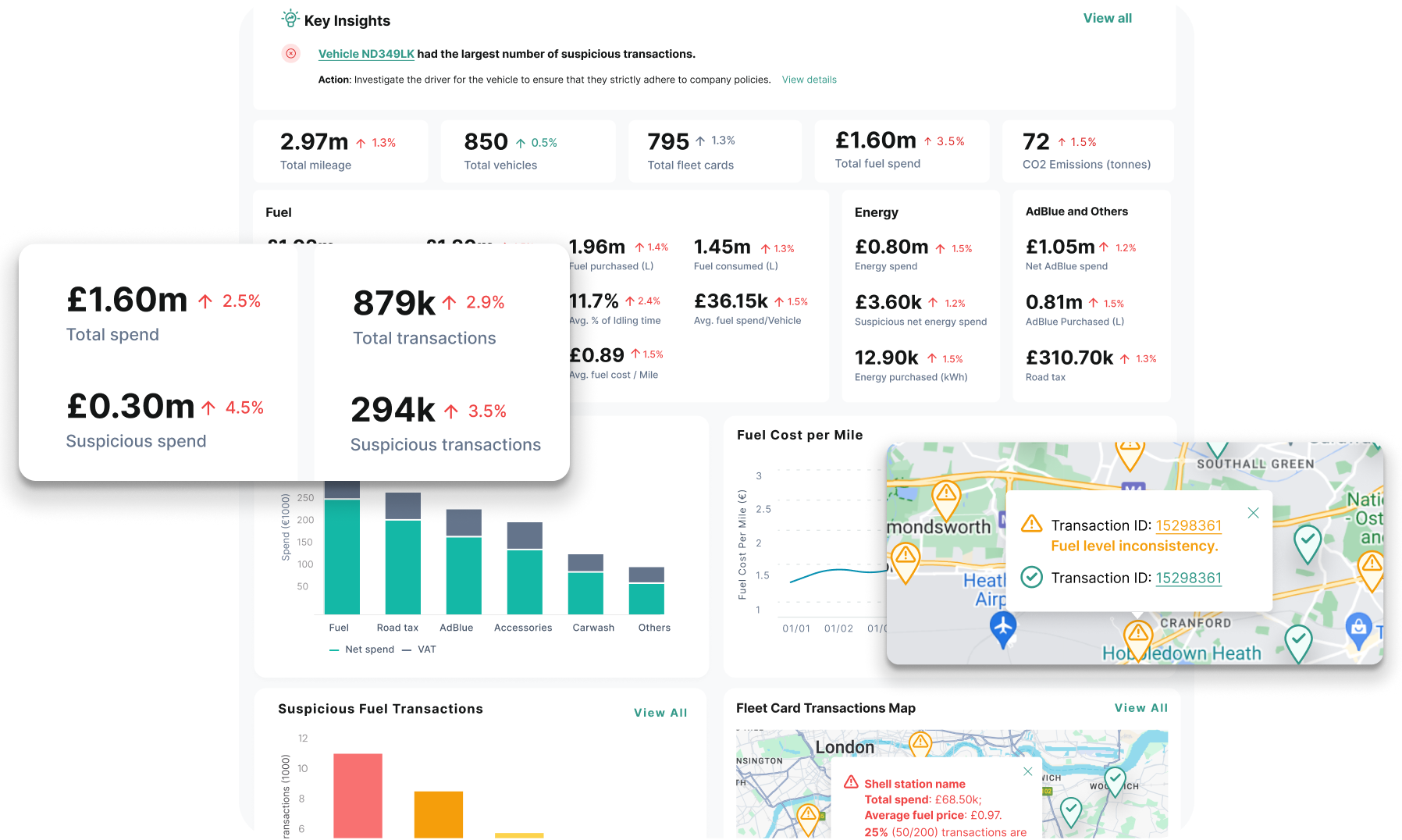
Fleevo starts a downtime clock the moment a vehicle is logged as in the repair shop, and shows fleet availability, vehicles out of service now, downtime days, and mean time to repair in one live view. Over time it reveals which vehicles spend the most time down and which repair shops are slowest to turn work around — so you can plan around downtime, hold suppliers accountable, and keep more of the fleet earning. It works alongside Fleevo's Maintenance Spend Control, so downtime and maintenance cost sit in the same picture.
Fleet Downtime FAQs
What does out of service (OOS) mean in fleet management?
An out-of-service vehicle — also called vehicle-off-road (VOR) — is one unavailable for work because it's in the repair shop, awaiting parts, or grounded by a fault or failed inspection. Downtime carries both repair cost and the cost of lost routes.
How do you measure fleet downtime?
Start a downtime clock when a vehicle enters the repair shop and stop it when it returns to service. Tracking fleet availability, downtime days, and mean time to repair — by vehicle and by repair shop — turns downtime from an invisible cost into a managed one.
How can fleets reduce downtime?
Track out-of-service vehicles in real time, prevent avoidable breakdowns with usage-based preventive maintenance, and measure repair-shop turnaround so slow suppliers can be held accountable.
Bottom line: downtime is usually the biggest unmeasured cost in a fleet. Start a clock when vehicles go out of service, track availability and mean-time-to-repair by vehicle and repair shop, and prevent the failures you can — and you keep more of the fleet working.
Explore the platform: Maintenance Spend Control · Preventive Maintenance for Fleets