
Plenty of guidance covers spotting fuel fraud. Far less covers the harder question: what to do once you have. Handle it well and you recover the loss and deter the next case; handle it badly and a genuine case can collapse, or worse, expose the business to a claim. This is a level-headed walk through the aftermath.
Confirm Before You Accuse
A flagged transaction is a question, not a verdict. Before anything else, build the evidence: the transaction record, the vehicle's location and telematics at the time, tank capacity versus volume, and the driver's assignment and mileage. Many "frauds" turn out to be data errors, shared cards, or innocent explanations, so confirm the pattern before treating it as deliberate.
Follow a Fair Process
Once the evidence points to misuse, treat it as a disciplinary matter and follow your organisation's process, involving HR early. That means putting the evidence to the employee, giving them a chance to respond, and documenting each step. Skipping process, even with strong evidence, is how employers turn a defensible dismissal into an unfair-dismissal claim.
Decide on Recovery and Referral
Two separate decisions follow. Cost recovery, whether and how to recoup the loss, is governed by employment law and the contract, not a simple deduction. Referral to the police is warranted where the fraud is serious or systematic, but is a judgement call that should be made deliberately, with the evidence organised, rather than in anger.
Close the Gap
Every confirmed case is a lesson about a control that failed. Ask how it happened, a shared card, no odometer entry, no monitoring, and fix that gap through your fuel card policy and checks, so the same route doesn't stay open.
A Note of Caution
Fuel fraud cases touch employment law, evidence, and sometimes criminal process. The steps above are a general guide, not legal advice, take advice on anything case-specific, especially before dismissal, cost recovery, or a police referral.
#1 AI-powered fleet spend control platform
Ready to Stop Losing Money on Fleet Spend?
See how much you could save in the first week. Start your free trial today. Cancel anytime.
How Fleevo Helps
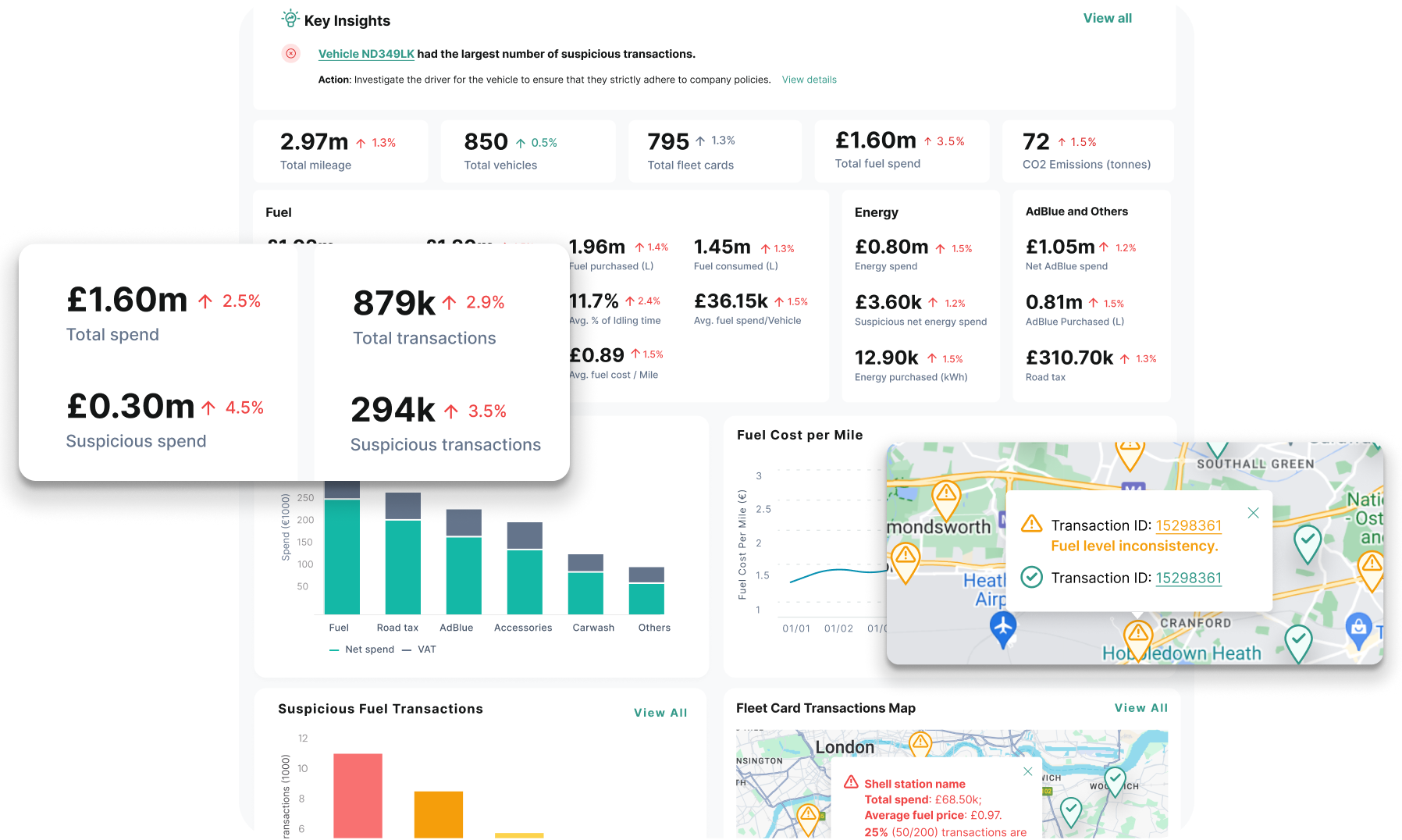
A case is only as strong as its evidence. Fleevo keeps every transaction matched to its vehicle, time, and location with a full audit trail, so when you need to confirm a suspected fraud, or defend the action you took, the evidence is organised rather than reconstructed. Explore Fuel & EV Charge Management, or read about the fuel fraud patterns we see most often.
Handling Fuel Fraud FAQs
What's the first step when you suspect fuel fraud?
Confirm it with evidence, the transaction, the vehicle's location and telematics, volume versus tank capacity, and driver assignment, before treating it as deliberate. Many flags turn out to be data errors or innocent explanations.
Can you dismiss an employee for fuel fraud?
Potentially, but only by following a fair disciplinary process with HR involved and the evidence put to the employee. Skipping process risks turning a defensible case into an unfair-dismissal claim. Take advice on specific cases.
Should you involve the police?
For serious or systematic fraud it may be warranted, but it's a deliberate judgement call to make with the evidence organised, not a reflex.
This is general information, not legal advice. Fuel fraud cases can turn on employment law and evidence, so take professional advice on anything case-specific.