
Most fuel card misuse isn't sophisticated, it's opportunistic, and it thrives where the rules are vague. Detection catches fraud after the money has gone; a good fuel card policy stops much of it happening at all. It is the cheapest fraud control a fleet has, and the most often neglected.
Card Assignment
Start with the rule every other control depends on: one card, one vehicle or one named driver. Shared and float cards are the single biggest source of untraceable spend, because they break the link between a transaction and a person (see our guide to fuel card sharing). A policy should say who holds which card and forbid casual sharing.
PINs and Security
Require a unique PIN per driver where the provider supports it, rather than one PIN per card, and treat PIN secrecy as a condition of holding a card. Set out how lost or stolen cards are reported and how quickly, so a missing card is cancelled before it's misused.
Limits and Approved Use
Define what the card can and can't buy: fuel type, whether shop purchases are allowed, approved sites or networks, and sensible spend and volume limits per card. Where the terminal allows it, require an odometer or mileage entry at the pump, which underpins later fraud detection.
Consequences and Review
A policy without teeth is a suggestion. State clearly that misuse is a disciplinary matter and may lead to cost recovery or dismissal, and that transactions are monitored. Then actually review the data, because a policy drivers know is enforced prevents far more than one that sits in a drawer.
Make It Enforceable
The best policy is specific, communicated, and backed by monitoring. Vague rules invite the "I didn't know" defence; clear ones, paired with the kind of checks in our fuel card audit checklist, remove the grey areas fraud relies on.
#1 AI-powered fleet spend control platform
Ready to Stop Losing Money on Fleet Spend?
See how much you could save in the first week. Start your free trial today. Cancel anytime.
How Fleevo Helps
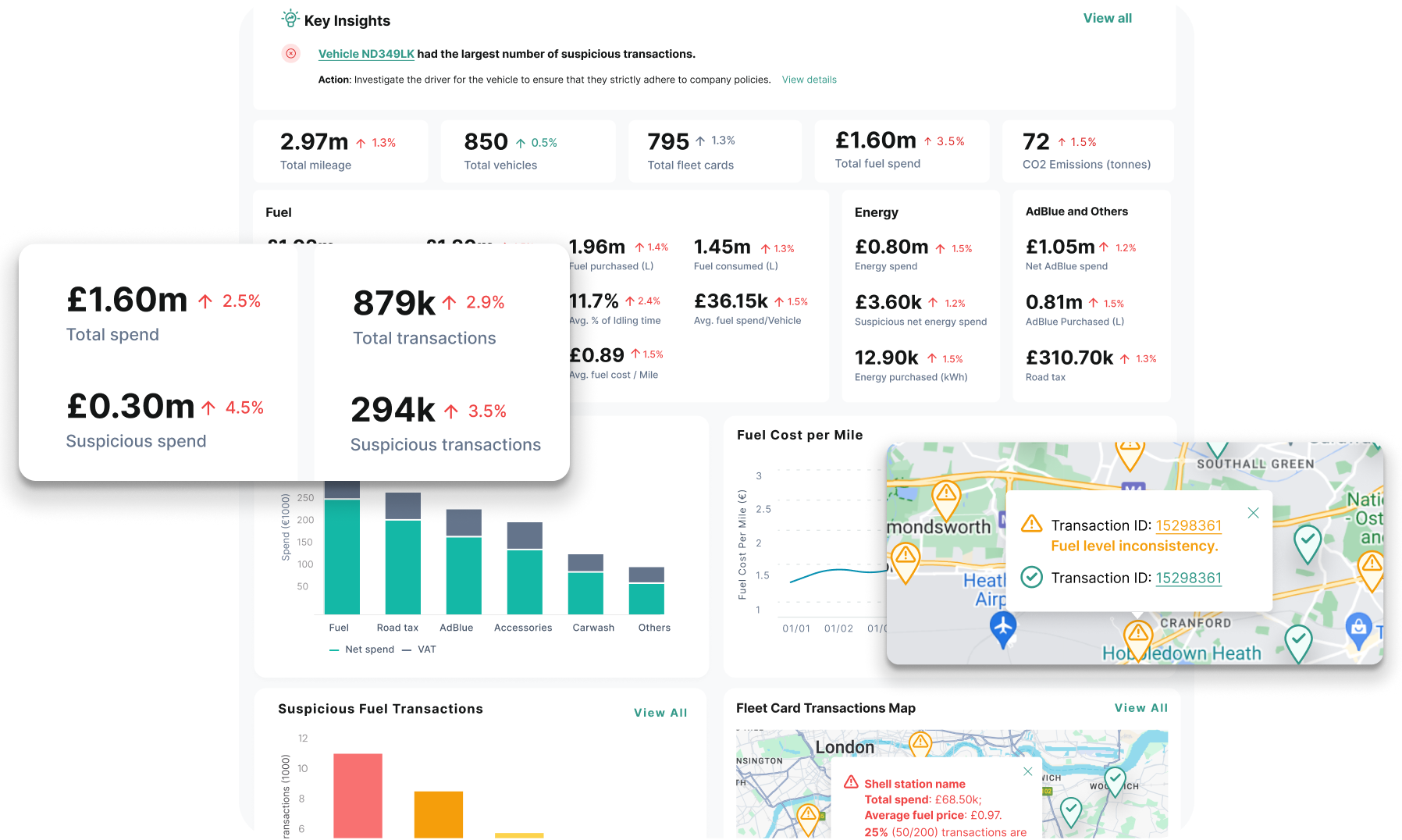
A policy is only as good as the monitoring behind it. Fleevo checks every transaction against the vehicle it's assigned to and flags card sharing, odd volumes, and out-of-pattern purchases, so the rules in your policy are actually enforced rather than assumed. Explore Fuel & EV Charge Management, or read what fuel card fraud is and how to prevent it.
Fuel Card Policy FAQs
What should a fuel card policy include?
Card assignment (one card per vehicle or named driver), PIN and security rules, approved fuel types, sites and spend limits, odometer entry where possible, and clear consequences for misuse, backed by monitoring.
Why is one card per vehicle or driver so important?
Because shared cards break the link between a transaction and a person, which is what makes fraud untraceable and gives misuse an easy excuse.
Does a policy actually reduce fraud?
Yes, when it's specific, communicated, and enforced with monitoring. A policy nobody checks against the data has little effect.