
A driver borrows a colleague's fuel card because theirs is lost, faulty, or left in another vehicle. It feels harmless, and most of the time it is, but it breaks the one assumption every fuel card system, and every fraud detection process, is built on: one card, one vehicle, one driver.
What Is Fuel Card Sharing?
Fuel card sharing is when more than one driver, or more than one vehicle, uses the same fuel card or PIN. It usually starts as a practical workaround rather than an attempt to cheat the system.
Why Fleets End Up Doing It
- Spare or float cards kept for breakdowns or cover drivers, used by whoever needs fuel that day.
- Agency or temporary drivers without their own assigned card.
- Lost or damaged cards where a driver borrows someone else's while a replacement is issued.
- Cards left in the vehicle rather than issued to a named driver, so whoever drives that vehicle uses it.
The Real Risk: It Breaks Attribution
Fuel card fraud detection, whether it's your own manual review or an automated platform, works by matching each transaction to the vehicle and driver it should belong to. Once a card is shared, that match breaks down. A genuinely unusual purchase, wrong location, extra volume, an odd time of day, can always be explained away as "someone else must have used it," whether or not that's actually true.
Is Card Sharing Actually Fraud?
Not by itself. A fleet knowingly using a float card across several drivers is a policy weakness, not a crime. But card sharing meaningfully increases fraud risk and makes real fraud, when it does happen, much harder to detect and much harder to prove after the fact. That distinction matters less than it sounds: whether the intent is innocent or not, the practical effect on your fuel spend visibility is the same.
How to Stop Fuel Card Sharing
- Issue cards per vehicle or per named driver, not as shared float cards.
- Use a separate PIN per driver where your card provider supports it, rather than one PIN per card.
- Require an odometer or mileage entry at the pump where the card terminal allows it.
- Set volume and frequency alerts per card so multiple fills in a short window get flagged.
- Treat any card that fuels two different vehicles on the same day as something to investigate, not explain away by default.
#1 AI-powered fleet spend control platform
Ready to Stop Losing Money on Fleet Spend?
See how much you could save in the first week. Start your free trial today. Cancel anytime.
How Fleevo Helps
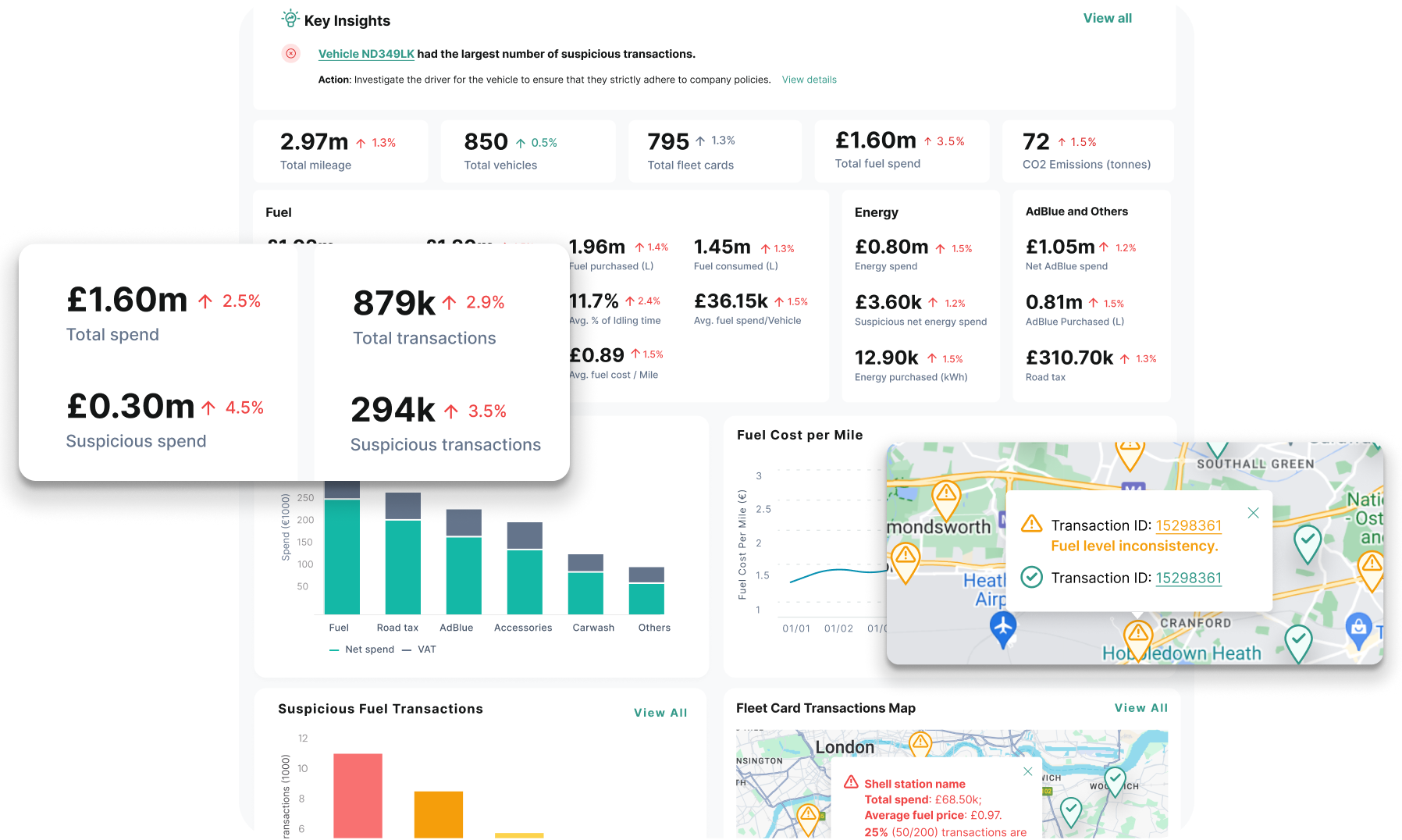
Fleevo cross-checks every fuel card transaction against the vehicle it's assigned to, using location, fuel type, and, where connected, telematics odometer and fuel-level data. When a card fuels a vehicle it isn't assigned to, or two vehicles show activity on the same card in a pattern that doesn't match how they actually moved that day, Fleevo flags it instead of letting it disappear into a monthly statement. Explore Fuel & EV Charge Management, read what fuel card fraud is, or see the fuel fraud patterns we see most often across fleets.
Fuel Card Sharing FAQs
Is sharing a fuel card between drivers illegal?
Not inherently. Sharing a card with the fleet's knowledge isn't a crime by itself, but it removes the paper trail that proves who bought what fuel, which is exactly what makes genuine fraud harder to catch and harder to prove afterward.
Can fuel card sharing hide fuel theft?
Yes. Once more than one driver uses the same card, unusual purchases can be waved away as "someone else was using it," so fraud that would otherwise stand out gets lost in the noise.
What's the simplest fix for card sharing?
Assign one card to one vehicle, or one named driver, and treat any transaction from a card on the wrong vehicle as something to investigate rather than explain away.