
Commercial fleets run on thin margins, and a surprising share of their spend never delivers value — it leaks away through waste, misuse, and outright fraud. Most of it hides in plausible-looking transactions that no one has time to check. Here are the biggest sources, roughly in order of how much they typically cost.
The biggest sources of waste and fraud in commercial fleet spending are:
- Fuel card fraud and misuse
- Fuel waste from operations
- Maintenance overbilling
- Depot and tank fuel loss
- Tolls, fines, and violations
- Manual admin and reconciliation
1. Fuel Card Fraud and Misuse
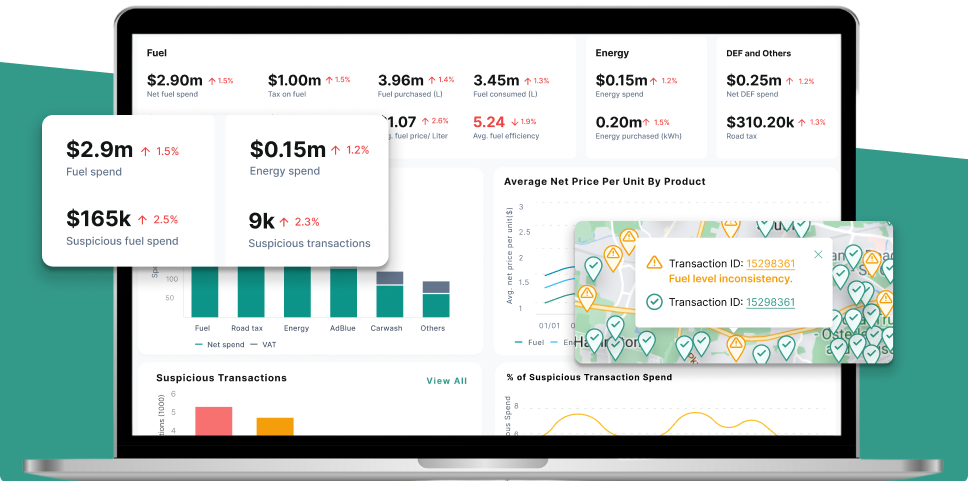
The single largest controllable leak. Fleets lose 2–5% of annual fuel spend to personal fill-ups, shared-card abuse, overfilling into containers, and premium-fuel upgrades on standard vehicles. Because each transaction looks normal, statement review never catches it. Detection requires cross-referencing every fill against vehicle location, tank capacity, and fuel type. More on fuel card fraud →
2. Fuel Waste from Operations
Not fraud, but pure loss: excessive idling, harsh driving, under-inflated tires, and inefficient routing quietly push consumption above where it should be. Telematics data benchmarked against expected MPG surfaces the vehicles and drivers burning more than they should.
3. Maintenance Overbilling
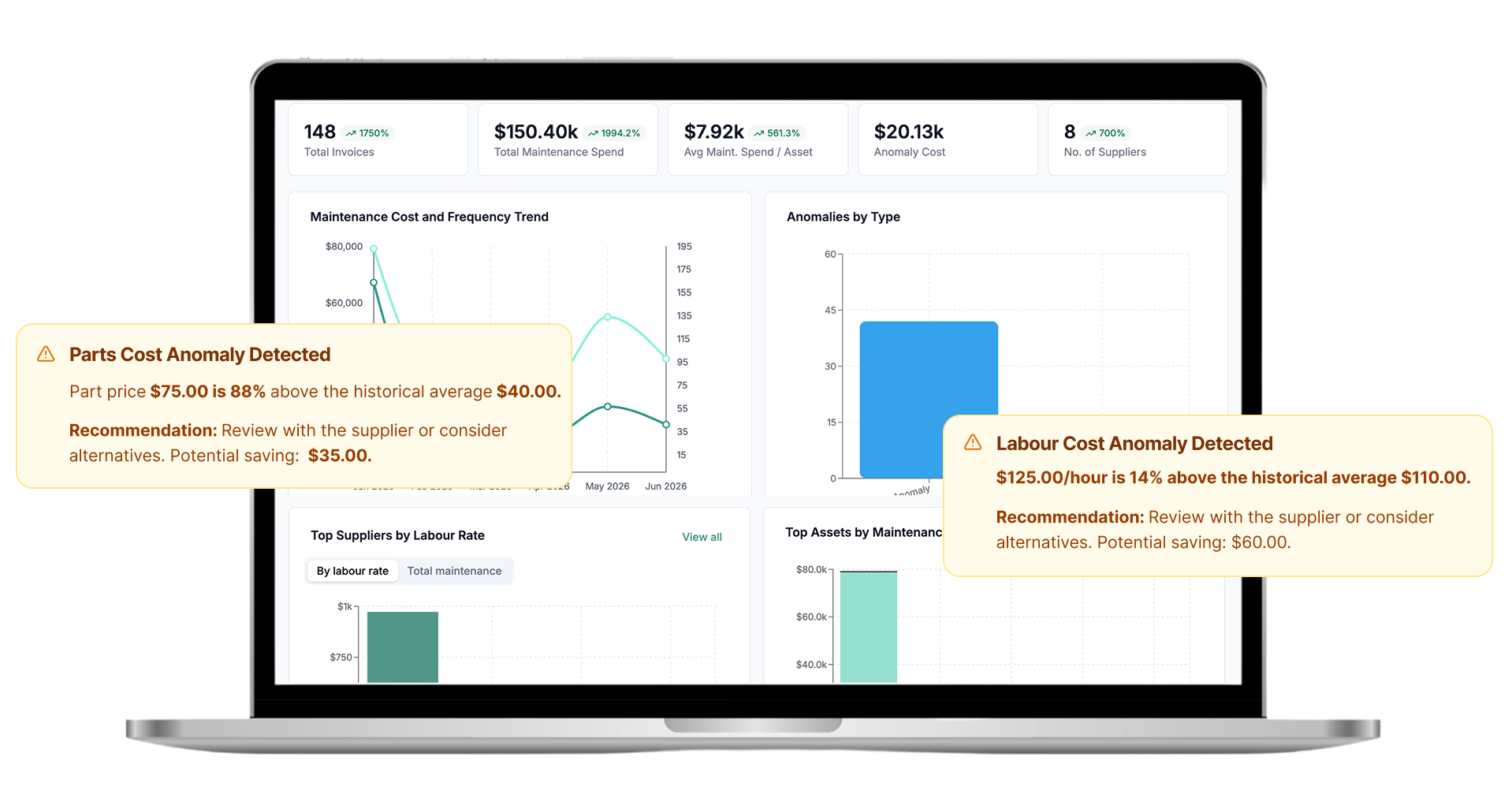
Repair shops and suppliers padding invoices — phantom repairs, parts charged but not fitted, labor hours inflated, or work done that wasn't needed. Without a system checking invoices against the vehicle's actual service history and mileage, these slip through as “just the cost of maintenance.”
4. Depot and Tank Fuel Loss
Onsite fuel tanks are a common blind spot. Shrinkage that isn't evaporation is usually siphoning — and because tank data often lives in a separate log, drops go unnoticed. Reconciling deliveries in, dispenses out, and tank level catches it.
5. Tolls, Fines, and Violations
Toll charges, parking fines, and traffic violations accumulate quietly — and late-payment surcharges multiply them. Fleets without a system to track and contest them simply absorb the cost.
6. Manual Admin and Reconciliation
The hidden cost: staff hours spent exporting reports, matching spreadsheets, and chasing discrepancies across disconnected systems. It's slow, error-prone, and it scales badly — the bigger the fleet, the more it bleeds.
#1 AI-powered fleet spend control platform
Ready to Stop Losing Money on Fleet Spend?
See how much you could save in the first week. Start your free trial today. Cancel anytime.
What These Leaks Have in Common
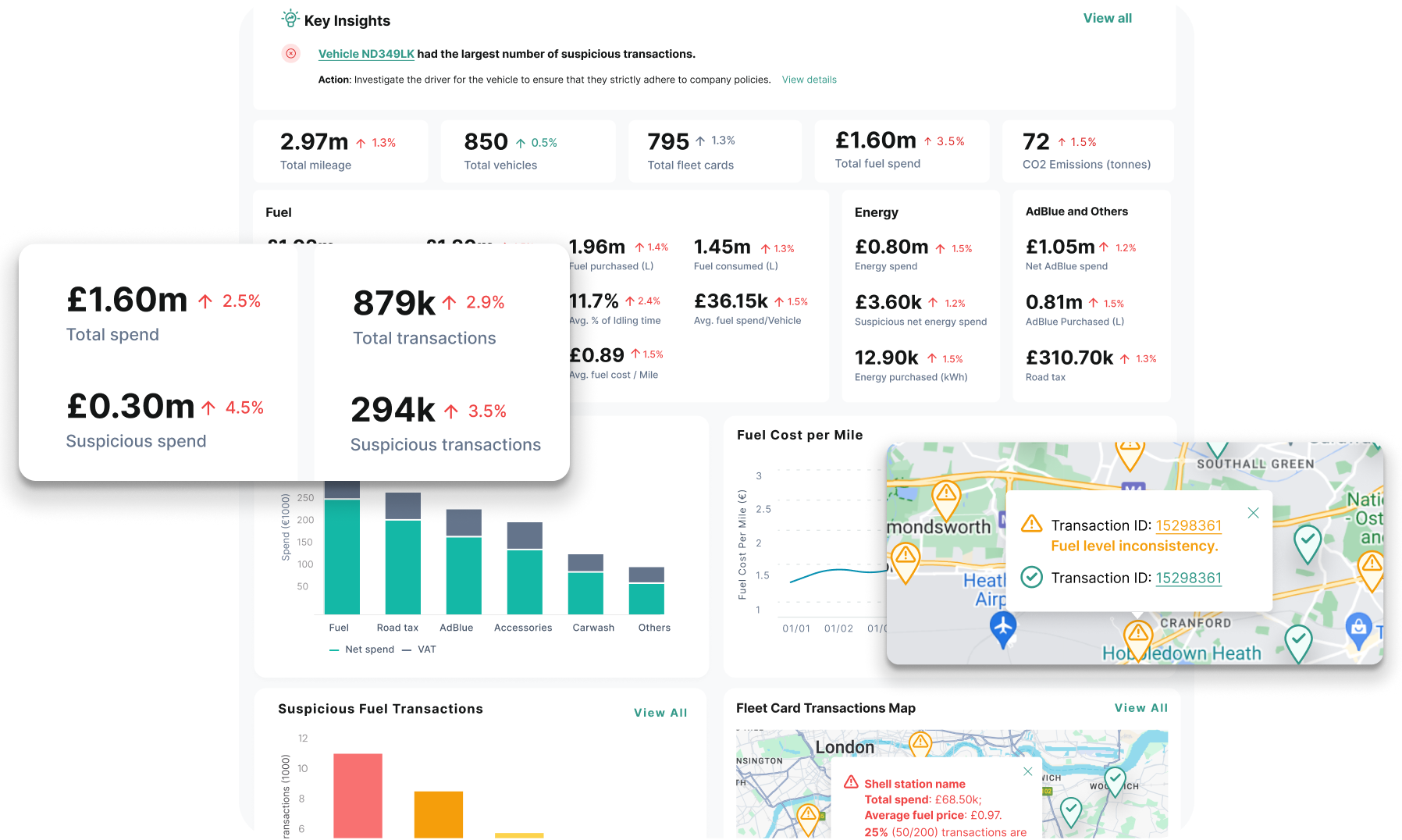
Every one of them hides in the gaps between systems — a fuel transaction the telematics could disprove, an invoice the service history contradicts, a tank drop no card explains. They persist not because they're clever, but because no one can manually cross-check thousands of records across separate portals. The fix isn't more vigilance; it's integrated data and automated checking.
How Fleevo Catches Fleet Waste and Fraud
Fleevo connects your fuel cards, tanks, telematics, and maintenance data into one platform and audits it continuously — flagging fuel fraud, consumption outliers, maintenance overbilling, and tank shrinkage as they happen, plus managing fines and violations. Fleets typically uncover unaccounted spend within their first weeks. See how Egertons Recovery strengthened oversight with Fleevo.
FAQs
What is the biggest source of fleet cost leakage?
Fuel is usually the largest controllable cost and the most exposed — 2–5% of fuel spend is typically lost to fraud and misuse, before counting operational fuel waste on top.
How do you find waste and fraud in a fleet?
By integrating fuel, telematics, and maintenance data and cross-referencing every transaction against vehicle activity. Anomalies — fills where the vehicle wasn't present, invoices that don't match service history, tank drops with no dispense record — become visible automatically.
Is fleet waste always fraud?
No — much of it is honest inefficiency (idling, poor routing, missed maintenance). That's why the goal is verification, not accusation: separate genuine anomalies from operational waste and address each appropriately.
Bottom line: commercial fleet spending leaks through fuel misuse, operational waste, maintenance overbilling, tank loss, and fines — all hiding in the gaps between systems. Integrate the data, audit it continuously, and the leaks become visible and fixable.
Explore the platform: Fuel & Energy Management · Maintenance Spend Control