

Fleet TCO is the total of every cost a vehicle generates across its whole life, minus what you recover when you sell it. The formula is:
TCO = (purchase price − resale value) + finance cost + fuel or energy + maintenance and repair + tyres + insurance + tax and licensing + fines and compliance + downtime cost + admin cost
Divide by months held for cost per month. Divide by distance covered for cost per mile. This guide is the calculation method in full. For what to do with the number once you have it, see how to reduce fleet TCO.
The Ten Cost Lines, and Where Each Number Lives
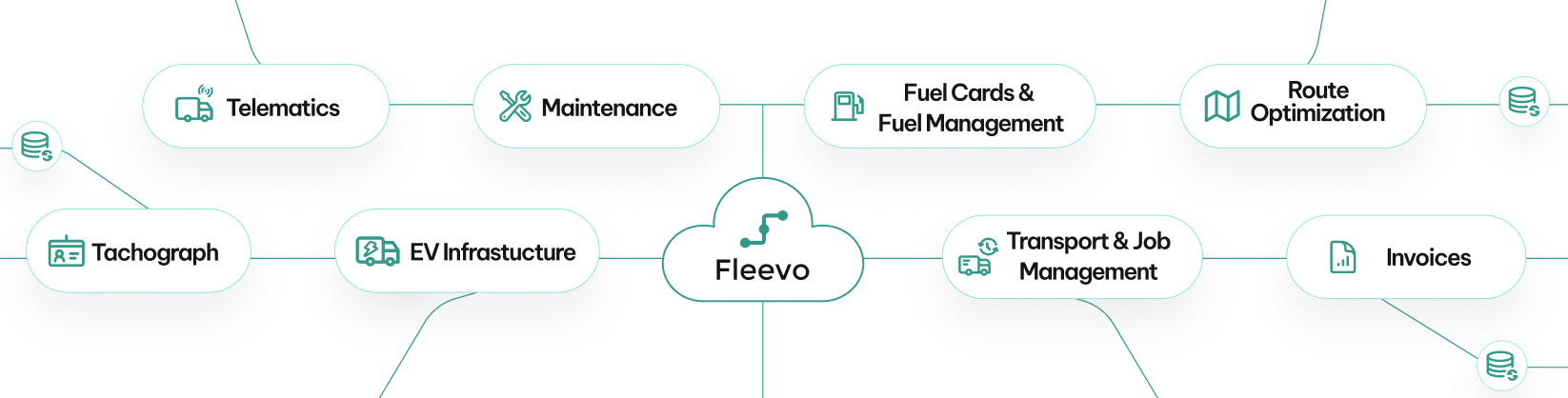
The arithmetic is trivial. The difficulty is that these ten numbers sit in eight or nine different systems, which is why most fleets calculate TCO annually at best.
- Depreciation (purchase price minus resale). Purchase invoice, plus a residual forecast or actual disposal proceeds. Usually the largest single line.
- Finance cost. Lease schedule or loan amortisation. On contract hire this is bundled into the rental, so split the rental into depreciation and finance rather than double counting.
- Fuel or energy. Fuel card statements, onsite tank dispensing records, charge point sessions. The line most fleets get wrong, because those three sources rarely reconcile against each other.
- Maintenance and repair. Workshop invoices, split to labour, parts and consumables. Keep scheduled servicing separate from unscheduled repair, or you cannot tell a maintenance problem from a driver behaviour problem.
- Tyres. Tyre supplier invoices. Worth its own line, because tyre cost per mile is one of the cleanest early indicators that a route or driver profile has changed.
- Insurance. Premium allocation per vehicle, plus excess actually paid on claims in the period.
- Tax and licensing. VED, operator licence apportionment, tolls, clean air and congestion charges.
- Fines and compliance. The notices themselves, attributed per vehicle. Most fleets book these to an overhead account, so they never reach a vehicle record.
- Downtime. Workshop and VOR records. Off-road days multiplied by the daily cost of a replacement, or the daily contribution that vehicle normally earns.
- Admin. Hours per vehicle on reconciliation, invoice checking and reporting, at a loaded hourly rate.
A Worked Example
A UK example, in pounds and litres. The figures are illustrative, chosen to show the method rather than to represent any particular market.
A 3.5t panel van, held 48 months, covering 80,000 miles:
- Purchase price £32,000, resale £11,000, so depreciation is £21,000
- Finance cost over the term: £3,400
- Fuel: 80,000 miles at 32 mpg, so 11,365 litres at £1.55 = £17,616
- Scheduled servicing: 4 services at £380 = £1,520
- Unscheduled repair: £2,900
- Tyres: 2 sets at £640 = £1,280
- Insurance: 4 years at £1,150 = £4,600
- Tax, tolls and zone charges: £2,100
- Fines and the admin to process them: £340
- Downtime: 11 VOR days at £180 = £1,980
- Admin: 9 hours per year at £38 = £1,368
Total TCO £58,104. Cost per month £1,210. Cost per mile £0.73.
Note what that exposes. Fuel is 30% of the total and depreciation 36%, so together they are two thirds of the number. Any TCO programme that starts anywhere else is optimising the small end.
Cost Per Mile and Cost Per Month
Report both, because they answer different questions. Cost per mile tells you what a vehicle costs to use. Cost per month tells you what it costs to keep. A van sitting on the yard has an excellent cost per mile and a terrible cost per month, because depreciation, finance, insurance and tax accrue whether or not it moves.
Within the calculation, separate the costs that accrue with use — fuel or energy, tyres, maintenance, tolls — from those that accrue regardless. Rising variable cost per mile points at driving, routing or vehicle condition. Rising fixed cost per mile almost always means the vehicle is not used enough to carry its own standing cost, which is a fleet sizing question rather than an operational one.
For the mileage figure itself, telematics odometer is the most reliable source. Fuel card odometer prompts are driver-entered and prone to typos, useful as a cross check rather than a primary source. Service records are accurate but too infrequent to support monthly reporting. See how to calculate fleet cost per mile for the detail.
Four Mistakes That Break the Number
1. Counting a contract hire rental as a single cost. It bundles depreciation, finance and often maintenance. Left unsplit, an owned vehicle and a leased one cannot be compared on the same basis.
2. Using invoiced fuel volume rather than reconciled volume. If card litres, tank dispensing records and telematics fuel level disagree, the difference is either a data problem or a loss. Neither appears if you simply total the statement.
3. Ignoring downtime. A vehicle that is cheap to maintain but off the road for three weeks is not cheap. Downtime is frequently the difference between two models that look identical on paper.
4. Averaging across the fleet too early. A fleet average hides the tail, and the tail is the actionable part. The useful output is a ranked list by cost per mile within class, reported as a median rather than a mean so one catastrophic repair does not move the benchmark.
How Often to Recalculate
Monthly for cost tracking, quarterly for decisions. Monthly is frequent enough to catch a vehicle drifting; quarterly smooths the lumpiness of servicing and tyre spend so replacement and reallocation decisions are not driven by one expensive month.
Refresh residual value assumptions at least twice a year. A stale residual forecast is the most common reason a TCO model quietly stops matching reality.
#1 AI-powered fleet spend control platform
Ready to Stop Losing Money on Fleet Spend?
See how much you could save in the first week. Start your free trial today. Cancel anytime.
Calculating Fleet TCO In Fleevo
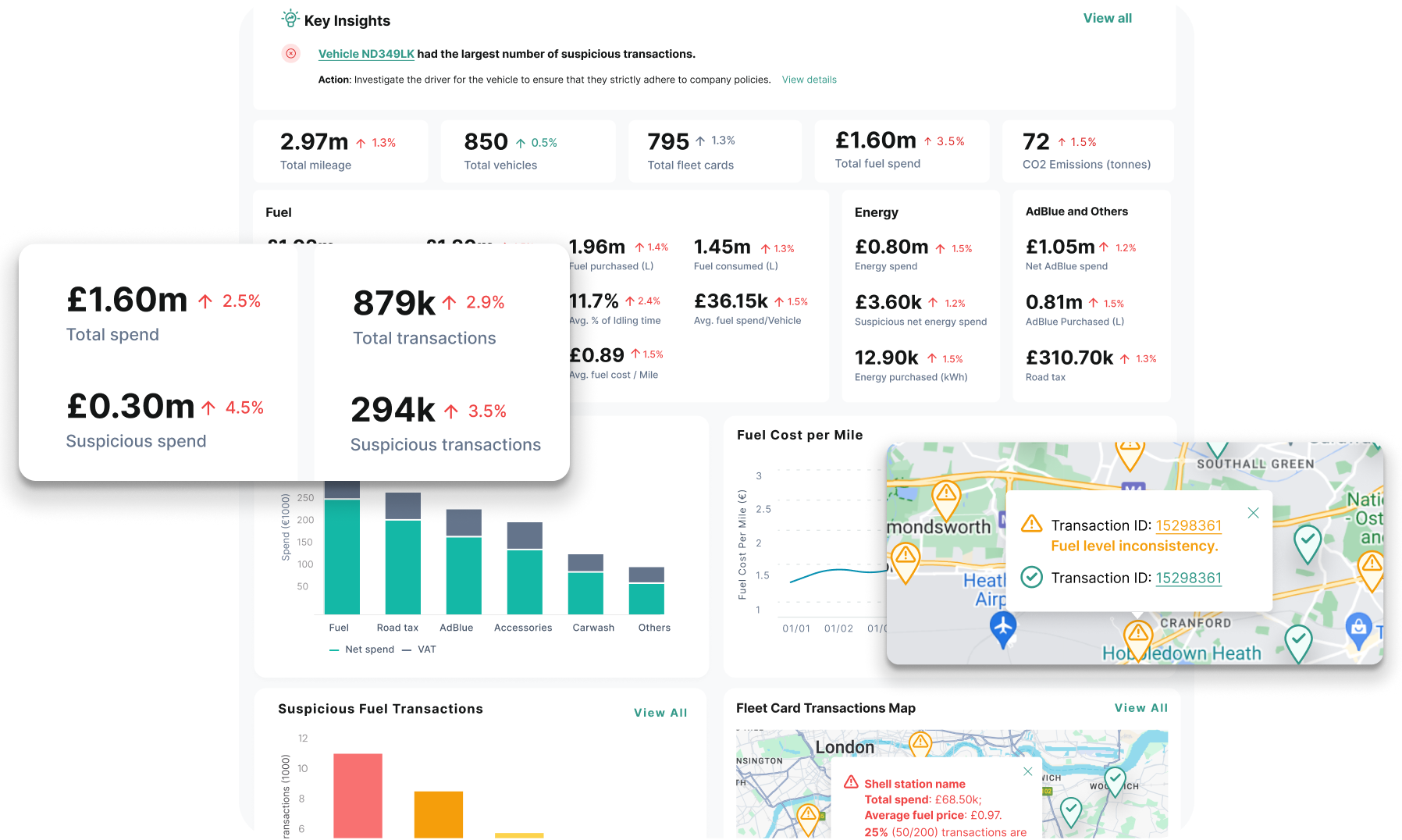
The calculation is not the hard part. Joining ten cost lines from eight or nine systems, per vehicle, per month, by hand is. Fleevo connects telematics, fuel cards, onsite tanks, charge points and maintenance invoices into one record per vehicle, so cost per mile and cost per month stay current rather than becoming a quarterly exercise, and every figure traces back to the underlying transactions. To run this on your own data, contact Fleevo or book a demo. See also Fleet TCO, how to reduce fleet TCO, and cost per mile.
Fleet TCO Calculation FAQs
What is the formula for fleet TCO?
TCO = (purchase price − resale value) + finance + fuel or energy + maintenance and repair + tyres + insurance + tax and licensing + fines + downtime + admin. Divide by months held for cost per month, or by distance for cost per mile.
What is the difference between TCO and cost per mile?
TCO is a total for the whole life of the vehicle. Cost per mile is that total divided by distance covered, which is what makes vehicles with different mileages comparable.
What data do I need before I can calculate fleet TCO?
Purchase or lease records, fuel or energy transactions, maintenance invoices, insurance allocation, tax and toll charges, and odometer readings. Odometer data is the one most fleets are missing, and without it there is no cost per mile.
Should leased vehicles be included?
Yes, with the rental split into its depreciation, finance and maintenance components so leased and owned vehicles compare on the same basis. Excluding them makes the fleet figure meaningless if any material share is on contract.
Why does my TCO figure differ from my finance team's?
Finance works from the general ledger, which allocates by account rather than by vehicle. Fines, downtime and admin in particular sit in overhead accounts and never reach a vehicle record. Reconciling the two views once, properly, is worth the effort.
How often should fleet TCO be recalculated?
Monthly for tracking, quarterly for decisions, with residual value assumptions refreshed at least twice a year.