
Fuel is one of the largest lines in any fleet budget, and the fuel card is where most of that spend is recorded. On its own, though, a fuel card statement is just a list of transactions. Fuel card integration turns that list into something you can actually control. Here is what it is, how it works, and what to look for.
What Is Fuel Card Integration?
Fuel card integration is the process of connecting your fuel card data to your fleet management or spend platform, so transactions flow in automatically and can be checked against other data such as vehicle location, mileage, and tank levels. Instead of downloading a statement and reconciling it by hand, integrated fuel data is imported continuously and cross-referenced in one place.
Why Integrate Fuel Card Data?
- Catch fraud and misuse. A transaction only becomes suspicious when you can compare it to where the vehicle actually was. Integration makes that check automatic. See how fuel card fraud works.
- End manual reconciliation. No more exporting statements and matching them to mileage logs by hand.
- See true cost per vehicle. Fuel is a core input to total cost of ownership, and you can't calculate it accurately while fuel data sits in a separate portal.
- Spot price and consumption creep. Integrated data surfaces premium-fuel purchases, off-network stations, and drops in fuel economy.
What Data Does a Fuel Card Provide?
A typical fuel card transaction includes the site and location, date and time, product or fuel grade, volume, and cost. Matched with telematics, that record can be lined up against the vehicle's GPS position and odometer, which is what makes automated checking possible.
How Fuel Card Integration Works
- Connect the source. Data comes in by direct API from the fuel card provider, or by automated import of the statements they email.
- Match to the vehicle. Each transaction is linked to a vehicle and, through telematics, to where that vehicle was at the time.
- Apply checks. Rules flag anything off: a fill when the vehicle was miles away, a volume larger than the tank, the wrong fuel grade, or repeat fills that suggest card sharing.
- Report. Clean, reconciled fuel data feeds cost-per-mile, TCO, and audit-ready reporting.
Which Fuel Cards Can You Integrate?
Any major fuel card can be integrated given the right connection. Common ones include Shell, BP, WEX, Voyager, Esso, TotalEnergies, Allstar, Right Fuel Card, and fuelGenie, alongside telematics platforms like Geotab, Samsara, and Verizon Connect. The goal is one view regardless of which card or system you use.
#1 AI-powered fleet spend control platform
Ready to Stop Losing Money on Fleet Spend?
See how much you could save in the first week. Start your free trial today. Cancel anytime.
How Fleevo Integrates Your Fuel Cards
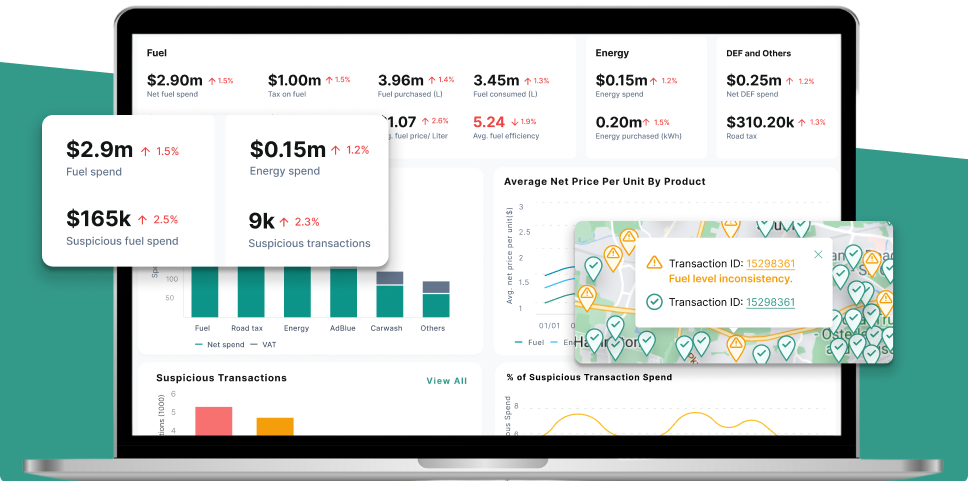
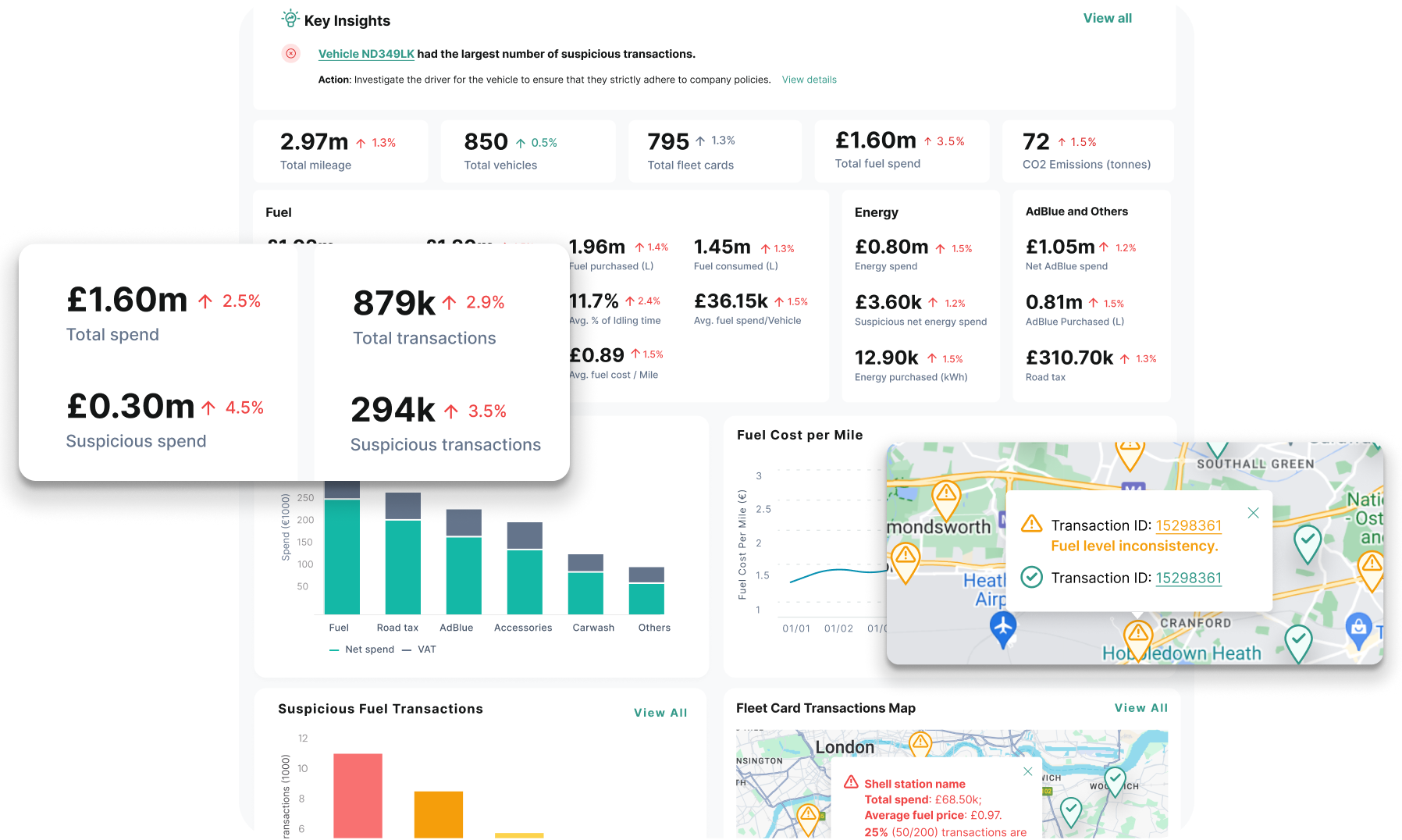
Fleevo connects the fuel cards, telematics, and onsite tanks you already use into one platform, with no new hardware. You can connect directly or simply forward the statements your provider emails. Once connected, every transaction is automatically cross-referenced against vehicle location and tank data to flag fraud, wrong-fuel fills, card sharing, and premium-fuel waste, and the reconciled data feeds a live cost and audit view. See how it fits into wider fleet data integration, or explore Fleevo's fuel card management system.
Fuel Card Integration FAQs
Do I need to switch fuel cards to integrate them?
No. Integration works with the cards you already have. A good platform connects to major providers directly or imports the statements they email, so there is no need to change supplier.
Do I need new hardware?
No. Fuel card integration uses data connections, not devices. If you already run telematics, that data is matched to your fuel transactions through existing feeds.
What is the main benefit of integrating fuel card data?
Automated checking. Once fuel data is matched to vehicle data, fraud, misuse, and waste surface on their own, and manual reconciliation disappears.
Popular integrations: Samsara fuel card integration and Geotab fuel card integration.
Explore the platform: fleet fuel management software and Fuel Card Fraud: How to Detect and Prevent It.