
Samsara tells you where every vehicle is and how far it has traveled. Your fuel card tells you what was bought, where, and when. Kept apart, neither can tell you whether a fuel transaction was legitimate. Connect them, and every fill can be checked against the vehicle that supposedly made it. Here is how Samsara fuel card integration works and what it catches.
Why Connect Samsara With Your Fuel Card?
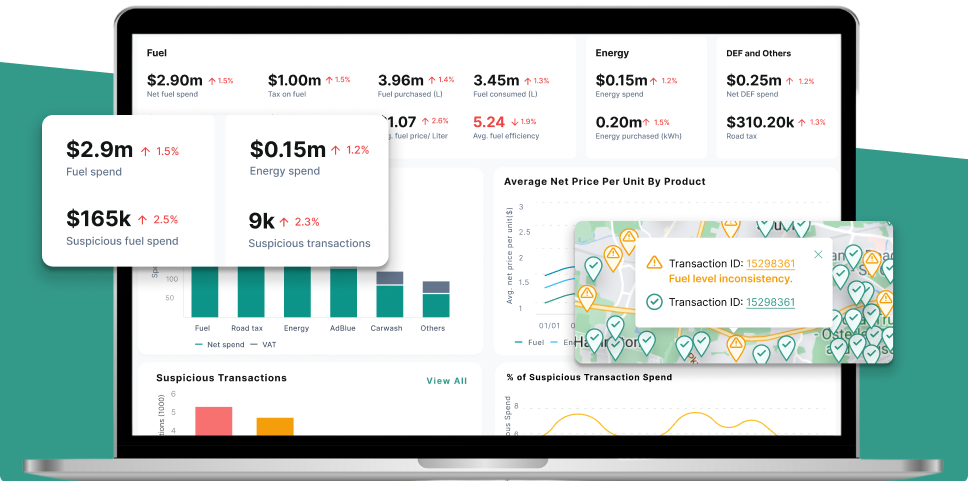
A fuel card statement on its own is hard to police. A large diesel fill looks fine until you know the assigned vehicle was 40 miles away at the time, or that its tank only holds a fraction of what was purchased. Samsara supplies the missing half of the picture: the vehicle's GPS location, odometer, and fuel level at the moment of each transaction. Matching the two turns a list of charges into verifiable events.
What Data Does Samsara Provide?
- GPS location: where each vehicle was, minute by minute.
- Odometer and mileage: for cost-per-mile and consumption checks.
- Fuel level and engine data: to compare against the volume purchased.
- Driver assignment: who was in the vehicle at the time.
What the Integration Catches
Once Samsara data is matched to fuel card transactions, common problems surface on their own:
- Location mismatch: a fill where the vehicle was nowhere near the station.
- Volume over tank size: more fuel purchased than the vehicle could hold, a classic sign of filling a container or a second vehicle.
- Wrong fuel type: the wrong grade for the vehicle.
- Card sharing: repeat or overlapping transactions one vehicle could not have made.
How to Connect Samsara With Your Fuel Card
- Connect Samsara. Authorize access to your Samsara account through its API. No new hardware is required.
- Connect your fuel card. Link the provider directly, or import the statements they email.
- Match transactions to vehicles. Each fuel transaction is lined up with the Samsara vehicle's location and odometer at that time.
- Review the exceptions. Only genuine mismatches are flagged, with the location and transaction detail attached.
See the Samsara integration page to connect it to Fleevo.
#1 AI-powered fleet spend control platform
Ready to Stop Losing Money on Fleet Spend?
See how much you could save in the first week. Start your free trial today. Cancel anytime.
How Fleevo Connects Samsara and Your Fuel Cards
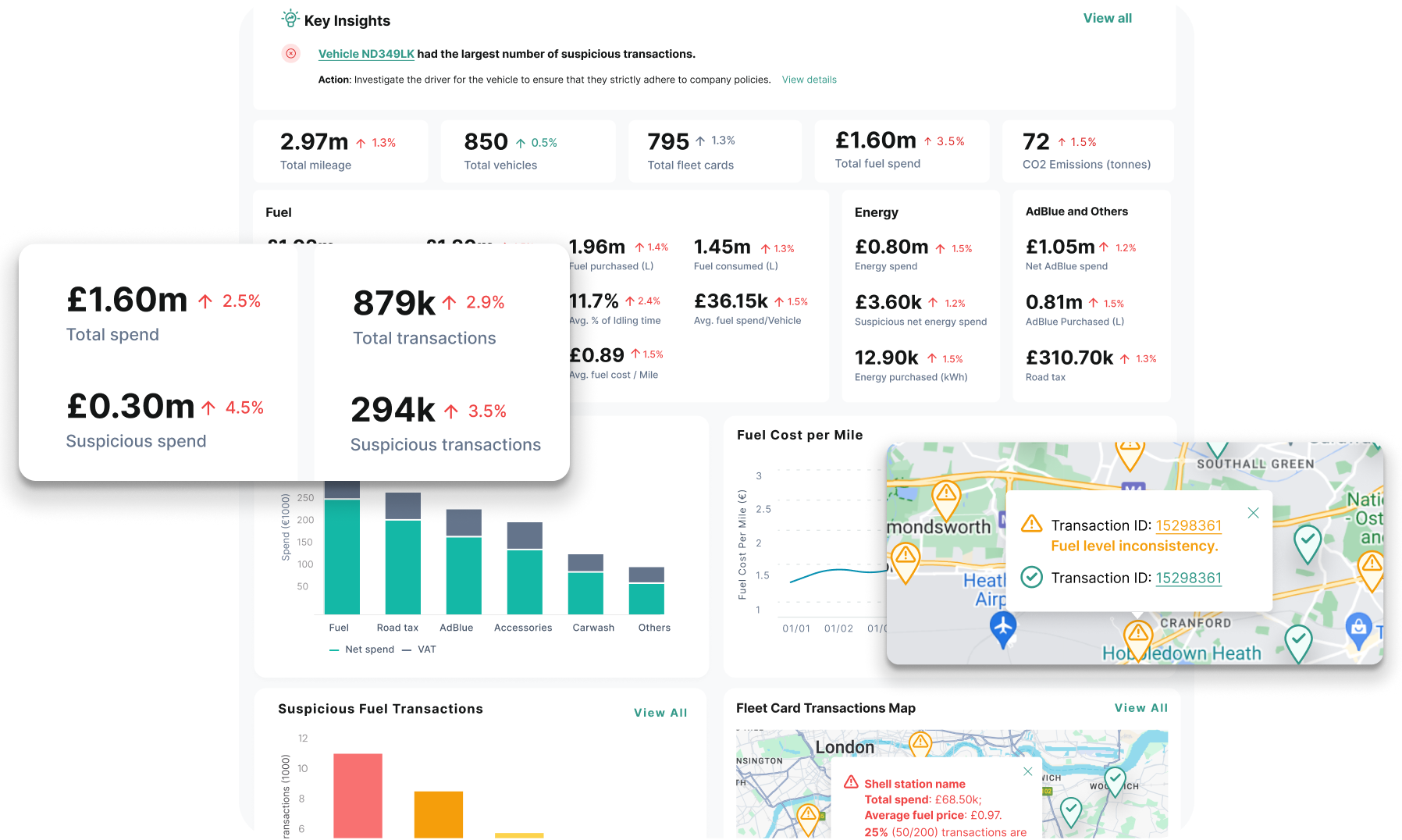
Fleevo integrates Samsara alongside the fuel cards, onsite tanks, and other systems you already use, with no new hardware. It pulls Samsara location and vehicle data, matches it to every fuel transaction automatically, and flags fraud, wrong-fuel fills, card sharing, and premium-fuel waste. Because the checks run continuously, you review a short exception list instead of reconciling statements by hand. It works the same way with other telematics providers, so a mixed estate stays in one view.
Samsara Fuel Card Integration FAQs
Do I need new hardware to connect Samsara and my fuel card?
No. Both connect through data: Samsara through its API, and the fuel card directly or by statement import. Your existing Samsara devices are all you need.
Which fuel cards work with Samsara?
Any major fuel card can be matched to Samsara data given the right connection, including Shell, WEX, Voyager, BP, and others. The card and the telematics do not have to come from the same supplier.
What does connecting Samsara with a fuel card actually detect?
Location mismatches, fills larger than the tank, wrong fuel grades, and card sharing: the patterns that are invisible when fuel and location data sit in separate systems.
Related: Fuel Card Integration: How It Works for Fleets and Fuel Card Fraud: How to Detect and Prevent It.
Explore the platform: Fuel & Energy Management.