

Service plans make maintenance cost predictable. They do not automatically make it lower. Whether a plan reduces your TCO depends on one comparison: the plan price against what you actually spent on the same vehicle type and duty cycle over the last three years. Most fleets have never run that comparison, which is why the question keeps getting answered with opinion.
What a service plan actually changes
A service plan converts variable maintenance spend into a fixed monthly cost. That has four real effects, only one of which is a direct saving:
- Variance drops. Budgeting gets easier and unplanned spend stops arriving mid quarter. Genuinely valuable, and the main reason finance teams like plans.
- Labour rate risk transfers to the provider. If workshop rates rise during the term, that is now their problem.
- Overbilling risk falls. You are not checking individual invoices for inflated labour hours, because you are not paying per invoice.
- Discretionary work risk rises. A fixed price provider has an incentive to do the minimum, which is the mirror image of a per invoice provider's incentive to do the maximum.
Note that the third and fourth points pull in opposite directions. A plan removes one failure mode and introduces another.
The test
Pull three years of maintenance invoices for the vehicle type in question and split them:
- Scheduled servicing. This is what the plan covers. Total it, divide by the number of vehicle months, and you have your actual scheduled cost per vehicle per month.
- Wear items. Brakes, clutches, tyres, exhaust. Check the plan wording carefully, because coverage varies more here than anywhere else.
- Unscheduled repair and damage. Almost never covered. Exclude it from the comparison entirely, or you will flatter the plan.
Compare the plan price to line 1, plus line 2 only to the extent the plan actually covers it. If the plan costs more than your historic figure, you are paying a premium for predictability. That can still be the right decision. It is just not a saving, and it should not be presented as one.
The three variables that decide the answer
Mileage against the plan's assumption. Plans are priced on a mileage band. A fleet running consistently at the top of its band gets good value, because service intervals come round more often than the pricing assumed. A fleet at the bottom of the band is subsidising someone else.
Duty cycle severity. Urban multi drop work destroys brakes and clutches at a rate that trunking does not. If your duty cycle is harsher than the average the plan was priced for, the plan is likely to be good value, and vice versa.
Hold period. Maintenance cost is back loaded. Years 1 and 2 are cheap, years 4 and 5 are not. A plan across a 3 year hold covers mostly the cheap years, which is exactly when you need it least.
That last point is the one most often missed. Short hold plus service plan is usually the worst combination on cost grounds, and it is also the most commonly sold.
What to check in the wording
- Whether wear items are included, and which ones specifically
- What happens if you exceed the mileage band, and at what rate
- Whether the plan is transferable on disposal, which affects resale value
- Whether you retain the right to see line level detail of work performed
- Whether MOT, and any statutory inspection relevant to the vehicle class, is included
The fourth point matters more than it looks. If a plan means you no longer receive itemised work records, you lose the data that tells you which vehicles are becoming expensive, and that costs you on the replacement decision later.
#1 AI-powered fleet spend control platform
Ready to Stop Losing Money on Fleet Spend?
See how much you could save in the first week. Start your free trial today. Cancel anytime.
Testing Service Plans With Fleevo
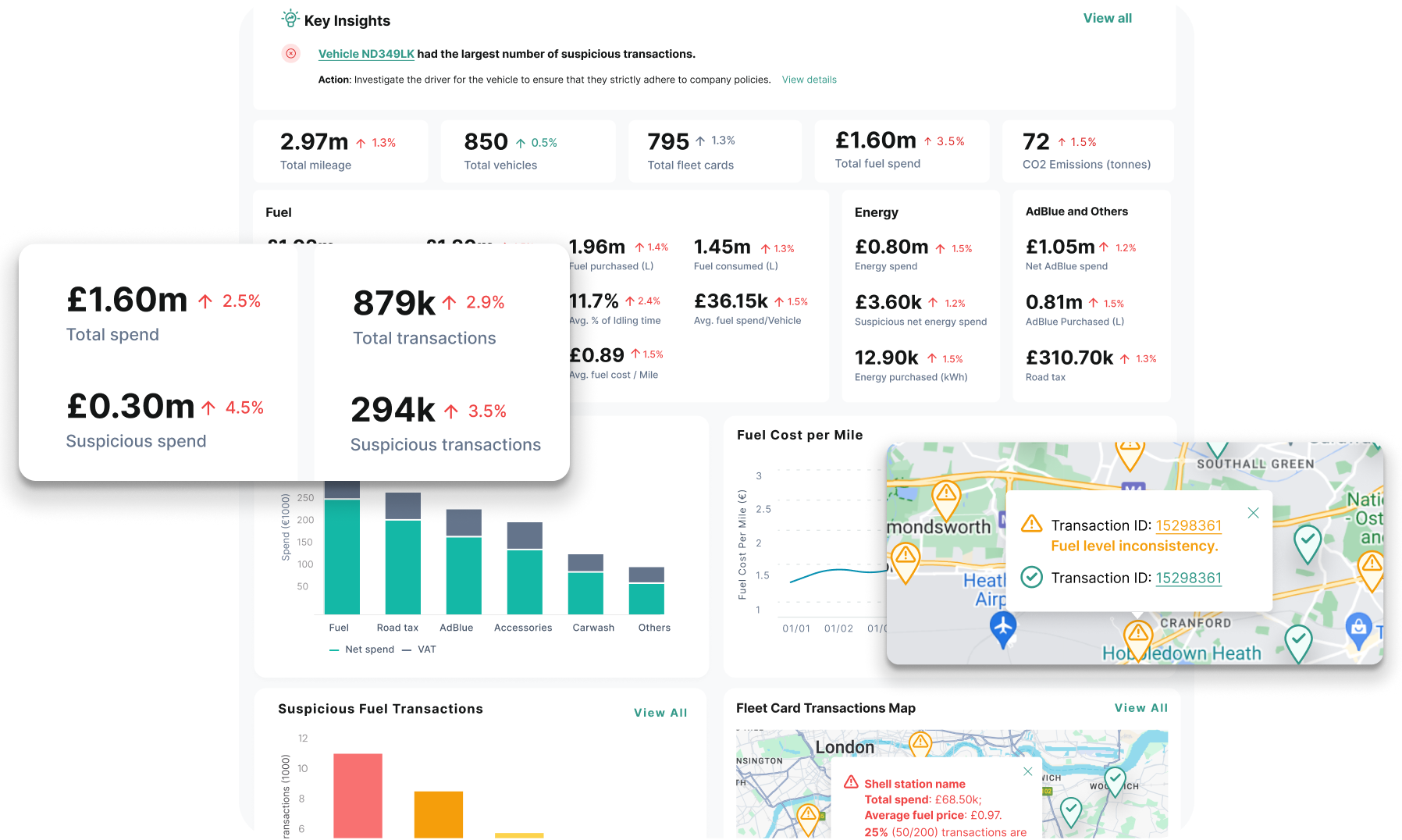
This decision is only as good as your maintenance invoice history, split cleanly into scheduled, wear and unscheduled work, per vehicle and per duty cycle. Fleevo parses maintenance invoices to line level and holds them against the vehicle record, so the comparison takes an afternoon rather than a data project, and the plan can be re-tested at renewal against what actually happened. To run this on your own invoice history, contact Fleevo or book a demo. See also maintenance spend control and controlling outsourced maintenance spend.
Service Plan FAQs
Are service plans cheaper than paying per service?
Sometimes. They are cheaper when your mileage sits at the top of the priced band, your duty cycle is severe, or you hold vehicles long enough to reach the expensive years. They are more expensive when the opposite is true. The only way to know for your fleet is to compare the plan price against your own scheduled servicing history.
Do service plans affect resale value?
A complete, documented service history supports resale value. A transferable remaining plan can add a little more. The mechanism is the record, not the plan itself, so a well documented pay as you go history achieves most of the same benefit.
What is the difference between a service plan and a maintenance contract?
A service plan typically covers scheduled servicing only. A full maintenance contract covers servicing, wear items, and usually repairs, at a correspondingly higher price. The words are used loosely by suppliers, so read the schedule rather than the label.
Should a mixed fleet use service plans for everything?
Rarely. The answer varies by vehicle class, mileage band and hold period, so a blanket decision across a mixed fleet will be wrong for a good share of the vehicles. Segment first, then decide per segment.
Does a service plan remove the need to check invoices?
It removes the overbilling risk and replaces it with an under-servicing risk, so the thing to monitor changes rather than disappears. Retain the right to line level work records so you can still see what was actually done.
Service plans are one lever among many; see the pillar guide on how to reduce fleet TCO for the full list ranked by payback.