
Outsourced maintenance spend is controlled at the contract and at the authorisation, not at the invoice. Checking invoices catches what has already happened, and it is worth doing. But by the time an invoice arrives the work is done, the parts are fitted, and your position is a dispute rather than a decision. The leverage sits earlier.
This guide covers that earlier half: what to put in the agreement, where to set an authorisation threshold, and how to review an estimate before the vehicle goes in. For the detection side, see how to spot maintenance overbilling and AI anomaly detection for labour rate and part price overbilling.
The prerequisite nobody puts in the contract
Start here, because it determines whether anything else is possible: you need line-level invoicing, and it has to be a contractual requirement.
Labour hours stated separately from parts. Part numbers, not descriptions. Unit prices, not totals. If your supplier sends an invoice reading "service and repair, 640.00", there is no check you can run, no benchmark you can build, and no conversation you can have that is not a matter of opinion. No amount of analysis fixes missing detail.
This is the actual blocker in most fleets. The analysis is not difficult. The data to run it on does not exist, because nobody made it a condition of the work.
Six clauses worth having
- Line-level invoicing. Labour hours, part numbers and unit prices stated separately. Non-negotiable, and the clause that enables every other one.
- Standard times as the basis for labour. Name the source you will both work from, and require the supplier to justify any job exceeding standard by more than an agreed margin. Standard times exist precisely so labour can be estimated independently of who did the work, which makes this an administrative check rather than a technical argument.
- An authorisation threshold. Work above a stated value needs approval before it starts, not after.
- Part sourcing rules. Whether non-original parts are acceptable, and for which components. Silence here is how a cheaper part gets billed at a premium price without breaching anything.
- Access to the vehicle history the supplier holds, in a usable format, during the contract and on exit. This one catches people out at transition: if the supplier holds your maintenance history and will not release it usably, you lose the baseline every future check depends on, and you cannot benchmark a replacement supplier against the incumbent.
- A dispute and credit process with a defined timeframe, so a queried charge has a route that does not depend on goodwill.
Where to set the authorisation threshold
The threshold value matters less than the fact that one exists and is applied consistently. Set it low enough to capture the work where discretion is genuinely exercised, and high enough that routine servicing does not queue behind an approval.
A workable pattern is two tiers: routine scheduled work proceeds without approval, anything unscheduled above a stated value needs a second pair of eyes. What you are buying is not the saving on any individual job. It is the supplier knowing that estimates get read.
Reviewing an estimate before you authorise
Three questions, asked consistently, change supplier behaviour faster than any clause:
- Are the labour hours consistent with standard times for these jobs?
- Are the part prices consistent with what we paid last time for the same part numbers? Your own purchase history is a better benchmark than any published list price, because it reflects what you actually negotiated.
- Is any of this work inside an interval that suggests it should not be due yet? Wear items replaced at a fraction of expected life, repeatedly, is over-servicing rather than overpricing, and it is the check almost nobody runs.
None of the three requires technical expertise. All three require the line detail from the first clause above.
Fixed price or per invoice: choosing which risk you carry
The two models fail in opposite directions, and neither is control-free.
Per invoice gives the supplier an incentive to do more. The risk is overbilling and unnecessary work, and the defence is the checks above plus invoice-level detection.
Fixed price gives the supplier an incentive to do less. The risk is under-servicing, deferred wear items and consequential damage later. It also, in practice, tends to reduce the line-level detail you receive, because you are no longer paying per item. That weakens your ability to monitor either failure mode.
If you go fixed price, keep the line-level invoicing clause anyway. You are buying predictability, and you should not pay for it with visibility.
And check the invoices too
Contracting well reduces what reaches you. It does not eliminate it, and the detection layer still earns its place: labour hours above standard, part prices drifting, wear items replaced early, duplicate charges across two visits. Those are covered in detail in how to spot maintenance overbilling.
The distinction worth holding onto is that individual invoices almost never look wrong. Patterns do. A supplier whose invoices sit consistently above standard times across hundreds of jobs is a contract conversation, not an invoice query.
#1 AI-powered fleet spend control platform
Ready to Stop Losing Money on Fleet Spend?
See how much you could save in the first week. Start your free trial today. Cancel anytime.
Controlling Supplier Maintenance Spend With Fleevo
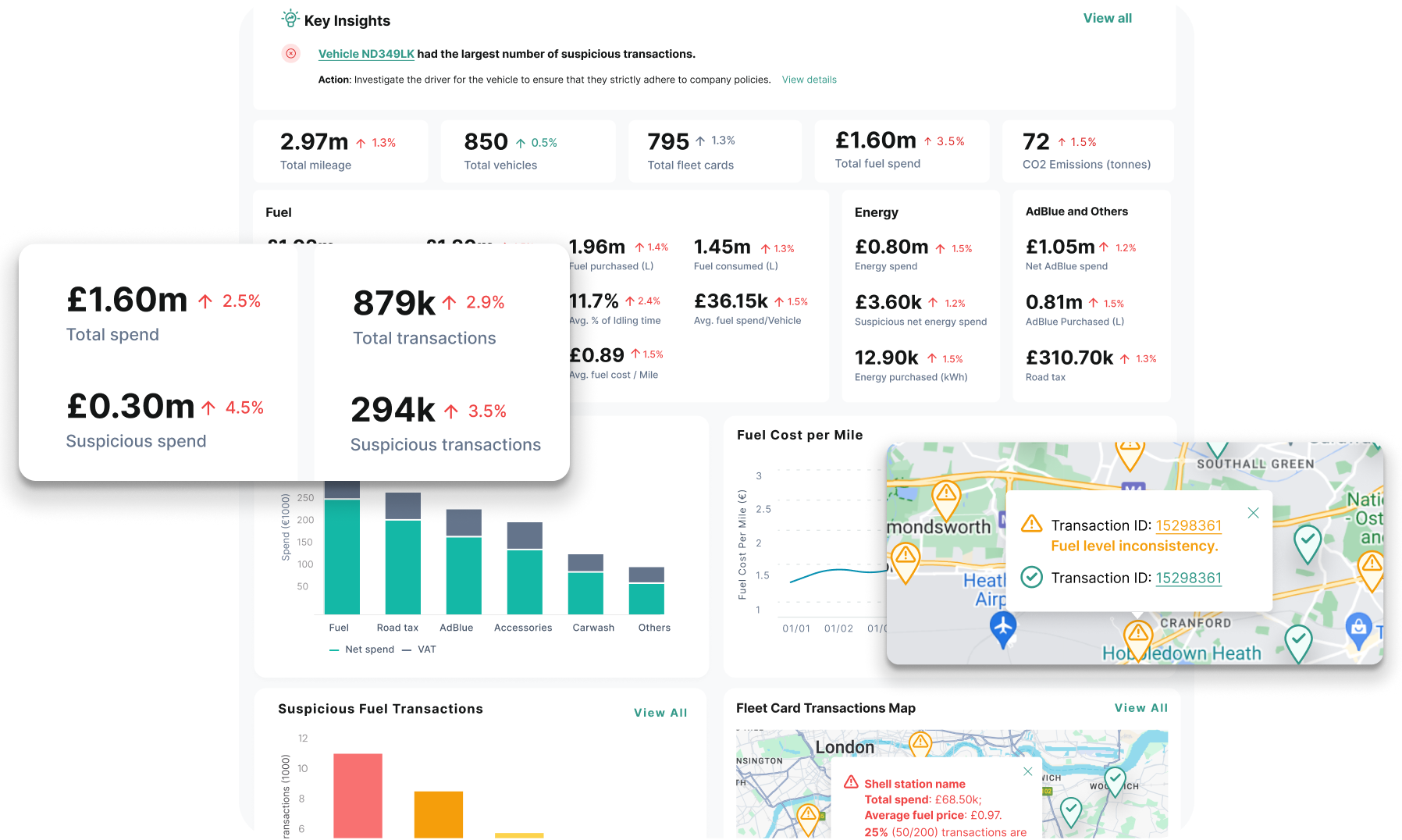
Fleevo parses maintenance invoices to line level and holds them against the vehicle record, then compares labour hours against standard times and part prices against your own purchase history across suppliers and sites, and flags wear items replaced early. Findings arrive with the comparable invoices attached, which is what turns a supplier conversation from an assertion into a documented pattern. Because the history sits with you rather than with the supplier, it also survives a change of supplier. To see what your own invoice history shows, contact Fleevo or book a demo. See also Maintenance Spend Control, how to reduce fleet maintenance costs, and fleet invoice management.
Outsourced Maintenance FAQs
What tools help control outsourced maintenance spend?
Anything that captures maintenance invoices at line level and compares labour hours to standard times and part prices to your own purchase history. Line-level parsing is the capability that matters, because total-only capture makes every other check impossible regardless of what else the tool does.
What should be in a fleet maintenance contract?
Line-level invoicing with labour hours, part numbers and unit prices stated separately; standard times as the named basis for labour; an authorisation threshold above which work needs prior approval; part sourcing rules; access to the vehicle history the supplier holds, including on exit; and a dispute and credit process with a defined timeframe.
Where should a maintenance authorisation threshold be set?
Low enough to capture work where genuine discretion is exercised, high enough that routine servicing is not held up waiting for approval. Two tiers works well: scheduled work proceeds, unscheduled work above a stated value needs approval. Consistency matters more than the exact figure.
Does a fixed-price maintenance contract remove the risk?
No, it swaps it. Per-invoice pricing incentivises doing more, so the risk is overbilling. Fixed pricing incentivises doing less, so the risk is under-servicing and consequential damage later. Fixed price also tends to reduce the line-level detail you receive, which weakens monitoring of either. Keep the line-detail clause regardless of model.
Can you review a maintenance estimate without being a technician?
Yes. Standard times exist so labour can be estimated independently of the person doing the work, and your own purchase history gives you part prices. Comparing an invoiced figure against a published figure is an administrative check, not a technical judgement.
What happens to your maintenance history if you change supplier?
It depends entirely on whether your contract gives you access to it in a usable format. If the supplier holds it and will not release it, you lose the baseline that every labour and parts check depends on, and you cannot benchmark the incoming supplier against the outgoing one. Put it in the agreement before you need it.