

Amazon Delivery Service Partners (DSPs) run some of the hardest-working fleets on the road — dozens of vans covering high daily mileage, on margins thin enough that a few percent of fuel waste can decide whether a route is profitable. For DSPs, fleet management isn't a back-office function; it's the difference between a healthy business and a struggling one. Here's what controlling a DSP fleet actually takes.
Why DSP Fleet Management Is Different
A DSP operates under conditions most fleets don't face all at once: a large fleet of similar vans, very high mileage per vehicle, tight and fixed margins set by the Amazon contract, and intense scrutiny on cost per route. That combination means small, per-vehicle leaks — a little fuel waste here, an inflated repair there — multiply fast across the fleet and hit the bottom line directly. Control depends on seeing every cost clearly, at scale, in near real time.
The Biggest Cost Levers for a DSP
- Fuel: the largest controllable cost, and the most exposed to misuse and fraud — personal fill-ups, off-route fueling, and unaccounted gallons across a big driver pool.
- Maintenance: high mileage means heavy servicing and repair spend, where overbilling and unnecessary work slip through easily.
- Fines and damage: urban multi-drop work generates parking and moving-traffic penalties structurally, and shared vans accumulate kerbing and low-speed damage that goes unreported until it is too late to attribute.
- Downtime: a van off the road is a route uncovered — preventive maintenance scheduled by real mileage keeps vehicles working.
- Total cost per route: with a fleet of near-identical vans, the route is the unit of work, and cost benchmarking against it instantly surfaces the outliers dragging margins down.
Cost Per Route, Not Cost Per Van
In most fleets the vehicle is the natural cost unit. In a DSP it is not, because vans are shared and rotated while the route is the thing Amazon pays for and the thing that has to be profitable. A van that looks average on cost per mile can still be running two loss-making routes, and you will not see it until you cost the route rather than the asset.
Building a cost-per-route figure means combining the four leaks above — fuel, maintenance accrual, fines, and damage — against the route each was incurred on. Ranked across routes, it does immediately what a fleet average never can: it names the routes losing money and separates a genuinely expensive route from a van that simply happens to run it.
How DSPs Get Control of Fleet Costs
- Corroborate every fuel transaction
With rotating drivers and shared vans, card assignment tells you little. Check each transaction against the van's location, tank capacity, and fuel type — the only reliable control at DSP scale, and impossible by hand. - Compare drivers on the same route
The same route driven by different people should consume similar fuel. Persistent differences on identical routes are coaching opportunities worth real money at DSP mileages, and they only surface when route, van, and driver are joined to the fuel data. - Analyse fines by location before driver
Repeat penalties at the same address are almost always a route-plan problem — a loading restriction, a banned turn — not a driver problem. Fixing the plan removes the recurring cost; starting with driver conversations does not, and it damages retention in an operation that can least afford it. - Capture damage at handover
A short timestamped photo check at the start and end of each shift is the only way to attribute damage in a shared-van operation. Its real value is deterrence. - Schedule maintenance by real mileage
Use telematics to service vehicles based on actual use, preventing the breakdowns that pull vans off routes. - Unify the data
Pull fuel, telematics, maintenance, and fines into one view so cost per route and per vehicle is visible without manual spreadsheets.
Why Weekly Beats Monthly for a DSP
Most fleets review cost monthly. For a DSP that is too slow, because driver turnover means a monthly fuel exception often surfaces after the driver concerned has already left, and a loss-making route runs four more weeks before anyone sees it. A weekly view — cost per route ranked, fuel exceptions with evidence, driver consumption on repeated routes, open fines with deadlines, and van availability — is what lets a DSP act while the shift is still recent and the driver still on the roster.
#1 AI-powered fleet spend control platform
Ready to Stop Losing Money on Fleet Spend?
See how much you could save in the first week. Start your free trial today. Cancel anytime.
How Fleevo Helps Amazon DSPs
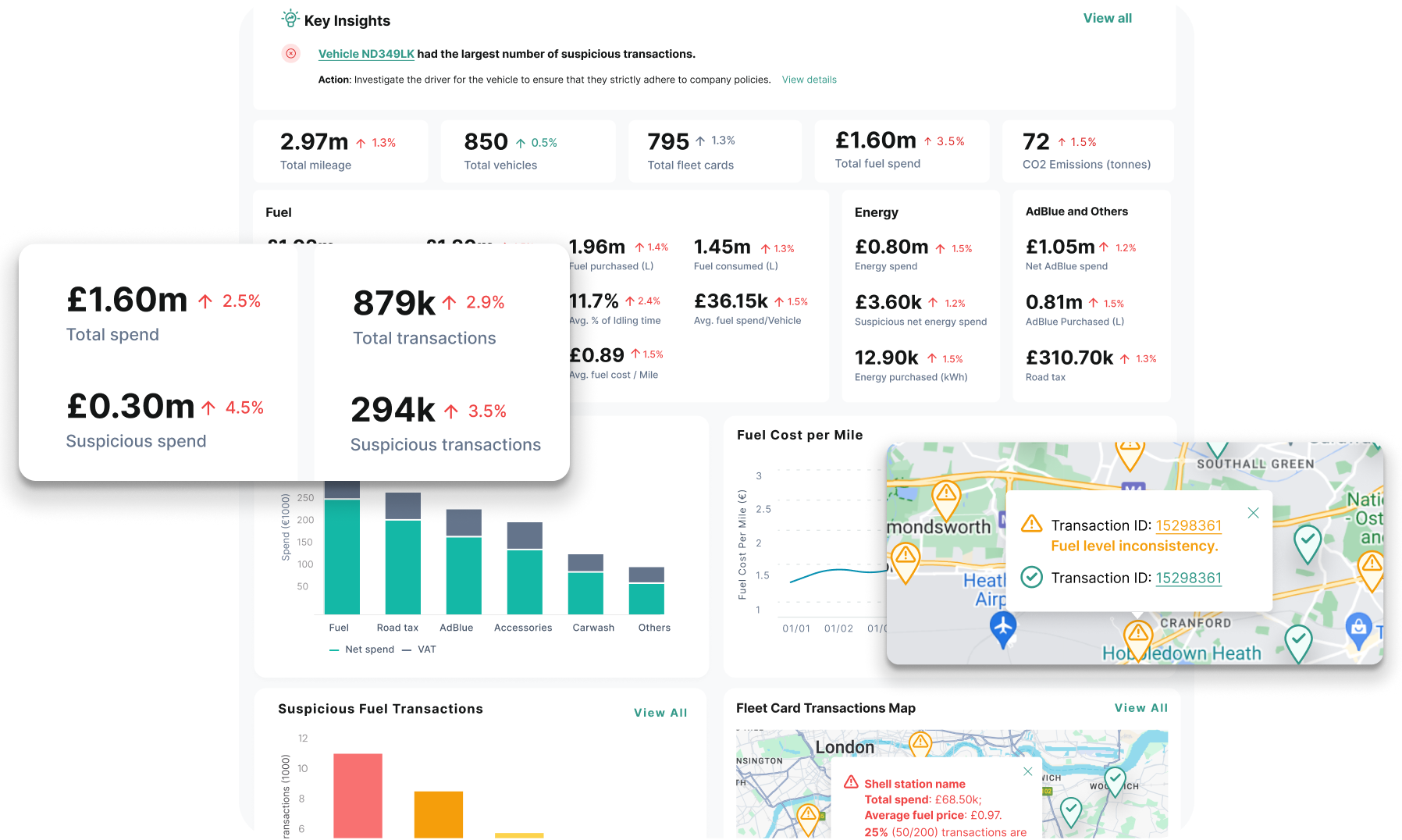
Fleevo gives DSPs one platform to control fuel and fleet spend at scale. It connects your fuel cards and telematics — including the systems commonly used across DSP fleets — and automatically corroborates every fuel transaction against van location and tank capacity, compares driver consumption on repeated routes, analyses fines by location, schedules preventive maintenance by real mileage, and flags maintenance overbilling. Everything rolls up to cost per route and per vehicle in one audited view, refreshed continuously rather than monthly, so you act while the shift is still recent. Fleets typically uncover unaccounted fuel activity within their first weeks. Learn more about Fleevo for Amazon DSP fleets.
Amazon DSP Fleet FAQs
What is an Amazon DSP fleet?
An Amazon Delivery Service Partner (DSP) is an independent business that operates a fleet of delivery vans to deliver Amazon packages. DSPs run high-mileage fleets on fixed margins, making fuel and cost control critical to profitability.
Why cost per route rather than cost per van for a DSP?
Because vans are shared and rotated while the route is what Amazon pays for and what has to be profitable. A van with an average cost per mile can still run loss-making routes, and only costing the route — fuel, maintenance, fines, and damage against the route each was incurred on — makes that visible.
How do DSPs control fuel card misuse with rotating drivers?
By corroborating each transaction against the van rather than the driver: location against telematics position, volume against tank capacity, and product against fuel type. Driver-based controls are weak when vans and drivers change daily, so vehicle-level checks do the work.
What's the biggest cost risk for a DSP fleet?
Fuel is the largest controllable cost and the most exposed to waste and misuse, but unmanaged maintenance overbilling, fines, and vehicle downtime run close behind. On DSP margins, small per-vehicle leaks add up quickly across the fleet.
How often should a DSP review fleet costs?
Weekly, not monthly. Driver turnover means a monthly review often surfaces a fuel exception after the driver has left, and a loss-making route runs several more weeks before anyone notices. A weekly cost-per-route view lets you act while it still matters.
Bottom line: DSP profitability lives and dies on cost per route. Corroborate fuel against the van, compare drivers on identical routes, fix fine hotspots by location, capture damage at handover, and unify the data weekly — and the small leaks that erode thin margins become visible and fixable.
Related: keep your vans compliant too, see Amazon DSP fleet compliance.
Explore the platform: Fleet Analytics for Amazon DSP Fleets · Fuel & Energy Management