
Integrating fuel cards with telematics means matching every fuel transaction to the vehicle that made it, its location, mileage and tank, so the data can prove whether the fuel was legitimate. On their own, a fuel card shows what was bought and telematics shows where the vehicle was; neither sees the other, and that gap is where fraud and waste hide. Here is how to connect them.
Why Integrate Fuel Cards With Telematics
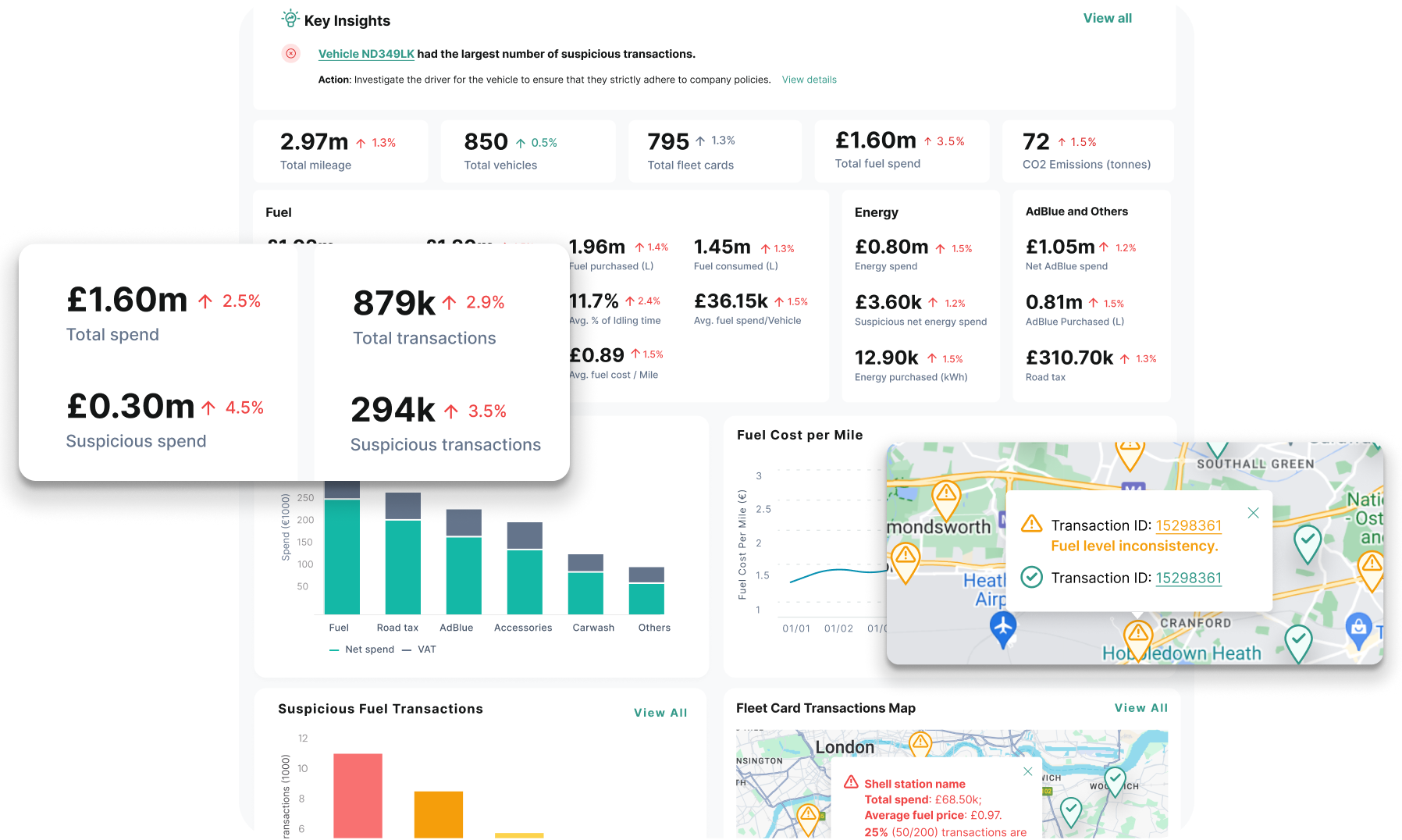
- Catch fraud: a fill at a station 30 miles from the vehicle, or more litres than the tank holds, is only visible when card and telematics data meet.
- Reconcile fuel: card volume, tank draw and telematics consumption should agree; the gap is either error or loss.
- Get cost per mile right: fuel spend divided by real telematics distance, per vehicle.
How to Do It, Step by Step
- Inventory your systems. List every fuel card and the telematics provider on each vehicle.
- Get both data feeds flowing. Connect fuel-card transactions and telematics location and odometer data, by API where available, or by scheduled statement import.
- Map cards to vehicles. Every card tied to a specific vehicle, with a documented process for reassignment, because a stale mapping breaks every check.
- Set the cross-checks. Location versus station, volume versus tank capacity, and fuel type versus the vehicle.
- Review exceptions, not totals. Work the flagged transactions with their evidence, rather than reading a monthly spend report.
What to Check Before Choosing a Tool
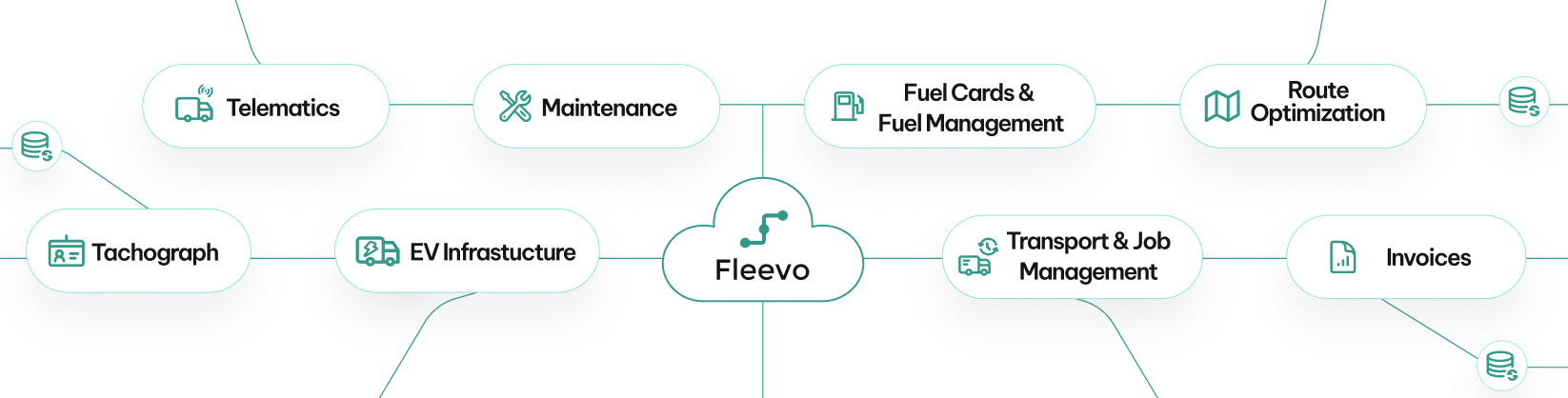
Confirm it connects to the specific cards and telematics you run, audits onsite tanks and EV charging as well as cards, and works continuously rather than as a monthly export. For the wider picture of joining all fleet systems, see what is fleet data integration.
Common Pitfalls
The two that break most integrations are card-to-vehicle mappings that drift as cards are reassigned, and manual CSV joins that fail the moment a format changes. Both are why spreadsheet reconciliations rarely survive more than a few cycles.
Frequently Asked Questions
Why connect fuel cards to telematics?
So each fuel transaction can be checked against the vehicle's location, mileage and tank, which is the only reliable way to catch misuse and reconcile fuel accurately.
Do fuel cards integrate with any telematics provider?
It depends on the platform doing the joining. A dedicated audit platform connects to many cards and telematics systems; confirm your specific combination is supported before committing.
Do I need new hardware?
No. Integration uses the data your existing telematics and fuel cards already produce.
#1 AI-powered fleet spend control platform
Ready to Stop Losing Money on Fleet Spend?
See how much you could save in the first week. Start your free trial today. Cancel anytime.
Fleevo Joins Fuel Cards and Telematics for You
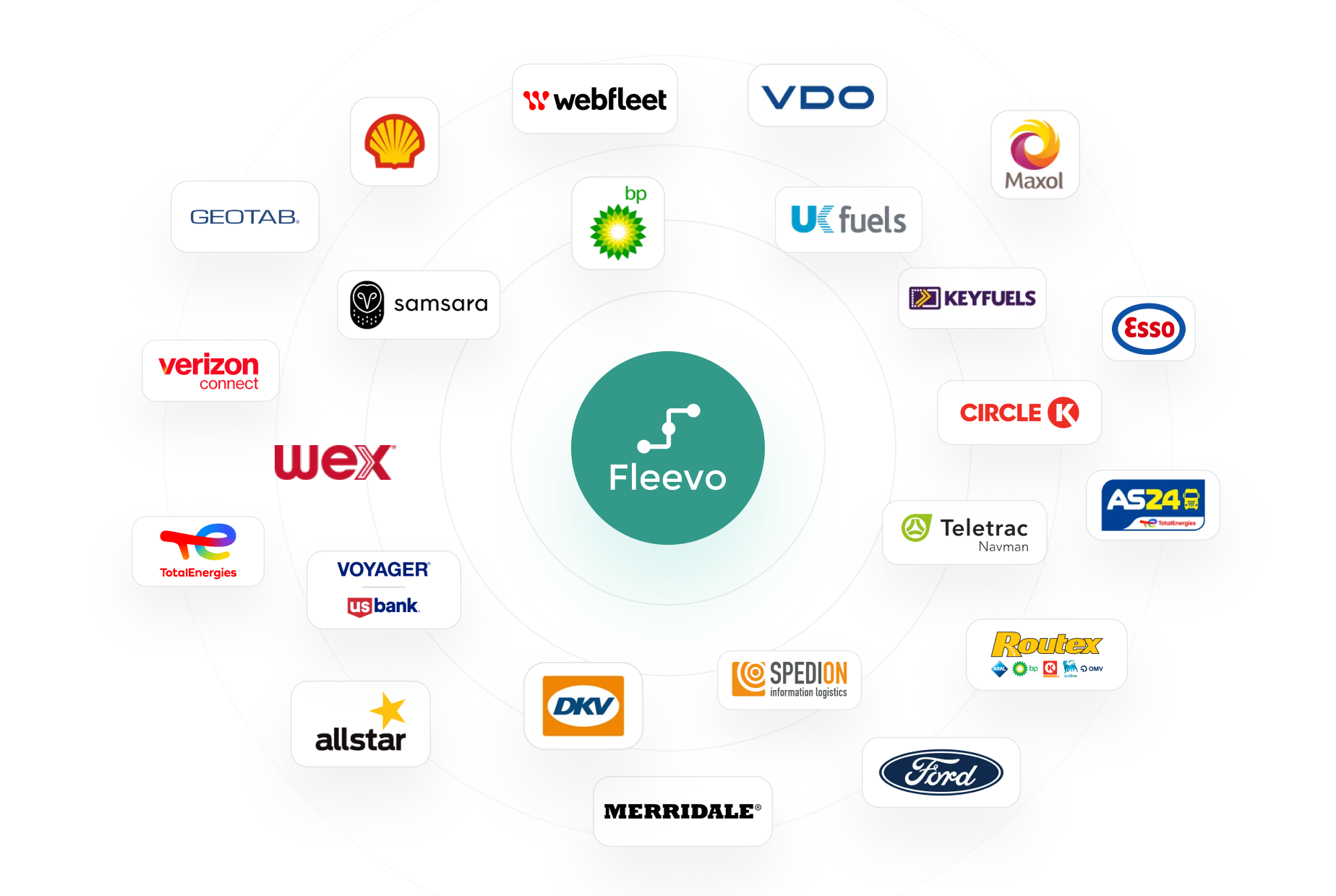
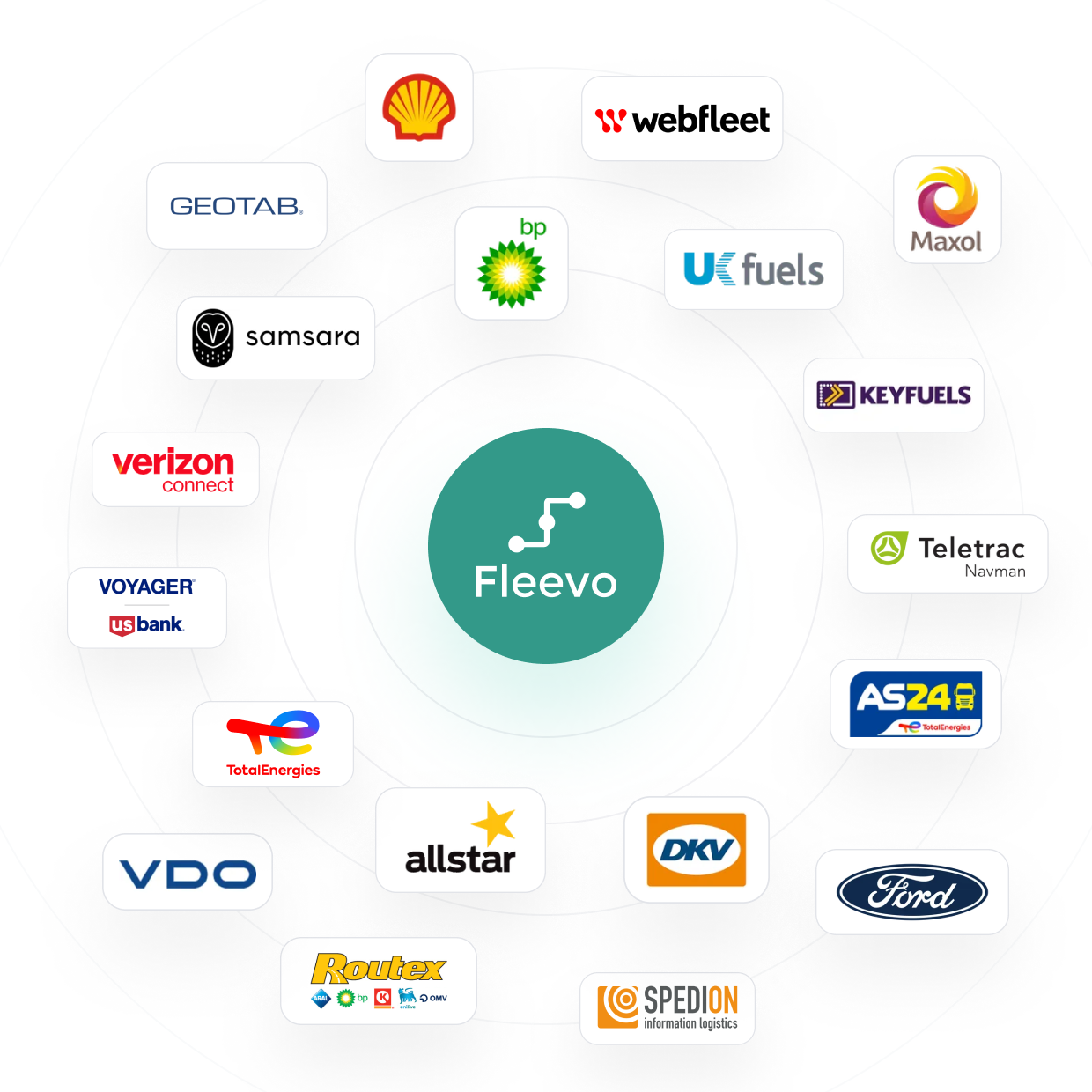
Fleevo connects 40+ fuel cards and the major telematics providers, maps every card to a vehicle, and checks each transaction against location, tank and fuel type automatically. To connect your systems, contact Fleevo or book a demo. See also fleet data integrations, fleet fuel reconciliation, and how fuel card integration works.