
Most fleets know their total fuel spend to the penny — and almost nothing about where those gallons actually went. A fuel card statement shows what was bought; it can't show whether the fuel ended up in a company vehicle, on a company route, doing company work.
A fleet fuel audit closes that gap. Here's what one involves, how to run it, and what fleets typically find when they do.
What is a Fleet Fuel Audit?
A fleet fuel audit is a systematic reconciliation of every gallon purchased against every gallon legitimately used. It cross-references fuel transactions — from cards, onsite tanks, and off-card purchases — against vehicle data: location, mileage, tank capacity, fuel level, and consumption. The output is a verified picture of fuel spend, with every unexplained gallon flagged.
It's the fuel-specific slice of a broader fleet audit, and of the fleet TCO picture — and usually the slice with the fastest payback, because fuel is both the largest controllable cost and the least verified one.
What Does a Fuel Audit Check?
- Card transactions vs vehicle location: Was the vehicle actually at the station for every recorded fill?
- Volumes vs tank capacity and fuel level: Do the gallons purchased physically fit the vehicle's tank?
- Fuel type vs vehicle specification: Diesel cards buying gas, standard vehicles buying premium.
- Onsite tank reconciliation: Does the fuel dispensed from your depot tank match what vehicles drew — and does tank level drop only when it should?
- Consumption vs mileage: Does each vehicle's fuel use match the miles telematics says it drove, benchmarked against its expected MPG?
- Timing patterns: Weekend fills on idle vehicles, second fills within an hour, transactions clustered just under approval thresholds.
How to Run a Fleet Fuel Audit
- Gather every fuel source
Fuel card statements (all providers), onsite tank records, off-card receipts, and EV charging data. An audit that misses a source misses the leaks hiding in it. - Match transactions to vehicles
Every fill gets attributed to a specific vehicle. Shared cards and pool vehicles are where attribution — and accountability — breaks down first. - Cross-reference against telematics
Location at time of fill, odometer readings, and fuel level data turn a list of purchases into a list of verified (or unverifiable) events. - Reconcile the onsite tank
Deliveries in, dispenses out, level in between. Shrinkage that isn't evaporation is usually siphoning — and it most often happens overnight, when tank data lives in a log nobody reads. - Benchmark and investigate outliers
Rank vehicles by cost per mile and MPG against their expected range. The outliers are your investigation list — and your savings list.
What Do Fuel Audits Typically Find?
Fleets lose roughly 2–5% of annual fuel spend to fraud and misuse — for a fleet spending $500,000 a year, that's $10,000–$25,000. The usual findings, in rough order of frequency: personal fill-ups on company cards, unaccounted gallons from shared cards, overfills that exceed tank capacity, depot tank shrinkage, and consumption drift from idling or outright fuel card fraud. Most fleets running their first systematic audit find material unaccounted fuel within weeks.
#1 AI-powered fleet spend control platform
Ready to Stop Losing Money on Fleet Spend?
See how much you could save in the first week. Start your free trial today. Cancel anytime.
Manual vs Automated Fuel Audits
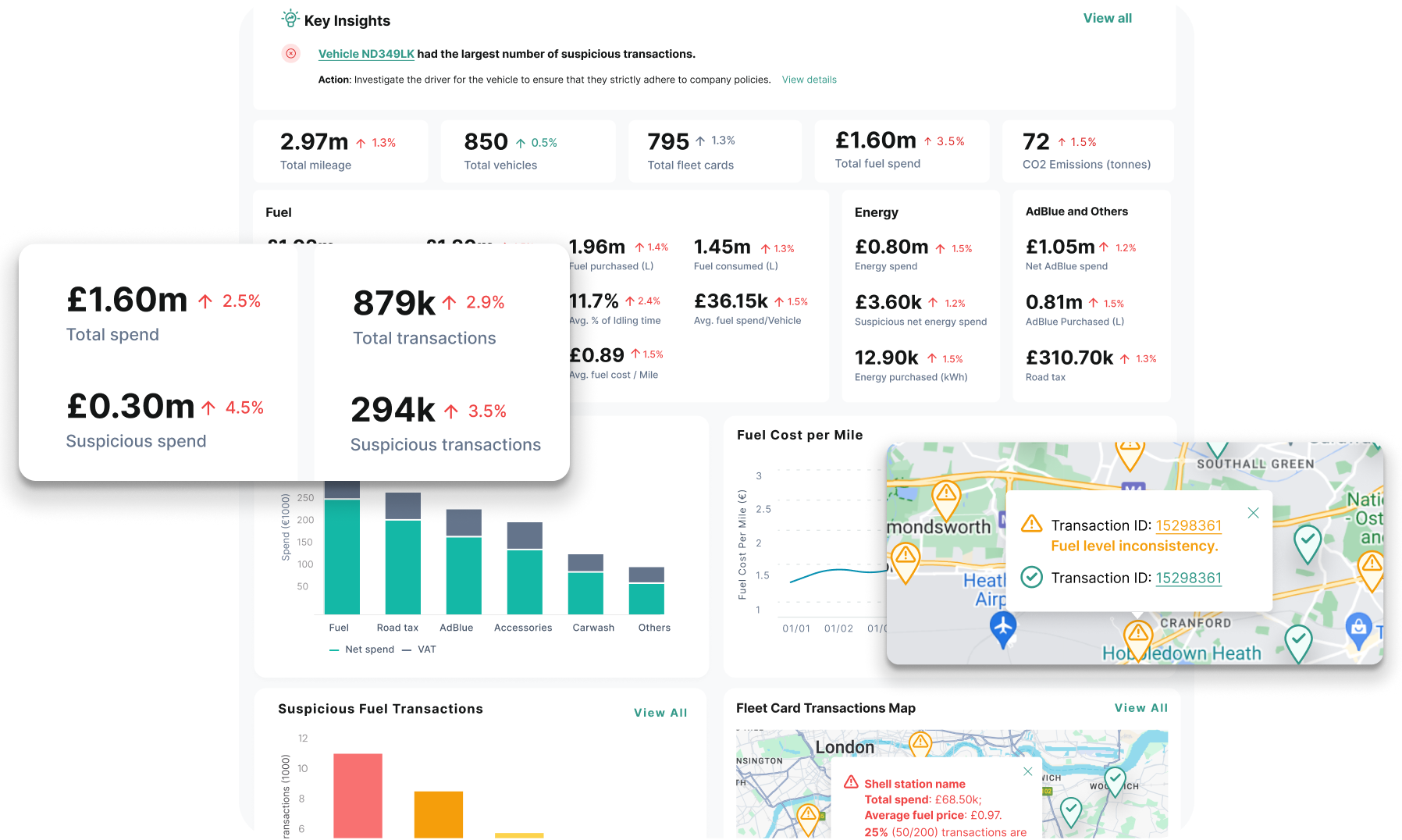
A manual audit — spreadsheets, statement exports, telematics reports side by side — works once, for a snapshot. But fraud and waste are continuous, and a quarterly manual audit catches problems months after they started. Automated auditing checks every transaction as it lands, against live vehicle data, so the audit is permanent rather than an event.
How Fleevo Automates the Fuel Audit
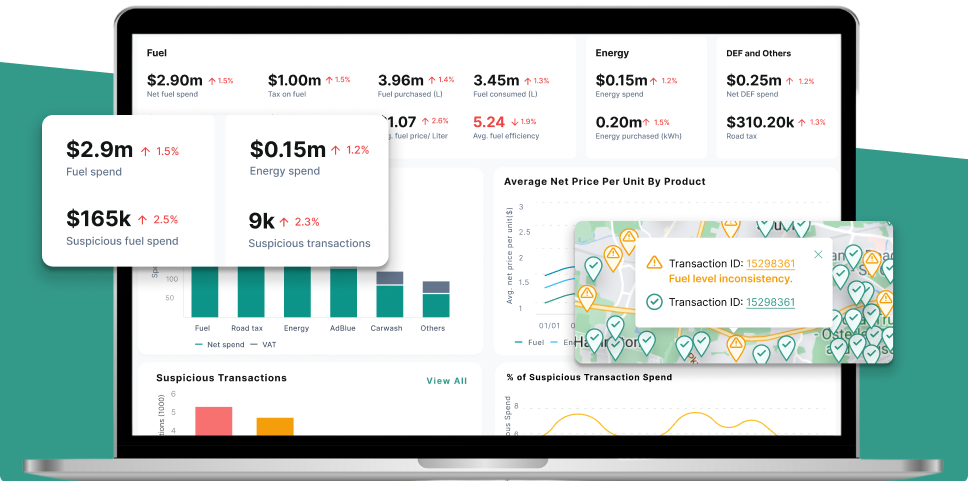
Fleevo connects your fuel cards, onsite tanks, and telematics in one platform and runs the full audit continuously: location validation, tank-capacity checks, fuel-type matching, MPG benchmarking, and depot tank reconciliation — with anomalies flagged as they happen, not at month-end. You can add custom checks in plain English, and reporting stays audit- and emissions-ready without the admin. See how Egertons Recovery strengthened fuel oversight with Fleevo.
Fleet Fuel Audit FAQs
How often should you audit fleet fuel?
Continuously, if your systems allow it — fraud caught at month-end has already cost you four weeks. If auditing manually, monthly reconciliation is the practical minimum, with a deep audit quarterly.
What data do you need for a fuel audit?
Fuel card transactions (site, time, gallons, fuel type, cost), telematics data (GPS, odometer, fuel level), vehicle records (tank capacity, fuel type), and onsite tank logs if you run depot fuel. The audit is only as complete as its data sources.
Can you audit fuel without telematics?
Partially — volume-versus-capacity checks and MPG benchmarks work from card and odometer data. But location validation, the strongest check, needs to know where the vehicle actually was.
Bottom line: unaudited fuel spend is a standing invitation for leaks. A systematic audit — ideally a continuous, automated one — typically pays for itself within the first month, and turns fuel from the fleet's biggest blind spot into its best-documented cost.
Explore the platform: Fuel & Energy Management · All Integrations