
Bunkered fuel is diesel bought in bulk at dedicated commercial refuelling sites, called bunker sites, at a pre-agreed wholesale price rather than the pump price shown on a retail forecourt. Drivers draw fuel with a fuel card, and the operator is invoiced later at the contracted rate. Bunkering is common in UK and European HGV operations, where networks such as Certas Energy, Keyfuels and UK Fuels run bunker sites built for fast, high-volume truck filling.
Bunker Sites vs Retail Forecourts
A retail forecourt charges the advertised pump price at the moment of sale. A bunker site charges a negotiated price set weekly or by contract, usually below retail for high-volume users, and bills through the fuel card account. Bunker sites are designed for HGVs, with high-flow pumps, high canopies, and 24-hour access.
Pros and Cons
- Pro: lower per-litre cost for fleets with the volume to justify it.
- Pro: HGV-friendly sites and one consolidated invoice.
- Con: pricing is negotiated and variable, so invoices are harder to check line by line.
- Con: bulk draws are exactly where misuse and slippage hide.
Why Bunkered Fuel Is Hard to Audit
Because bunker pricing is contractual and volumes are large, a bunker statement is difficult to verify by hand: you cannot tell from the invoice alone whether every litre reached the right vehicle. This is the same problem as any fuel card, amplified by volume.
#1 AI-powered fleet spend control platform
Ready to Stop Losing Money on Fleet Spend?
See how much you could save in the first week. Start your free trial today. Cancel anytime.
How Fleevo Audits Bunkered Fuel
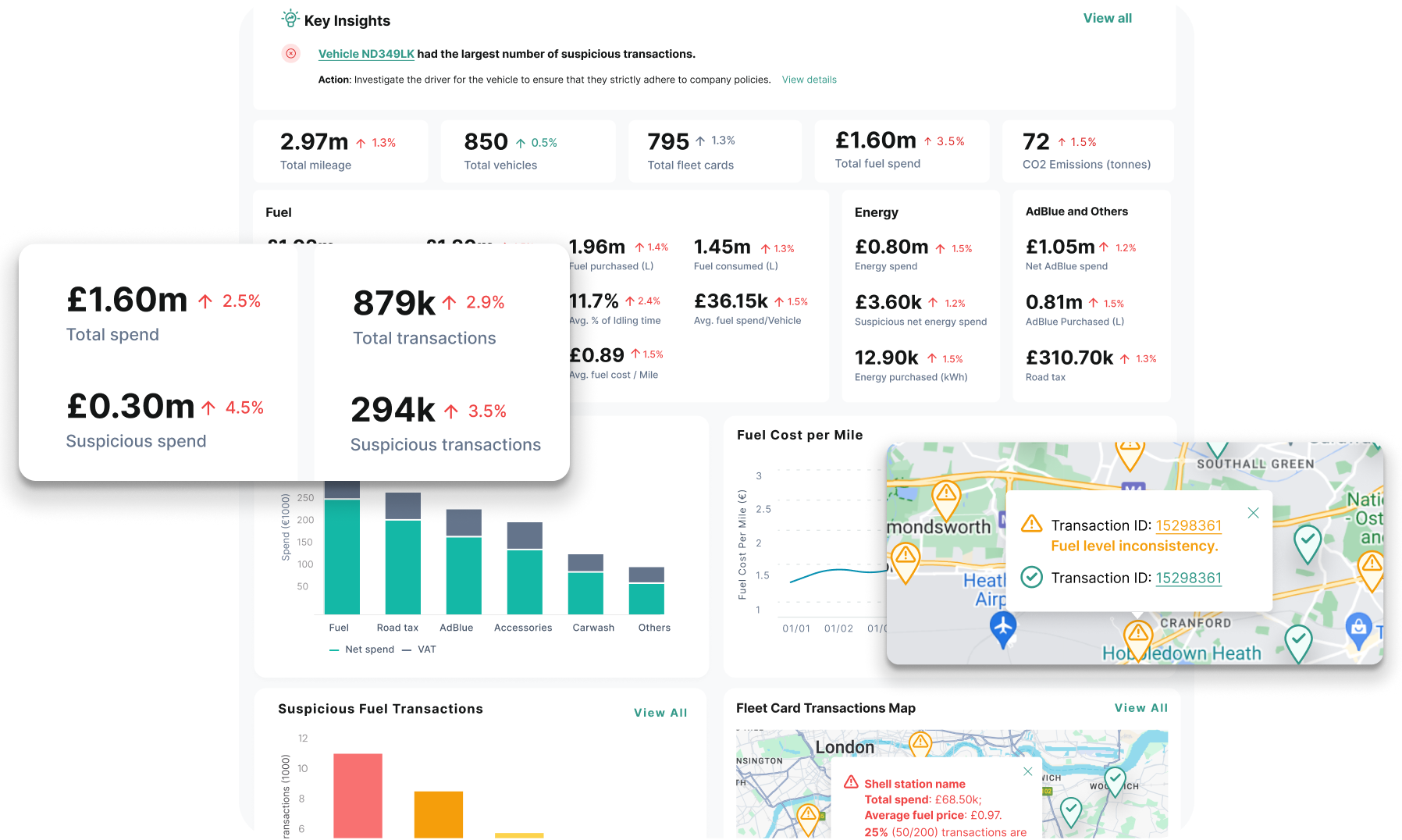
Fleevo ingests bunker card transactions and onsite tank draws and checks each against telematics: was the vehicle at that bunker at that time, and does the volume fit its tank? Bunker fuel then sits alongside retail card spend, onsite tanks, and EV charging in one audited view. See the Certas Energy integration, fleet fuel reconciliation, and the fuel card comparison hub.
Bunkered Fuel FAQs
What does bunkered fuel mean?
Diesel bought in bulk at commercial bunker sites at a pre-agreed price, drawn by fuel card and invoiced later, rather than paying retail pump price.
Is bunkered fuel cheaper than forecourt fuel?
Usually, for fleets with enough volume, because the price is negotiated below retail. The saving depends on your volume and contract.
Which fuel cards use bunker sites?
UK networks such as Certas Energy, Keyfuels and UK Fuels operate bunker sites for HGVs, alongside their retail acceptance.
Related: what is fuel slippage, Certas Energy integration, and the fuel card comparisons hub.