
Fuel slippage is the gap between the fuel a fleet pays for and the fuel that actually ends up moving vehicles. Every litre or gallon bought but not accounted for is slippage, whether it was lost to theft, a leak, a miscalibrated pump, tank shrinkage, an unrecorded fill, or a simple data error. On most fleets it hides in plain sight because no single system is watching the whole journey from purchase to combustion.
Where Fuel Slippage Happens
Slippage creeps in wherever fuel changes hands or systems:
- At the pump or card: fills to the wrong vehicle, personal use, card sharing, or brimming a tank beyond its capacity.
- At the onsite tank: unrecorded draws, delivery short-measures, evaporation, and meter drift.
- In the data: transactions that never reconcile against a vehicle, duplicated entries, or fills logged against the wrong asset.
Why It Matters
Fuel is the largest controllable line in most fleet budgets, so a few percent of slippage compounds fast across a year. It also distorts every downstream number: cost per mile, MPG, and total cost of ownership are all wrong if the fuel figure feeding them includes litres that never reached a vehicle.
How to Measure and Cut It
The only reliable way to find slippage is to reconcile three numbers that usually live apart: fuel purchased (card and tank records), fuel dispensed (pump and tank meters), and fuel consumed (telematics distance and fuel level). Where they disagree, you have either a data error or a real loss. Closing the gap means matching every transaction to a vehicle that was actually there, with a tank that could hold that volume, then investigating the exceptions.
#1 AI-powered fleet spend control platform
Ready to Stop Losing Money on Fleet Spend?
See how much you could save in the first week. Start your free trial today. Cancel anytime.
How Fleevo Cuts Fuel Slippage
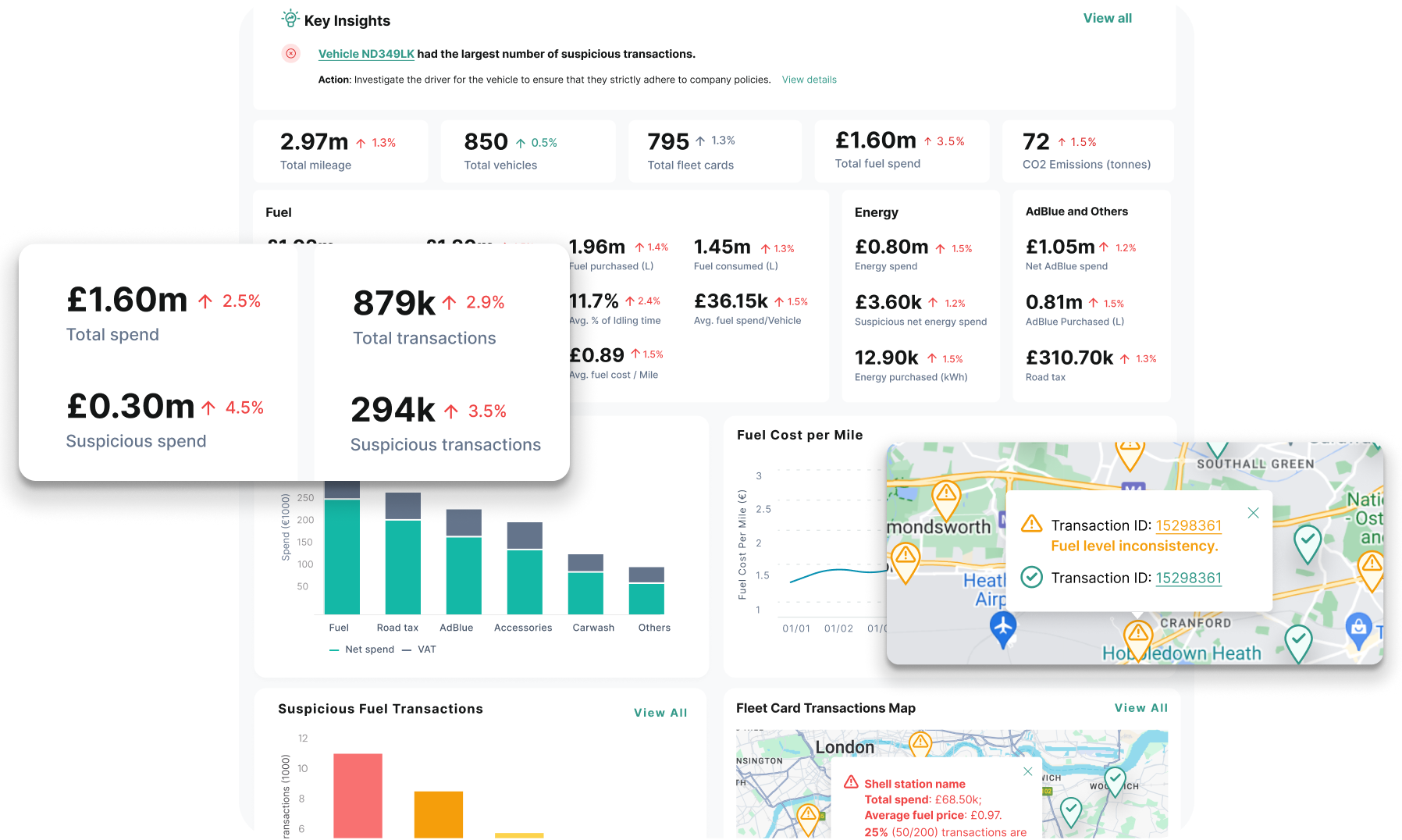
Fleevo automatically reconciles fuel card transactions, onsite tank draws, and EV charging against telematics and vehicle records, flagging any fill that does not line up with where the vehicle was, how much its tank holds, or what it should consume. See fleet fuel reconciliation and fuel card fraud detection, or explore Fuel & Energy Management.
Fuel Slippage FAQs
What is fuel slippage?
The difference between fuel a fleet pays for and fuel that actually does useful work, caused by theft, leaks, miscalibration, tank shrinkage, unrecorded fills, or data errors.
How do you measure fuel slippage?
Reconcile fuel purchased against fuel dispensed and fuel consumed (from telematics). Persistent gaps that are not data errors are real losses.
Is fuel slippage the same as fuel fraud?
No. Fraud is deliberate misuse; slippage is the broader gap that includes fraud plus leaks, calibration drift, evaporation, and reconciliation errors.
Related: fleet fuel reconciliation, how to prevent fuel theft, and the fleet TCO guide.