
DOT and FMCSA compliance is the set of federal rules a US commercial fleet must meet to operate: hours-of-service limits recorded by an ELD, vehicle inspection and maintenance records, driver qualification and drug-and-alcohol testing, IFTA fuel-tax reporting, and the CSA safety scores that tie them together. Miss one and the cost is not only a fine, because a poor CSA score pulls you toward a federal audit.
This guide maps the US compliance stack and links to a deeper guide on each part. It is written for fleet and finance leaders who need to know what is required, what records prove it, and where the data comes from.
Who Regulates US Fleets?
The Department of Transportation (DOT) sets federal transportation policy. The Federal Motor Carrier Safety Administration (FMCSA), an agency within the DOT, writes and enforces the safety rules for commercial motor vehicles in interstate commerce. Most of the requirements below live in the Federal Motor Carrier Safety Regulations, 49 CFR Parts 40 and 300 to 399.
The Core Requirements
Hours of service and ELDs
Property-carrying drivers may drive up to 11 hours within a 14-hour on-duty window after 10 consecutive hours off, must take a 30-minute break after 8 hours of driving, and are capped at 60 or 70 hours over 7 or 8 days. Most interstate drivers must record this automatically with an Electronic Logging Device. Full detail: ELD and hours of service rules explained.
IFTA fuel tax
Fleets running qualified vehicles across two or more states or provinces file one quarterly IFTA return with their base jurisdiction, reporting miles and fuel by jurisdiction. Full detail: what is IFTA fuel tax reporting.
Vehicle inspection and maintenance
Drivers complete a Driver Vehicle Inspection Report (DVIR) for defects, and carriers must keep systematic maintenance and repair records for every vehicle. Poor maintenance records are one of the fastest ways to fail a review.
Driver qualification and drug and alcohol
Carriers keep a driver qualification file for each driver and run a DOT drug-and-alcohol program, including pre-employment and random testing and FMCSA Drug and Alcohol Clearinghouse queries.
CSA Scores Tie It Together
The FMCSA's Compliance, Safety, Accountability (CSA) program scores carriers from roadside inspections and crash data across seven BASICs, including Unsafe Driving, Hours-of-Service Compliance, and Vehicle Maintenance. Scores are percentiles from 0 to 100 where higher is worse, and crossing an intervention threshold, around 65% for most on-road BASICs, makes a compliance review far more likely. Full detail: CSA scores and DOT audits.
What Proves Compliance: Records
Every requirement above is really a records requirement. An audit is won or lost on whether you can produce ELD logs, DVIRs and maintenance history, driver files, testing records, and IFTA mileage and fuel data, complete and quickly. Records scattered across an ELD, a maintenance spreadsheet, a fuel-card portal and a filing cabinet are what turn a routine review into a bad one.
Frequently Asked Questions
What is the difference between DOT and FMCSA?
The DOT is the federal department. The FMCSA is the agency within it that regulates commercial motor vehicle safety, so most fleet rules are FMCSA rules.
What triggers a DOT audit?
Most often a high CSA score in a BASIC, a serious crash or worsening inspection trend, or a complaint. New carriers also receive a new-entrant safety audit within their first 12 months.
What records does a DOT audit check?
HOS and ELD logs, DVIRs and maintenance records, driver qualification files, drug-and-alcohol testing and Clearinghouse queries, and often IFTA and IRP records.
Does an ELD make me IFTA compliant?
No. An ELD records hours and can capture mileage, but IFTA also needs fuel purchased per jurisdiction reconciled to those miles. They are separate filings.
#1 AI-powered fleet spend control platform
Ready to Stop Losing Money on Fleet Spend?
See how much you could save in the first week. Start your free trial today. Cancel anytime.
Where Fleevo Fits in US Compliance
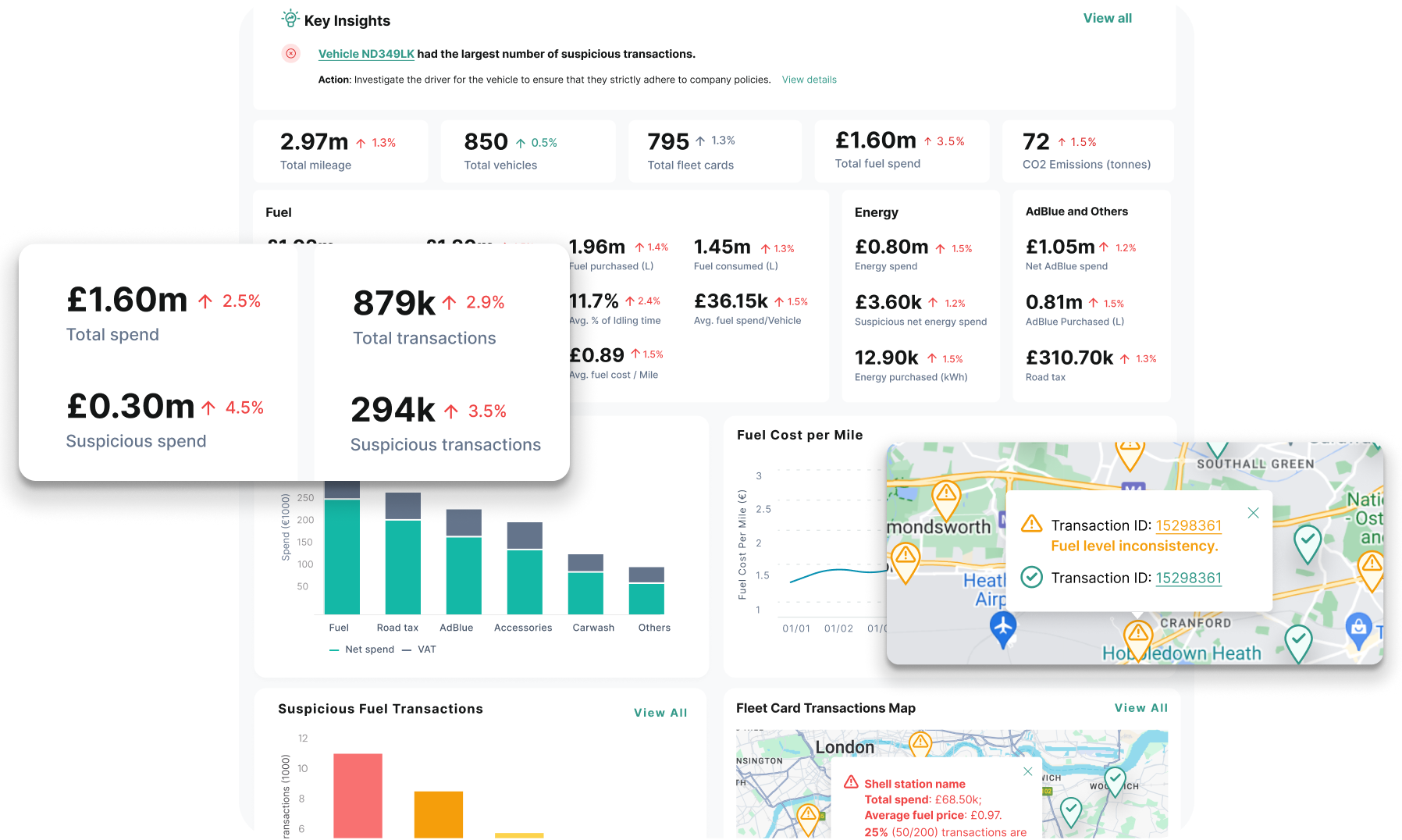
Fleevo is not an ELD and does not manage hours of service, driver qualification files or drug-and-alcohol testing. Keep your telematics or ELD and your safety-management system for those. What Fleevo does is the data and cost side of compliance: it connects your telematics, fuel cards and maintenance records to reconcile IFTA miles and fuel, keep a complete fuel and maintenance audit trail, and surface the maintenance and cost issues that feed the Vehicle Maintenance BASIC. When a review comes, the fuel, maintenance and IFTA records are already assembled rather than scattered. Explore compliance and audit readiness.