
For most UK companies with vehicles, the fleet is the biggest source of the energy and carbon figures they must publish under SECR (Streamlined Energy and Carbon Reporting). SECR asks large companies to report their UK energy use, including transport fuel, and the emissions that come from it, in the directors' report every year. The numbers start with one thing: how many litres of fuel your vehicles used.
This guide covers who SECR applies to, what it asks for, how to work out the fleet figures, and where fleet data fits in wider ESG (environmental, social and governance) reporting.
Who has to report under SECR
SECR applies to:
- quoted companies, and
- large unquoted companies and LLPs that meet two of these three tests for two years in a row: turnover of £36 million or more, a balance sheet of £18 million or more, and 250 or more employees.
The SECR thresholds were not raised when the Companies Act size thresholds changed in April 2025, so a company that is no longer "large" for accounts may still have to report.
A large company that used 40,000 kWh or less of energy in the UK in the year is a low energy user. It does not report the figures, but must say in its report that it is exempt.
What SECR asks for
| Item | What it means for a fleet |
|---|---|
| UK energy use in kWh | Includes transport fuel, as well as gas and electricity |
| Scope 1 emissions | Fuel burned in company vehicles |
| Scope 2 emissions | Electricity bought, including electricity for charging electric vehicles at your sites |
| Scope 3 business travel | Fuel used in employees' own cars or hire cars for business, where the company pays for the fuel, the grey fleet |
| An intensity ratio | Emissions against a measure of activity, such as tonnes CO2e per £ million turnover or per vehicle mile |
| Energy efficiency actions | What you did in the year to use less energy |
| Methodology | How you calculated the figures |
| Last year's figures | For comparison |
How to work out the fleet figures
- Collect every litre. Fuel card transactions, onsite tank deliveries and dispensing, and fuel claimed back on expenses for the grey fleet. Missing sources is the most common error.
- Split by type. Diesel, petrol and electric vehicle charging, at your sites, at home and on public chargers.
- Convert to kWh and CO2e. Use the UK Government greenhouse gas conversion factors for the year, published by DESNZ. They give a factor for each fuel per litre. For diesel with the average biofuel blend, the 2025 factor is about 2.57 kg CO2e per litre.
- Separate the scopes. Company vehicles are scope 1. Grey fleet and hire cars where you pay for the fuel are scope 3. Charging electricity you buy is scope 2.
- Pick an intensity ratio you can repeat. Emissions per mile or per vehicle make sense for a fleet business, because they show whether the fleet got more efficient, not just whether it shrank.
- Keep the evidence. Keep the transaction data behind each figure, so the numbers can be checked.
Where fleet data fits in ESG
SECR covers the environmental side. Buyers, lenders and tenders increasingly ask about all three parts of ESG, and the fleet touches each one:
- Environmental: fuel use, emissions per mile, idling, and the move to electric vehicles.
- Social: driver safety, such as licence checks, drivers' hours, and fines and PCNs as a sign of driving behaviour.
- Governance: controls over spend, such as fuel card fraud checks, invoice checks and an audit trail of decisions.
Fleet figures are only as good as the fuel data behind them. If a fuel card is used to fill a car that is not on the fleet, or fuel paid for never reaches a vehicle, it still lands in your reported emissions. Checking transactions is a data quality step as well as a cost control.
#1 AI-powered fleet spend control platform
Ready to Stop Losing Money on Fleet Spend?
See how much you could save in the first week. Start your free trial today. Cancel anytime.
How Fleevo helps with fleet emissions reporting
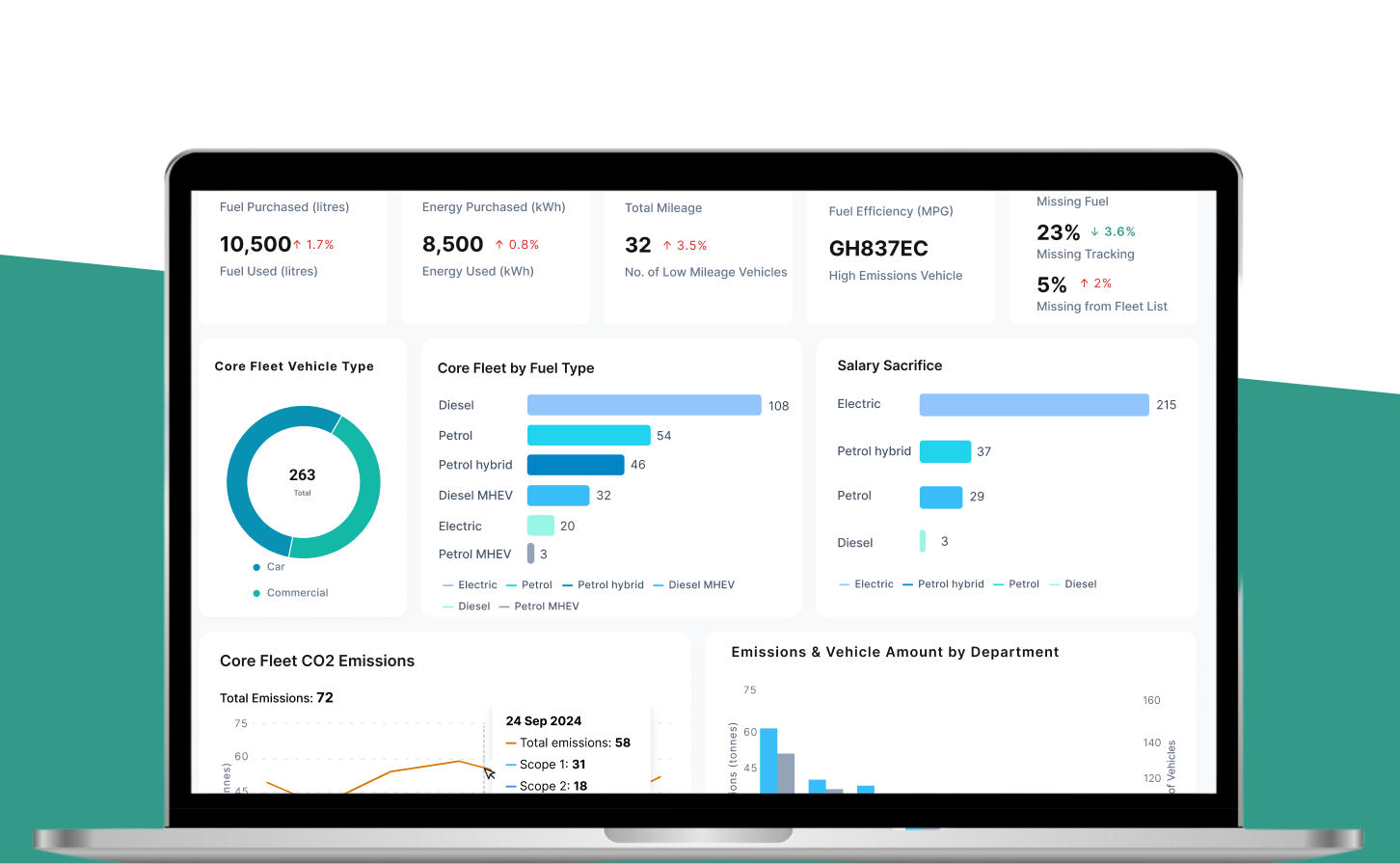
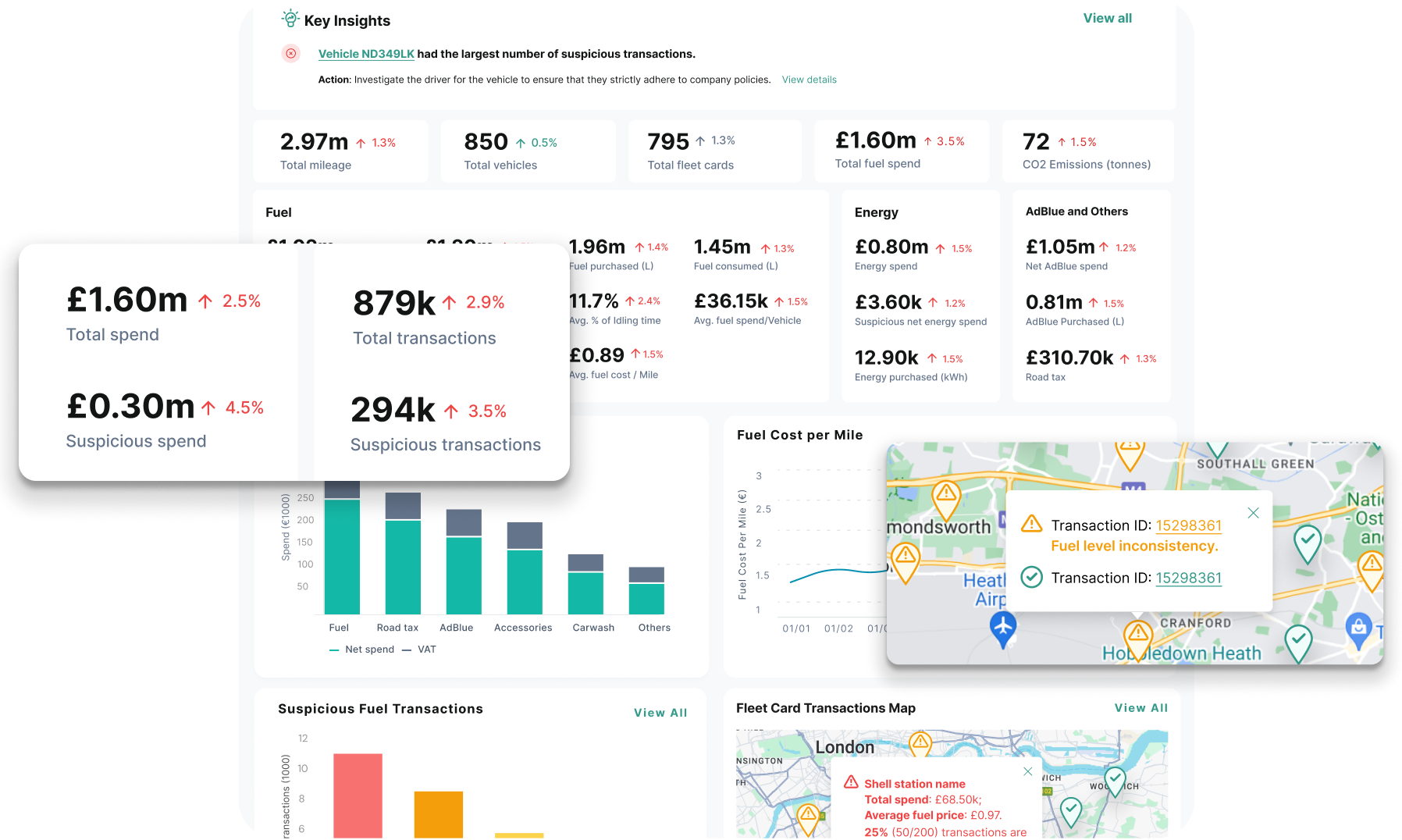
Fleevo brings fuel card transactions and onsite tank data together for every vehicle, and turns the litres into CO2 per vehicle and per month, with a map of where fuel was used. When job data from your transport management system is connected, emissions can also be split by customer. Because every transaction is checked against telematics, the fuel in your figures is fuel that went into your vehicles. Fleevo is the implementer in the iLEAP project with the Smart Freight Centre, which links logistics emissions data with product carbon footprints. Explore Fleevo emissions reporting, or talk to us.
Fleet ESG and SECR FAQs
Does SECR include company vehicles?
Yes. Transport fuel is part of the UK energy use companies must report, and fuel burned in company vehicles is scope 1.
Does SECR include the grey fleet?
Yes. Business travel in employees' own cars or hire cars, where the company pays for the fuel, is reported as scope 3.
Who has to report under SECR?
Quoted companies, and large unquoted companies and LLPs that meet two of: £36 million turnover, £18 million balance sheet and 250 employees, for two years in a row.
What is the SECR low energy exemption?
A company that used 40,000 kWh or less of energy in the UK in the year does not report the figures, but must state that it is exempt.
Which conversion factors should I use for fleet fuel?
The UK Government greenhouse gas conversion factors published by DESNZ for the reporting year, using the fuels factors when fuel is recorded in litres.
What is a good intensity ratio for a fleet?
Emissions per vehicle mile, or per tonne-mile for freight, because it shows changes in efficiency rather than fleet size.
Related: fleet emissions reporting: scope 1, 2 and 3, grey fleet management, fleet idling costs, fleet efficiency KPIs.
This is general information, not legal or accounting advice. Confirm your reporting obligations with your auditor.
Sources
- GOV.UK, Streamlined Energy and Carbon Reporting (SECR) for academy trusts (explains the 2018 requirements): https://www.gov.uk/government/publications/streamlined-energy-and-carbon-reporting-secr-for-academy-trusts/streamlined-energy-and-carbon-reporting-secr-for-academy-trusts
- GOV.UK, Environmental reporting guidelines, including SECR: https://www.gov.uk/government/publications/environmental-reporting-guidelines-including-mandatory-greenhouse-gas-emissions-reporting-guidance
- GOV.UK, Greenhouse gas reporting: conversion factors: https://www.gov.uk/government/collections/government-conversion-factors-for-company-reporting