
Every fleet vehicle has a sweet spot: the point where keeping it any longer costs more than replacing it. Hold on past that point and rising maintenance, downtime, and fuel costs quietly erode the savings of a paid-off asset. Here is how to find the right time to replace.
Why Replacement Timing Matters
A new vehicle depreciates fastest early on, which argues for keeping it longer. But as a vehicle ages, maintenance and downtime costs climb and reliability falls. The optimal replacement point is where the falling ownership cost and the rising running cost cross: the lowest total cost per mile over the vehicle's life.
The Maintenance Tipping Point
The most reliable replacement trigger is a maintenance one. As a vehicle ages, repairs get more frequent and more expensive while its value and reliability fall. The tipping point comes when the cost of keeping it on the road, mainly maintenance and the downtime that goes with it, is higher than the cost of running a replacement. Two practical tests:
- Annual cost test. When a vehicle's yearly maintenance and downtime cost climbs above the annual cost of a replacement (its depreciation or lease plus its lower running costs), keeping the old one is losing you money.
- Repair-versus-value test. When a major repair costs more than the vehicle is worth, or a big repair is due on a vehicle already near the end of its economic life, replacing is usually the better call.
In short, if a vehicle costs more to maintain than it is worth keeping on the road, it is time to replace it. The key is accurate per-vehicle maintenance and cost-per-mile data, so you can see that point coming rather than react to it.
The Signals to Watch
- Rising cost per mile. The clearest signal, once a vehicle climbs above the fleet average.
- Increasing downtime. More days off the road mean more lost work.
- Major repairs due. A big-ticket repair on an old vehicle rarely pays back.
- Falling reliability. Repeat breakdowns carry costs beyond the repair bill.
- Compliance or emissions. Older vehicles may fall foul of clean-air zones or standards.
How to Decide
- Track cost per mile per vehicle. You cannot time replacement without it.
- Compare to the fleet. Flag vehicles running well above average.
- Forecast the next year. Estimate upcoming maintenance and downtime cost.
- Weigh against replacement cost. Compare keeping versus replacing over the same period.
- Plan ahead. Stagger replacements so cost and downtime do not spike at once.
#1 AI-powered fleet spend control platform
Ready to Stop Losing Money on Fleet Spend?
See how much you could save in the first week. Start your free trial today. Cancel anytime.
How Fleevo Informs Replacement Decisions
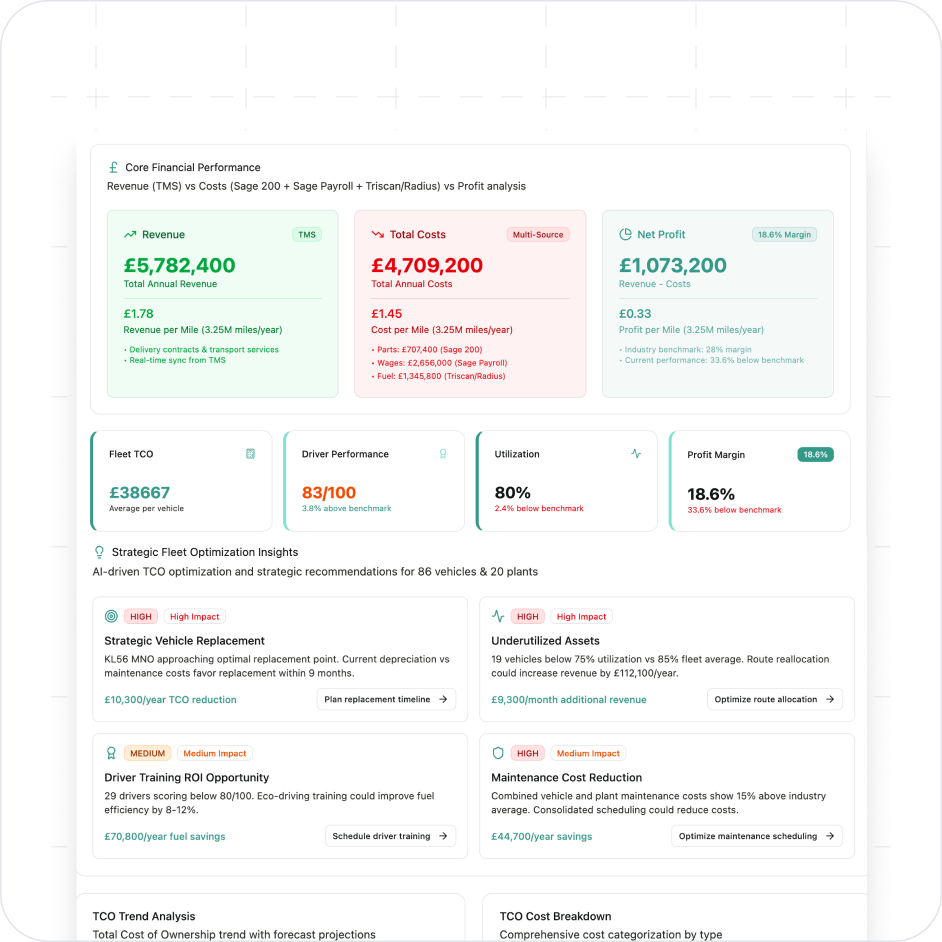
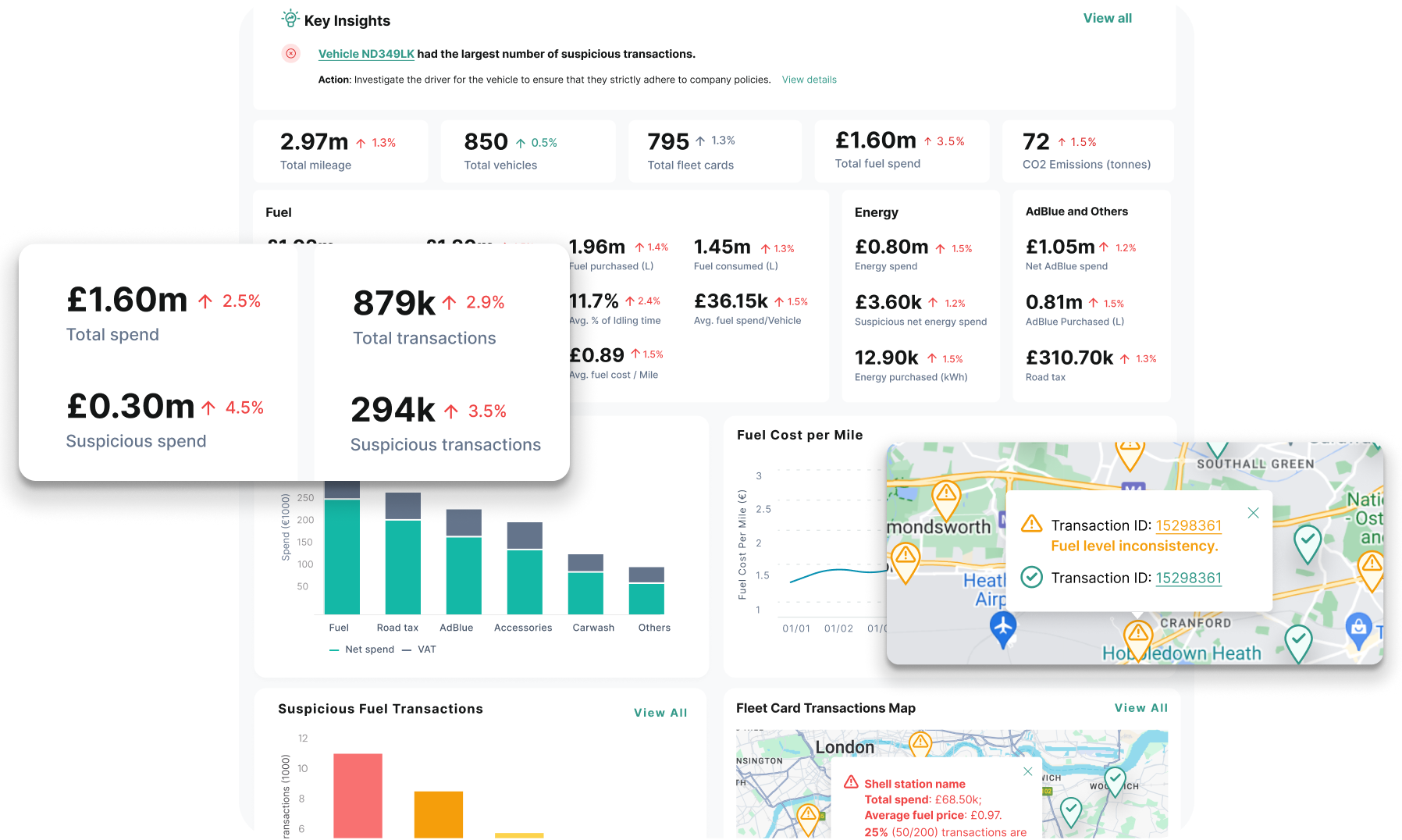
Fleevo keeps a live cost-per-vehicle and cost-per-mile picture across fuel, maintenance, and fines, so the vehicles whose costs are climbing past the fleet average stand out early, and you can see rising maintenance spend before it tips past the value of keeping the vehicle. That turns replacement timing from a gut call into a data-backed decision. Explore Fleet TCO, or read how fleet budgeting and forecasting plans replacements ahead.
Vehicle Replacement FAQs
When should you replace a fleet vehicle?
When the cost of keeping it running, mainly maintenance and downtime, rises above the annual cost of running a replacement, or when a major repair costs more than the vehicle is worth. In short, once it costs more to maintain than it is worth keeping on the road.
What is the optimal fleet replacement cycle?
It varies by vehicle type and usage, so the reliable answer comes from each vehicle's own cost-per-mile and maintenance-cost curve rather than a fixed number of years or miles.
Why not keep vehicles as long as possible?
Because rising maintenance, downtime, and reliability costs eventually outweigh the savings of a paid-off vehicle, and can cost more than a newer, more efficient replacement.
Replacement timing is one of twelve levers in our pillar guide on how to reduce fleet TCO.