
Run trucks across Europe and road charges become one of your largest and most fragmented costs. There is no single European toll: each country runs its own system, its own device, and its own pricing logic, and the rules keep changing as CO2-based pricing spreads. This guide maps the main systems a UK or European fleet meets, and links to a deeper look at each.
Two Kinds of Charge: Distance vs Time
Most European heavy-vehicle charging falls into two camps. Distance-based systems charge per kilometre driven, usually via a satellite or gantry-read on-board unit: Germany's LKW-Maut, Austria's GO-Maut, Switzerland's LSVA, and the barrier péages of France and Italy all work this way. Time-based systems, chiefly the Eurovignette, charge for a period of access regardless of distance. Knowing which applies where is the first step to budgeting a route.
The Main Systems
- Germany – LKW-Maut: distance-based on motorways and federal roads, now for all trucks over 3.5 tonnes. Read our German LKW-Maut guide.
- Austria – GO-Maut: distance-based via the GO-Box, plus special section tolls on Alpine routes. Read our Austrian GO-Maut guide.
- Switzerland – LSVA: a distance, weight, and emissions charge on all heavy vehicles. Read our LSVA guide.
- Italy – Telepass: barrier-based motorway tolls, paid automatically with a Telepass device. Read our Italian Telepass guide.
- France – Péage: barrier-based per-kilometre tolls, paid with a Télépéage tag. Read our French péage guide.
- Eurovignette: a time-based vignette now covering Luxembourg and Sweden. Read our Eurovignette guide.
- UK – Dart Charge: the Dartford Crossing charge, camera-enforced with next-day payment. Read our Dart Charge guide.
The Common Challenge for Fleets
The problem isn't any single toll, it's that they arrive separately: different invoices, currencies, devices, and billing cycles for one truck's week on the road. Without consolidation, no one can say what a given route or vehicle actually cost, or spot where an OBU has been misconfigured or double-charged. The fleets that control toll spend are the ones that pull every charge into one place, attributed to the vehicle and journey that incurred it.
#1 AI-powered fleet spend control platform
Ready to Stop Losing Money on Fleet Spend?
See how much you could save in the first week. Start your free trial today. Cancel anytime.
How Fleevo Helps
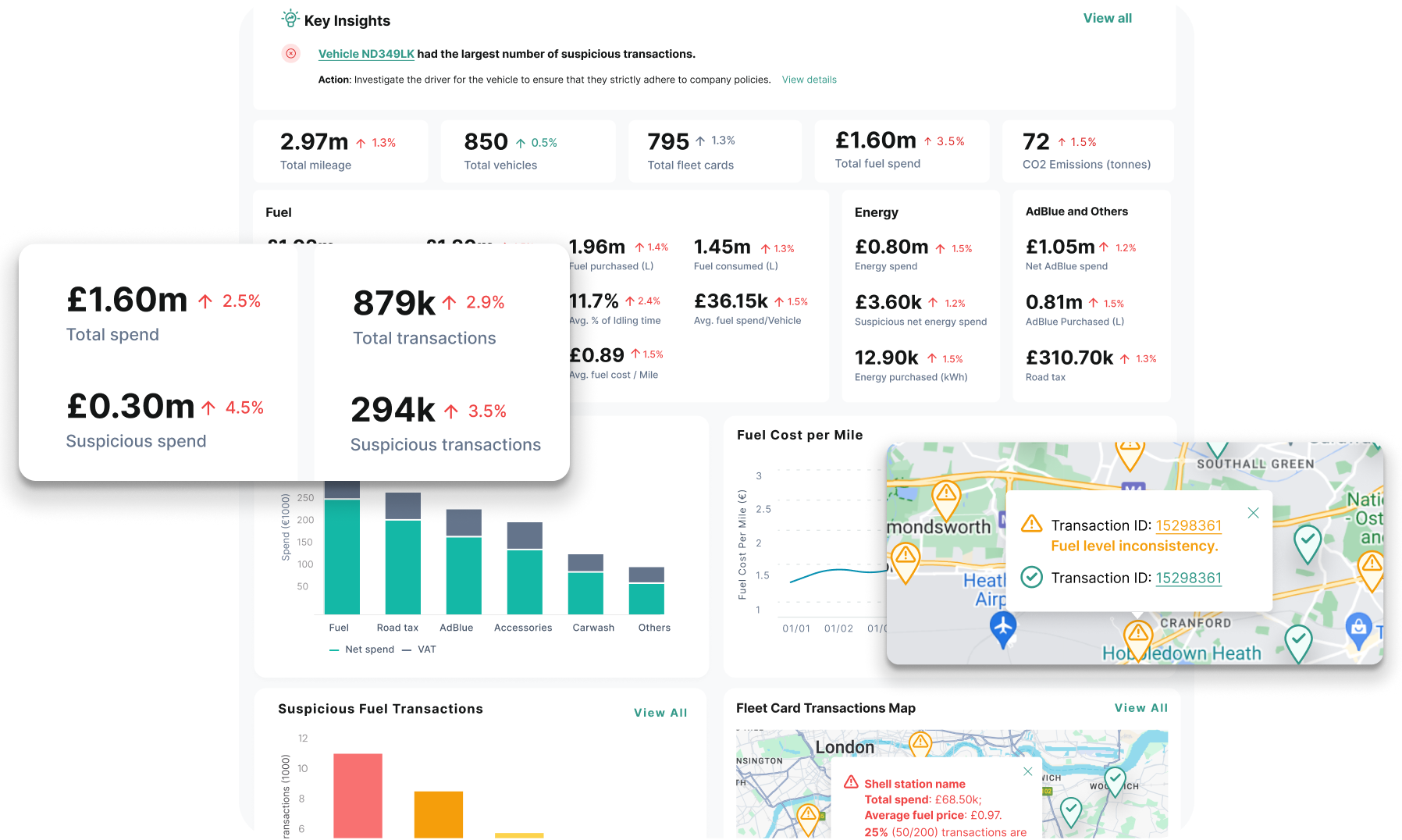
Fleevo is built to consolidate fleet spend, so toll and road-charge data from across your operating countries can sit in one view, attributed to the vehicle and route that incurred it, alongside your fuel, fines, and maintenance rather than in a stack of separate foreign invoices. To find out what Fleevo can bring in for your fleet, contact Fleevo or book a demo, or see PCNs & Fines Management.
European Truck Tolls FAQs
Is there one toll system across Europe?
No. Each country runs its own, split broadly into distance-based tolls (Germany, Austria, Switzerland, France, Italy) and time-based vignettes (the Eurovignette). Devices and rules differ by country.
What's the difference between a toll and a vignette?
A distance-based toll charges per kilometre driven, usually via an on-board unit. A vignette charges for a period of access (a day, week, month, or year) regardless of distance.
Why is European toll spend hard to manage?
Because charges arrive as separate invoices in different currencies, devices, and billing cycles. Consolidating them per vehicle and route is what turns fragmented costs into a managed line item.